Imagine a city where Christian, Jewish, and Muslim cultures coexisted for centuries, leaving behind a labyrinth of medieval streets, stunning architecture, and enough history to fill a dozen museums. Now imagine that city is just 30 minutes from Madrid by high-speed train.
Welcome to Toledo.
If I had to choose one day trip from Madrid – just one – Toledo would be it. Yes, Segovia has its fairy-tale castle and Roman aqueduct. El Escorial has its grand monastery. But Toledo? Toledo has everything. An entire medieval city frozen in time, perched dramatically on a hill surrounded by the Tagus River, with layers upon layers of history waiting to be discovered.
This isn’t just a collection of monuments. This is a living, breathing UNESCO World Heritage Site where you could spend days wandering and still not see everything. Where El Greco painted his masterpieces. Where Christians, Jews, and Muslims created something extraordinary together. Where every cobblestone street leads to another architectural wonder.
Having visited Toledo countless times, I’ve learned what works and what doesn’t. How to avoid the tour group crush. Which sights are truly unmissable and which you can skip. Where to eat without falling into tourist traps. The secret to seeing it all without feeling rushed.
So let me show you how to do Toledo right.
Why Visit Toledo?
Toledo is often called “the city of three cultures” because of its unique history where Christian, Jewish, and Islamic communities lived and worked together, particularly during the Middle Ages. The result is an architectural and cultural melting pot unlike anywhere else in Spain.
The entire old city is a UNESCO World Heritage Site – not just a building or two, but the whole medieval city. Walk five minutes in any direction and you’ll stumble upon a centuries-old synagogue, a Gothic cathedral, or a Muslim gate. The density of historical significance is almost overwhelming.
But here’s what makes Toledo special: it’s not a museum city. Yes, tourists come (lots of them), but Toledo is a real place where people live and work. You’ll see locals buying groceries in the plaza, elderly residents chatting in doorways, and schoolkids running through streets that haven’t changed in 500 years.
The city also has an artistic soul. El Greco spent the last decades of his life here, creating some of his most famous works. His paintings are scattered throughout the city, giving you a masterclass in Spanish Renaissance art while you explore.
Getting to Toledo from Madrid
You have three main options, and honestly, one is clearly the best.
High-Speed Train (Strongly Recommended)
Take the AVE high-speed train from Madrid’s Puerta de Atocha station to Toledo.
Journey time: 30-33 minutes (seriously – it’s that fast)
Frequency: Trains run roughly every hour throughout the day
Cost: €13-22 depending on how far in advance you book and time of day
Advantages: Super fast, comfortable, drops you close to the old town
Book tickets on the Renfe website or app. Prices increase closer to your travel date, so book at least a few days ahead if possible. The Renfe app is actually pretty good and shows you all available trains.
From Toledo train station to old town: The station is about 20 minutes walk uphill to the historic center (and it IS uphill). You have three options:
- Bus Line 5 or 12: €1.40, drops you near Puerta de Bisagra (main entrance to old town)
- Taxi: €5-7, gets you right to where you want to start
- Walk: Free, but it’s uphill and gets tiring with the day ahead of you
Pro tip: There are escalators partway up from the station that many tourists don’t know about. If you do walk, look for the signs to “Escaleras Mecánicas” – it makes the climb much easier.
Bus
Buses run from Madrid’s Plaza Elíptica station to Toledo.
Journey time: About 1 hour (can be longer with traffic)
Frequency: Several buses per hour
Cost: Around €6 each way
Advantages: Cheaper than train, drops you right at the old town entrance
The bus is fine, but honestly, for the small price difference, the train’s speed and comfort make it the better choice.
Organized Tours
Plenty of companies offer day trips (€50-80) including transport, guide, sometimes lunch.
Tours make sense if you want context from a guide or don’t want to navigate anything yourself. But Toledo is genuinely easy to visit independently, and you’ll have much more flexibility on your own.
My recommendation: Take the AVE train. It’s fast, comfortable, and the journey itself is pleasant. Splurge for a taxi from the station to save your energy for exploring the city.
How Much Time Do You Need?
Minimum: 6-7 hours (rushed but possible – see cathedral, synagogue, wander main streets)
Recommended: 8-9 hours (comfortable pace, proper lunch, see the main sights)
Ideal: Full day or even overnight (really absorb the city, see evening lights, fewer crowds)
Toledo rewards slow exploration. This isn’t a place to tick off monuments and leave. The magic is in the wandering, getting deliberately lost, discovering hidden corners.
A typical day trip timeline:
- 9:00-9:30 AM train from Madrid
- 10:00 AM arrive Toledo, walk to old town
- 10:30 AM-1:00 PM explore main sights (Cathedral, synagogue, church)
- 1:00-3:00 PM leisurely Spanish lunch
- 3:00-6:00 PM more exploring (Alcázar, shopping, wandering)
- 6:30-7:00 PM train back to Madrid
The Tourist Bracelet: Your Best Value
Before we dive into specific sights, know about the Pulsera Turística (Tourist Bracelet) – Toledo’s multi-monument ticket.
Cost: €10
Includes: 7 monuments/churches including:
- Church of Santo Tomé (El Greco’s “Burial of Count of Orgaz”)
- Synagogue of Santa María la Blanca
- San Juan de los Reyes Monastery
- Mosque of Cristo de la Luz
- Church of El Salvador
- Church of the Jesuits
- Royal College of Noble Maidens
Where to buy: Any participating monument or the tourist office
Worth it? Absolutely, if you plan to visit 3 or more of these. The bracelet alone is €6-8 depending on the monument, so visiting 3 pays for itself.
Note: The bracelet does NOT include the Cathedral or Alcázar – those require separate tickets.
The Must-See Sights
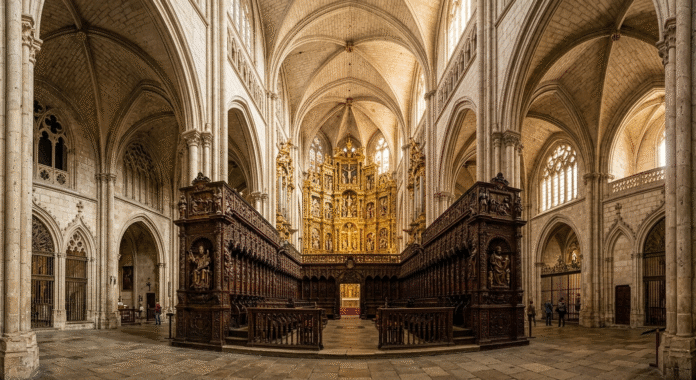
Toledo Cathedral (Catedral Primada)
This is the big one. One of Spain’s most important cathedrals and one of the finest Gothic buildings in Europe.
Entry: €12.50 (includes audio guide)
Hours: Monday-Saturday 10:00-18:30, Sunday 14:00-18:30
Time needed: 1-1.5 hours minimum
The exterior is impressive, but the interior is where your jaw drops. The main altarpiece rises nearly 30 meters high, covered in gilded wood carvings depicting biblical scenes. The choir stalls feature intricate carvings. The Treasury holds a massive 16th-century monstrance weighing over 200 kilos of gold and silver.
Don’t miss the Transparente – a baroque masterpiece where light streams through a hole in the ceiling to illuminate the altar. It’s theatrically dramatic and unlike anything else you’ll see.
The cathedral also has works by El Greco, Goya, Titian, and other masters in its sacristy museum.
Pro tip: Go early (open at 10 AM) or late (after 5 PM) to avoid the worst crowds. The cathedral is popular with tour groups mid-day.
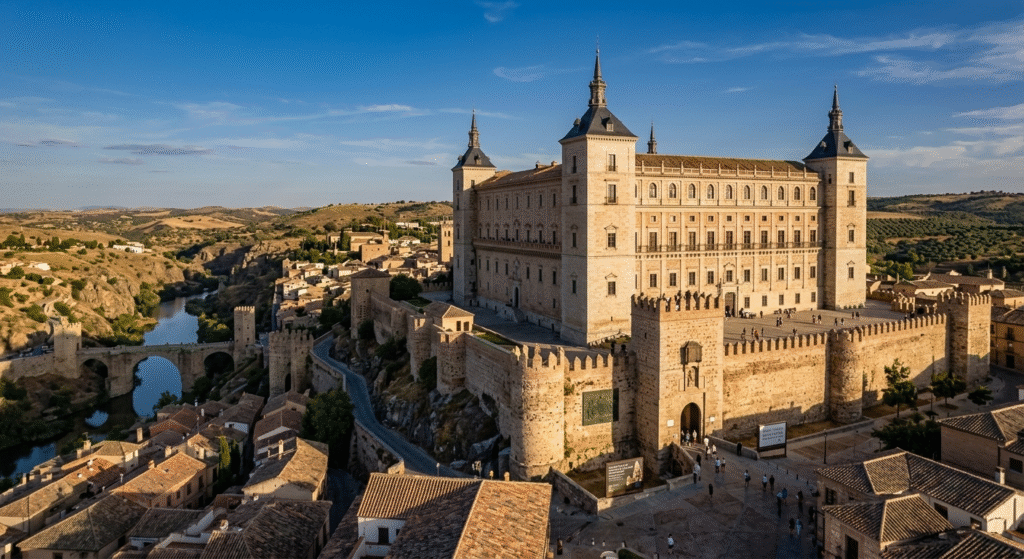
Alcázar of Toledo
The massive fortress dominating Toledo’s skyline has been rebuilt multiple times over centuries. Currently houses the Army Museum.
Entry: €5 (free on Sundays)
Hours: 10:00-17:00 (closed Mondays)
Time needed: 1 hour
The building itself is architecturally impressive, and the views from the exterior terraces are excellent for photos. The Army Museum inside is thorough if you’re into military history, but honestly, the main draws are the building and the views.
Skip if: You’re not into military museums and have limited time. The exterior is photogenic from below, and you can see the building without entering.
Synagogue of Santa María la Blanca
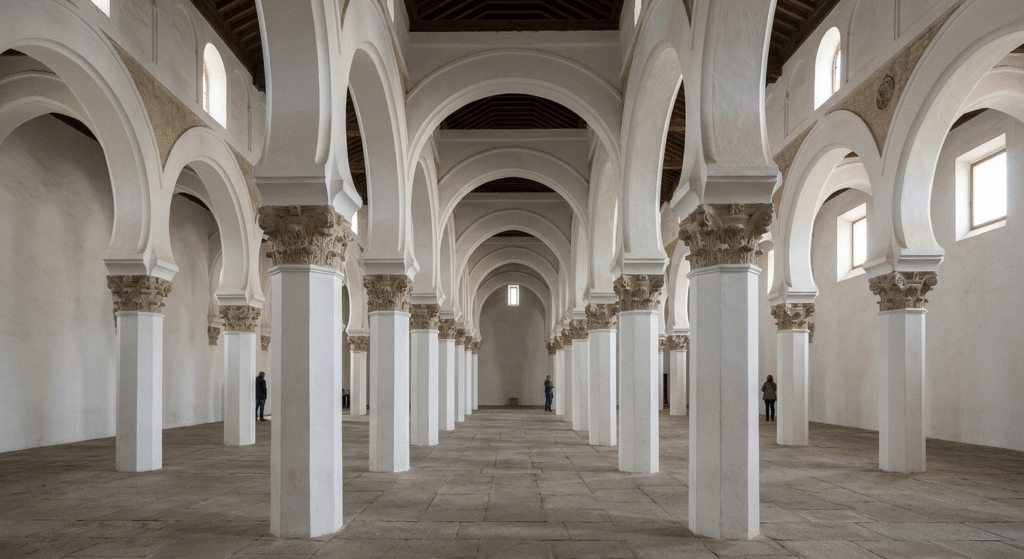
Originally built as a synagogue in 1180, later converted to a church – it’s one of the oldest synagogue buildings in Europe still standing.
Entry: Included in Tourist Bracelet, or €3 standalone
Time needed: 20-30 minutes
The interior is stunning – white horseshoe arches creating a forest of columns, blending Islamic architectural style with its Jewish origins. The peaceful, elegant space feels timeless.
Synagogue del Tránsito & Sephardic Museum
Another historic synagogue, this one houses a museum about Spain’s Jewish heritage.
Entry: €3 (free Saturday afternoons and Sunday mornings)
Time needed: 45 minutes
The synagogue’s ornate mudéjar decoration on the walls is beautiful. The attached museum tells the story of Spain’s Sephardic Jews – their contributions, persecution, and eventual expulsion in 1492. It’s moving and educational.
Church of Santo Tomé
Home to El Greco’s masterpiece “The Burial of the Count of Orgaz.”
Entry: Included in Tourist Bracelet, or €3 standalone
Time needed: 20 minutes
You come here for one painting. But what a painting. El Greco’s “Burial of the Count of Orgaz” is extraordinary – heaven and earth depicted in one canvas, with the count’s burial below and his soul’s reception in heaven above. The artist included his own son in the painting, making it personal as well as spiritual.
The church gets crowded because everyone wants to see this painting. Visit early or late if possible.
Monastery of San Juan de los Reyes
A stunning Franciscan monastery built by the Catholic Monarchs Isabella and Ferdinand.
Entry: Included in Tourist Bracelet, or €3 standalone
Time needed: 30-40 minutes
The cloister is the highlight – gorgeous Gothic architecture with intricate stonework. Look up at the exterior walls to see chains hanging – these were worn by Christian prisoners freed from Granada, hung here as symbols of reconquest victory.
Mosque of Cristo de la Luz
A tiny 10th-century mosque, one of the oldest Muslim buildings in Spain.
Entry: Included in Tourist Bracelet
Time needed: 15 minutes
It’s small but significant – one of the few remaining examples of Moorish architecture in Toledo. The horseshoe arches and the structure itself transport you back to Islamic Spain.
The Jewish Quarter (Judería)
Not a single sight but an entire neighborhood of narrow, winding streets.
Entry: Free – it’s a neighborhood
Time needed: 1+ hours just wandering
This is where Toledo’s Jewish community lived before the 1492 expulsion. Today it’s atmospheric, photogenic, and full of artisan shops selling Toledo’s famous damascene work (gold inlay on black steel). Don’t buy the first thing you see – prices vary wildly, and quality matters.
Get deliberately lost here. The maze-like streets, hidden courtyards, and unexpected viewpoints are part of the magic.
The Mirador del Valle (Valley Viewpoint)
Location: Across the river, opposite side from the old town
How to get there: 15-minute walk from town, or taxi/bus
Best time: Morning for light on the city
This is THE postcard view of Toledo – the entire medieval city rising from the hill, surrounded by the Tagus River loop. If you’ve seen photos of Toledo, they were probably taken from here.
Important: Go in the morning. Afternoon light puts the city in shadow. If you’re arriving on the morning train, consider going here first with your taxi from the station, then having the driver take you into town after photos.
Where to Eat in Toledo
Toledo has its own culinary traditions, and you should try them.
Traditional Toledo Dishes:
Carcamusas: A hearty stew with pork, tomatoes, and peas
Venison (venado) and partridge (perdiz): Game meats are specialties here
Marzipan (mazapán): Toledo is famous for it. Buy some to take home.
Restaurant Recommendations:
Adolfo Colección (upscale, modern Spanish)
Innovative cuisine in a beautiful historic building. Expensive but excellent. Reserve ahead.
La Orza (traditional Castilian)
Solid traditional food, good atmosphere, reasonable prices. Popular with locals and tourists alike.
Taberna El Botero (casual tapas)
Great for a more relaxed meal. Good tapas selection and local wines.
Bar Ludeña (local institution)
Tiny bar that’s been here forever. Standing room only, cheap, authentic. Get the carcamusas.
Lunch timing: Remember, Spaniards eat late. Lunch is 2-4 PM, many kitchens close between lunch and dinner (roughly 4-8 PM). Plan accordingly.
Tourist trap warning: Restaurants right in Plaza de Zocodover are overpriced and mediocre. Walk a few streets away for better value and quality.
Shopping: Damascus Steel & Marzipan
Toledo has been famous for two things for centuries:
Damascene Work (Damasquinado)
The art of inlaying gold or silver wire into darkened steel. You’ll see it everywhere – jewelry, decorative plates, swords.
Where to buy: Many shops throughout the Jewish Quarter and near the cathedral. Quality and prices vary dramatically.
Tips:
- Handmade vs. machine-made matters (handmade costs more but lasts forever)
- Smaller items make better souvenirs (jewelry, keychains)
- Bargaining is sometimes possible, especially for larger purchases
Marzipan
Toledo’s marzipan is legendary. Several centuries-old shops make it fresh.
Best places:
- Santo Tomé (the most famous, multiple locations)
- Confitería La Campana (locals’ favorite)
Buy a box to take home. It keeps well and makes great gifts.
Photography Tips for Toledo
Best views:
- Mirador del Valle (morning only)
- From Alcázar terrace
- Puente de San Martín bridge (looking back at city)
Best streets for photos:
- Narrow alleys in Jewish Quarter
- Calle de Santo Tomé
- Plaza del Ayuntamiento (town hall square)
Golden hour: Late afternoon light is beautiful on Toledo’s honey-colored stone.
Drone warning: Drones are restricted in the old town. Don’t risk it.
Toledo vs. Segovia vs. El Escorial: Which Day Trip?
All three are excellent, but they offer different experiences:
Toledo:
- Most comprehensive (entire medieval city)
- Best for history lovers
- Most time-consuming (needs full day)
- Can feel overwhelming (so much to see)
- More compact and manageable
- Spectacular specific sights (aqueduct, castle)
- Better food scene (cochinillo!)
- Easier if you have limited time
- Single massive monument vs. whole city
- More focused visit
- Austere and impressive
- Good for architecture/Habsburg history fans
If you only have time for one: Toledo offers the most complete medieval Spanish city experience.
If you have time for two: Toledo + Segovia gives you variety.
If you’re doing all three: Space them out. Don’t try to do multiple in one day (I’ve seen people try – they’re miserable).
Practical Tips for Your Toledo Visit
Getting Lost is Part of the Experience
Toledo’s medieval streets were designed to confuse invaders. They’ll confuse you too. Embrace it. Some of the best discoveries come from taking wrong turns.
Navigation tip: The cathedral tower is visible from most of the old town. If you’re lost, look up, find the tower, and navigate from there.
Wear Comfortable Shoes
Cannot stress this enough. Toledo is all cobblestones and hills. Your feet will hurt if you wear the wrong shoes. This is not the place for cute but uncomfortable footwear.
Crowds
Worst times: Weekends, especially Saturdays. Summer months (July-August). Middle of the day (noon-3 PM).
Best times: Weekday mornings. Late afternoons after tour groups leave. Off-season (November-March, excluding holidays).
Strategy: Hit the cathedral and Santo Tomé early. Do the wandering/shopping/lunch during peak tourist hours. Return to secondary sights later.
Skip Toledo if…
- You only have 2 days in Madrid (focus on the city itself)
- You have severe mobility issues (those hills and cobblestones are challenging)
- You hate crowds and can’t go on a weekday
Don’t Skip Toledo if…
- You have 3+ days in Madrid
- You love history and architecture
- You want the most impressive day trip
- You’re interested in Spain’s Jewish or Islamic heritage
- You enjoy medieval cities
The Puy du Fou Show
Your current post mentions “Sueño de Toledo” by Puy du Fou. This is a separate evening show (not in the historic center) that recreates Toledo’s history through theatrical performance.
Duration: 70 minutes
Season: Typically March-November (check schedule)
Cost: €20-35 depending on seating
It’s impressive and well-produced, but adds several hours to your day trip. Only consider if you’re staying overnight in Toledo or have a full day and evening free.
Final Thoughts
Toledo is one of those places that exceeds expectations. You arrive thinking “okay, medieval city, some churches, should be nice” and you leave thinking “that was one of the most impressive places I’ve ever seen.”
The density of history is remarkable. Christian, Jewish, and Islamic heritage layered together. El Greco’s artistic legacy. Medieval streets that transported me back centuries. The weight of being in a place where so much happened over so many centuries.
Yes, it gets crowded. Yes, there are tourist traps. Yes, you’ll get lost in the streets. But that’s all part of what makes Toledo extraordinary.
The key is giving yourself enough time. Don’t rush. Take that long Spanish lunch. Wander the Jewish Quarter without a map. Sit in a plaza and watch the world go by. Buy the marzipan. Get the Tourist Bracelet and see the sights at your own pace.
And whatever you do, don’t try to see everything. You can’t. Even locals who’ve lived there for decades keep discovering new corners, new stories, new perspectives on their city’s incredible history.
Visit Toledo when you have time to breathe. When you can linger over lunch and not worry about catching the last train. When you can get deliberately lost and not care.
Because Toledo isn’t a checklist of monuments. It’s an experience. A journey through Spain’s layered history. A reminder that different cultures can create something beautiful together.
Go slowly. Look up at the architecture. Peek into courtyards. Try the carcamusas. Buy the damascene jewelry. Get lost in the maze.
And when you finally board that train back to Madrid, you’ll already be planning your return visit. Because one day in Toledo? It’s enough to fall in love. But it’s nowhere near enough to see everything.
That’s the magic of it.
FAQs:
Q: How do I get to Toledo from Madrid? A: Take the AVE high-speed train from Madrid Atocha station to Toledo (30-33 minutes, €13-22). Trains run roughly every hour. From Toledo station, take a taxi (€5-7), bus line 5 or 12 (€1.40), or walk 20 minutes uphill to the old town.
Q: How long does the train take from Madrid to Toledo? A: The AVE high-speed train takes just 30-33 minutes from Madrid Atocha to Toledo. It’s one of the easiest and fastest day trips from Madrid, making Toledo very accessible for a full day visit.
Q: Is Toledo worth visiting from Madrid? A: Absolutely! Toledo is one of Spain’s most impressive UNESCO World Heritage cities, featuring a complete medieval cityscape with Christian, Jewish, and Islamic heritage. The Cathedral, El Greco paintings, Jewish Quarter, and atmospheric medieval streets make it essential if you have 3+ days in Madrid.
Q: What is the Tourist Bracelet in Toledo? A: The Pulsera Turística (Tourist Bracelet) costs €14 and includes entry to 7 monuments: Church of Santo Tomé (El Greco painting), Santa María la Blanca synagogue, San Juan de los Reyes monastery, Mosque of Cristo de la Luz, and three other churches. It’s excellent value if visiting 3+ sites.
Q: How much time do you need in Toledo? A: Minimum 6-7 hours for a rushed visit. We recommend 8-9 hours (full day) for a comfortable pace including Cathedral, Tourist Bracelet sights, Jewish Quarter wandering, and proper Spanish lunch. Some visitors stay overnight to avoid rushing.
Q: What should I see in Toledo? A: Must-sees include Toledo Cathedral (€12.50, Spain’s Gothic masterpiece), Santo Tomé church (El Greco’s “Burial of Count of Orgaz”), Santa María la Blanca synagogue, Jewish Quarter streets, and Mirador del Valle viewpoint. The Tourist Bracelet (€10) covers multiple sights efficiently.
Q: Where should I eat in Toledo? A: Try traditional Toledo dishes like carcamusas (pork stew), venison, or partridge. Good restaurants include Adolfo Colección (upscale), La Orza (traditional Castilian), Taberna El Botero (casual), and Bar Ludeña (local institution). Eat lunch Spanish-style at 2-4 PM.
Q: Is Toledo better than Segovia? A: They’re different experiences. Toledo offers a complete medieval city with more to see (entire UNESCO old town) but needs a full day and can feel overwhelming. Segovia is more compact with spectacular specific sights (aqueduct, castle) and better for limited time. Both are excellent – choose based on your interests and available time.
Q: How much does it cost to visit Toledo? A: Train from Madrid: €13-22 round trip. Cathedral: €12.50. Tourist Bracelet: €10 (covers 7 monuments). Alcázar: €5. Lunch: €15-30. Total day trip: €50-80 per person depending on choices. It’s moderate pricing compared to other European UNESCO cities.
Q: When is the best time to visit Toledo? A: Weekday mornings have fewer crowds than weekends. Spring (April-May) and fall (September-October) offer pleasant weather and manageable tourist numbers. Summer (July-August) gets hot and crowded. Visit Cathedral and Santo Tomé early, do wandering during midday tourist peak, return to other sights later.

 11°C
11°C - Temperature
- Precipitation
- Rain Chance
- Wind
- Humidity
- Pressure