Last Updated on May 6, 2026 by Jaime
By Jaime · Mars 9, 2026 · 9 min read
Walk down Calle de las Huertas in Madrid’s Barrio de las Letras and look down. The cobblestones themselves tell stories – literally. Quotes from Spain’s greatest writers are carved into the stones beneath your feet: Cervantes reflecting on love, Lope de Vega musing on human nature, Quevedo being characteristically sardonic.
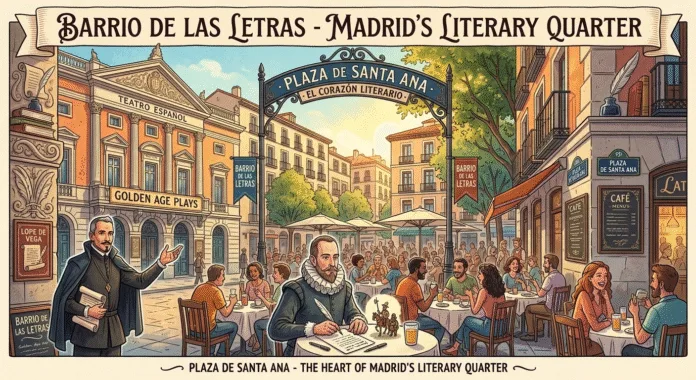
This is Madrid’s Literary Quarter, where the Spanish Golden Age of literature was written, where Cervantes penned Don Quixote just streets away from his literary rival Lope de Vega, where Hemingway later drank during the Spanish Civil War, and where today’s Madrid blends literary history with a vibrant cultural scene.
I’ve spent countless afternoons in Barrio de las Letras – sipping vermut in Plaza de Santa Ana while watching actors from Teatro Español taking breaks between rehearsals, browsing second-hand bookshops that smell gloriously of old paper, eating tapas in century-old bars where Hemingway once stood, discovering art galleries hidden in converted Golden Age mansions.
This neighborhood doesn’t shout about its literary heritage the way tourist areas might. It just quietly exists, beautiful and cultured and proud, letting you discover its secrets at your own pace. The quotes carved in cobblestones? Easy to miss if you’re not looking down. Cervantes’ tomb? In a convent most tourists walk past without noticing. The bar where Hemingway drank? Looks like a dozen other traditional Madrid bars from outside.
But once you know where to look, Barrio de las Letras reveals itself as one of Madrid’s most captivating neighborhoods – a place where literature isn’t just history, it’s woven into the very streets.
Understanding Barrio de las Letras
Location: Heart of Madrid, between Sol and the Prado Museum
Boundaries: Roughly Carrera de San Jerónimo (north), Paseo del Prado (east), Calle Atocha (south), Calle de la Cruz (west)
Also called: Huertas (after Calle de las Huertas, the main street)
Why “Literary Quarter”?
In the 16th and 17th centuries – Spain’s Golden Age (Siglo de Oro) – this neighborhood was Madrid’s bohemia. Writers, actors, and artists lived here because it was near the corrales de comedias (open-air theaters) where their plays were performed.
Miguel de Cervantes lived and died here. Lope de Vega (Spain’s Shakespeare) lived here and is buried in the neighborhood. Quevedo, Góngora, Tirso de Molina – the giants of Spanish literature all walked these streets.
Today’s character:
Barrio de las Letras is Madrid’s perfect mix: literary heritage meets contemporary culture, tourists blend with locals, traditional taverns neighbor trendy cocktail bars, and you can go from browsing a 17th-century literary museum to listening to live jazz in the same afternoon.
It’s less polished than Salamanca, less overtly touristy than Sol, less alternative than Malasaña. It’s cultured without being stuffy, historic without being museumified, lively without being overwhelming.
The Literary Sites You Shouldn’t Miss
Casa-Museo Lope de Vega
What it is: The actual house where Lope de Vega (1562-1635) lived his last 25 years.
Lope de Vega was prolific beyond belief – he wrote around 1,500 plays (about 500 survive), making Shakespeare look lazy. He was also charismatic, complicated, and lived a dramatic life involving duels, secret relationships, and eventually becoming a priest.
His house is beautifully preserved with period furniture, his study where he wrote, the garden he tended, and rooms arranged as they would have been in the 1600s.
Visiting:
- Address: Calle Cervantes 11 (yes, he lived on a street named for his contemporary/rival)
- Entry: €3 (guided tours in Spanish only, but worth it even with limited Spanish)
- Hours: Tuesday-Sunday 10 AM – 6 PM, closed Mondays
- Time needed: 45 minutes for the guided tour
Pro tip: Book ahead online as tour groups are limited to 15 people.
Convento de las Trinitarias Descalzas: Cervantes’ Tomb
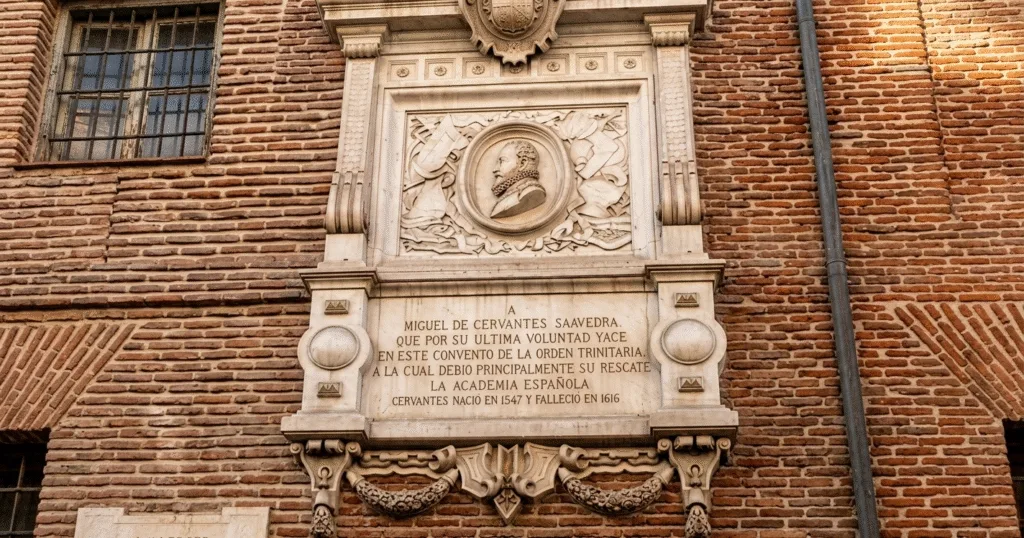
What it is: The convent where Miguel de Cervantes (1547-1616), author of Don Quixote, is buried.
Cervantes lived his final years in poverty in this neighborhood, dying in a house on Calle León (exact location debated). He was buried at this Trinitarian convent, though his remains were lost for centuries until being rediscovered in 2015.
Visiting:
- Address: Calle Lope de Vega 18 (just around the corner from Lope de Vega’s house – they lived that close!)
- Entry: You can’t enter the convent itself (it’s a functioning monastery), but you can see the commemorative plaque outside marking where Cervantes’ remains lie.
- Time needed: 5 minutes to pay respects
Worth knowing: The church of San Sebastián (Calle Atocha 39) is where both Cervantes and Lope de Vega had their funerals. It’s still open for worship.
The Quotes in the Cobblestones
What they are: Literary quotes carved into the pavement throughout the neighborhood.
As you walk (especially along Calle de las Huertas), look down. The gray cobblestones have bronze letters inlaid with quotes from Spanish writers – Cervantes, Lope de Vega, Calderón, Quevedo, more modern writers like García Lorca.
“En un lugar de La Mancha, de cuyo nombre no quiero acordarme…” (In a place in La Mancha, whose name I do not wish to remember…) – the opening line of Don Quixote – is somewhere on Calle Cervantes.
Experiencing them: Just walk. Look down. Read what you can. Even if your Spanish isn’t perfect, seeing literature literally under your feet is moving.
Street Names as Literary Homage
Notice the street names: Calle Cervantes, Calle Lope de Vega, Calle Quevedo, Calle Góngora. The entire neighborhood is a map of Spanish Golden Age literature.
Plaza de Santa Ana: The Heart of the Barrio
This rectangular plaza is Barrio de las Letras’ living room – where locals and visitors gather, where terraces fill with people drinking wine or beer, where the neighborhood’s energy concentrates.
What’s here:
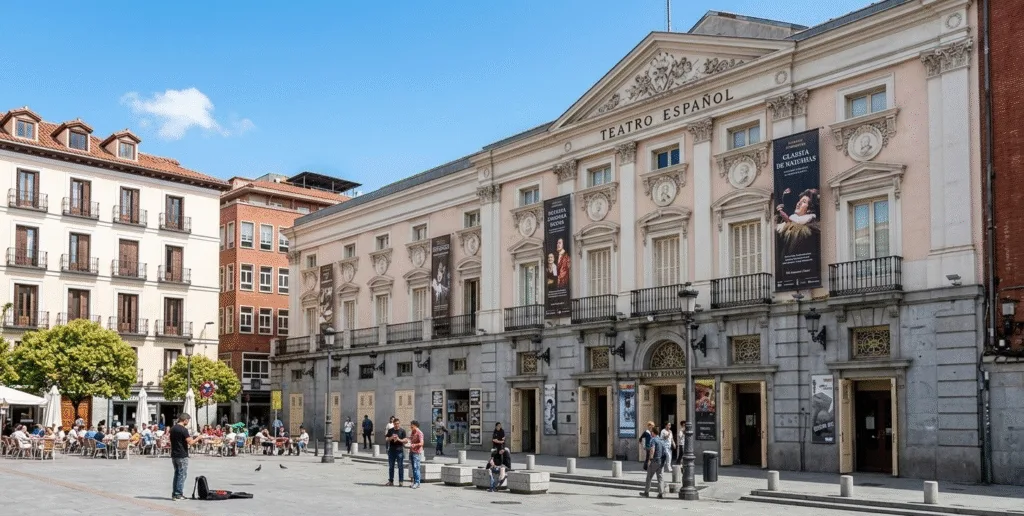
Teatro Español: One of Europe’s oldest theaters (founded 1583), rebuilt multiple times. Still stages classic Spanish plays and contemporary theater. The current building dates from 1895 with a beautiful facade.
Hotel ME Madrid: Modern glass building that’s architecturally controversial (some hate it, some love the contrast with historic surroundings). The hotel is close but has a rooftop bar with incredible city views.
Statue of Federico García Lorca: The 20th-century poet and playwright, murdered during the Spanish Civil War, honored in bronze.
Statue of Calderón de la Barca: Golden Age playwright honored with statue outside Teatro Español.
Countless terraces: The plaza’s edges are lined with bar terraces. Some are tourist traps (avoid the ones with picture menus), but mixed among them are gems where locals actually drink.
When to go: Afternoons for coffee and people-watching, evenings for vermouth or wine. Sunday afternoons get particularly lively.
Cultural Venues & Museums
Ateneo de Madrid
What it is: A prestigious cultural institution since 1835 – somewhere between a members’ club, library, and cultural center.
This is where Madrid’s intellectuals have debated, given lectures, and shaped Spanish thought for nearly 200 years. The building itself is gorgeous – ornate reading rooms, painted ceilings, endless bookcases.
Visiting:
- Address: Calle del Prado 21
- Entry: They sometimes allow visitors for specific exhibitions or events. Check their schedule.
CaixaForum Madrid (nearby)
While not technically IN Barrio de las Letras, it’s on the eastern border near the Prado.
What it is: Contemporary art space in a stunning vertical garden building.
- Entry: Usually free or very affordable
- Exhibitions: Rotating international contemporary art
Where to Eat & Drink in Barrio de las Letras
The neighborhood has everything from century-old taverns to modern fusion restaurants.
Traditional Taverns with History
Casa Alberto (Calle de las Huertas 18)
Madrid’s oldest tavern (since 1827), supposedly built on the site where Cervantes once lived. Traditional Spanish food, excellent vermouth, croquetas that locals line up for.
The place has history dripping from the walls – old tiles, wooden bar, that lived-in patina you can’t fake. Stand at the bar for tapas or sit down for full meals (cocido madrileño on Thursdays!).
La Venencia (Calle Echegaray 7)
Sherry bar that’s barely changed since opening in 1929. Hemingway drank here during the Spanish Civil War.
Rules: No photos. Cash only. Sawdust on floor. They pour sherry from barrels and write your tab in chalk on the bar. It’s atmospheric as hell.
Only serves sherry and cheap vermouth. Order whatever the bartender recommends and some olives or mojama (cured tuna). Embrace the authenticity.
Cervecería Alemana (Plaza de Santa Ana 6)
Another Hemingway haunt, though more touristy now. Good for beer and tapas on the plaza. The terrace is perfect for people-watching.
Viva Madrid (Calle Manuel Fernández y González 7)
Beautiful tiled bar from 1856. The ceramic tiles alone are worth seeing – they’re stunning. Good for tapas and traditional atmosphere.
Modern & Trendy
Lateral (Plaza de Santa Ana 12)
Contemporary tapas, good wine list, reliable quality. The tuna tartare and Iberian ham croquetas are excellent.
Taberna La Daniela (Calle General Pardiñas – has several locations)
Modern take on traditional cocido madrileño (Madrid’s chickpea stew). If you want to try this classic dish, this is a good place.
International Options
Yugo The Bunker (Calle Luis de Góngora)
Michelin-starred Japanese restaurant. Expensive but exceptional if you want a splurge.
MACAO (Plaza de la Lealtad)
Madrid-Asian fusion in a beautiful space. The weekend brunch is popular.
Coffee & Sweets
Brown Bear Bakery (Calle Lope de Vega 23)
American-style bakery with excellent coffee, carrot cake, brownies. Rare find in Madrid.
Chocolatería Valor (Plaza de Santa Ana)
Hot chocolate and churros. Tourist-oriented but good quality.
Nightlife & Entertainment
Barrio de las Letras has excellent nightlife – from jazz bars to flamenco shows to cocktail lounges.
Live Music & Jazz
Café Central (Plaza del Ángel 10)
One of Europe’s best jazz clubs. Intimate, excellent acoustics, top-tier musicians. Entry usually €8-15 depending on artist.
Arrive early for a table near the stage. They serve dinner but people mostly come for the music.
Café Berlin Jazz (Costanilla de los Ángeles)
Smaller jazz venue, cozy atmosphere, free entry most nights. Good for discovering emerging artists.
Cocktail Bars
Salmon Guru (Calle Echegaray 21)
Creative cocktail bar from renowned bartender Diego Cabrera. Inventive drinks, playful presentations. Reservations recommended on weekends.
1862 Dry Bar (Calle del Prado 2)
Speakeasy-style cocktail bar specializing in gin & tonics. Over 150 gins. If you like G&Ts, this is your place.
Flamenco Shows
Cardamomo (Calle Echegaray 15)
Tablao flamenco with dinner shows and late-night performances. More intimate than larger tourist venues.
Villa Rosa (Plaza de Santa Ana 15)
Beautiful tiled building that’s been doing flamenco shows for decades. Dinner + show packages available.
Reality check: All tablao flamenco in Madrid are somewhat tourist-oriented and expensive (€35-60+ for show + drink). But the performances are authentic and the artists are skilled. If you want to see flamenco, this neighborhood has good options.
Theaters
Teatro Español (Plaza de Santa Ana)
Classic Spanish theater, contemporary plays, occasional musicals. Tickets €15-30, cheaper than London/NYC theater.
Teatro Calderón (Calle Atocha 18)
Musicals, concerts, larger productions. Spanish versions of Broadway shows.
Shopping in Barrio de las Letras
The neighborhood isn’t a major shopping destination, but it has character.
Bookshops
Miguel Miranda Librería (Calle de las Huertas)
Second-hand bookshop with charm. Mostly Spanish books but browsing is a pleasure.
La Central (Calle del Prado)
Modern bookshop with art books, literature, café inside.
Art Galleries
Several small galleries dot the neighborhood, especially around Calle Alameda. Browse on a weekend afternoon – many are free to enter.
Specialty Shops
Guitarrería (luthier workshops)
The neighborhood has traditional guitar makers. Even if not buying, watching craftspeople work is fascinating.
Practical Tips for Visiting Barrio de las Letras
How to Get There
Metro:
- Antón Martín (Line 1) – south side of neighborhood
- Sol (Lines 1, 2, 3) – northwestern corner, 5-minute walk to Plaza de Santa Ana
- Atocha (Line 1) – southeast corner near train station
Walking: From Puerta del Sol, it’s a 5-minute walk east. From Prado Museum, 5-minute walk north.
When to Visit
Best times:
- Weekday afternoons: Quiet, good for museums and walking
- Weekend evenings: Lively atmosphere, terraces full
- Sunday afternoon: Plaza de Santa Ana at its most animated
Avoid: Late nights can get rowdy with bar crowds, especially around Calle de las Huertas. Not dangerous, just loud.
Time Needed
- Quick visit: 2-3 hours (Lope de Vega house, walk the streets, drink in plaza)
- Half day: 4-5 hours (add lunch, more wandering, maybe a museum)
- Full day: Include museums nearby (Prado, Reina Sofía, Thyssen within 10-15 min walk)
Who Will Love Barrio de las Letras
Literature lovers: Obviously – this is literary pilgrimage territory
Culture seekers: Theater, art, music all accessible here
Foodies: Mix of traditional and modern restaurants
Those wanting central location without Sol crowds: Quieter than Puerta del Sol but equally convenient
Jazz & music lovers: Excellent live music scene
Who Might Skip It
Those with limited time: If you only have 2 days in Madrid, prioritize La Latina or main sights over this
Non-readers: The literary significance might not resonate if you’re not into books
Seeking nightclub scene: Better options in Malasaña or Chueca
Combining Barrio de las Letras with Other Areas
Perfect combinations:
Museum day: Prado in morning → lunch in Barrio de las Letras → Reina Sofía in afternoon
Cultural full day: Retiro Park morning walk → Prado Museum → lunch in Barrio de las Letras → Lope de Vega house → jazz at Café Central
Literary walk: Start at Ateneo → walk through Barrio de las Letras → end at Círculo de Bellas Artes rooftop for views
Final Thoughts
Barrio de las Letras won’t announce itself with flashy tourist attractions. It’s subtle, cultured, and rewards those who take time to discover its layers.
Walk these streets and you’re walking where Spain’s greatest writers walked. Stand in Lope de Vega’s study and you’re in the room where hundreds of plays were written. Sip vermouth in Casa Alberto and you’re drinking where generations of madrileños have drunk. Read the quotes in the cobblestones and you’re literally walking on Spanish literature.
But it’s not just a museum neighborhood. It’s alive – with jazz musicians playing nightly, actors rehearsing at Teatro Español, bookshop owners recommending hidden treasures, bartenders pouring sherry from barrels, locals arguing about literature over wine.
This is Madrid at its most cultured and its most authentic. Not the polished luxury of Salamanca or the calculated cool of Malasaña, but something more genuine – a neighborhood that knows its worth and doesn’t need to prove anything.
Visit Lope de Vega’s house. Pay respects at Cervantes’ tomb. Read the quotes in the stones. Have vermouth in Plaza de Santa Ana. Listen to jazz at Café Central. Browse second-hand bookshops. Let the neighborhood reveal itself slowly.
Because the best things in Barrio de las Letras – like the best literature – reward patience, attention, and a willingness to look beneath the surface.
FAQs
Barrio de las Letras (Literary Quarter) is Madrid’s historic neighborhood where Spanish Golden Age writers lived in the 16th-17th centuries, including Cervantes, Lope de Vega, and Quevedo. Today it features literary museums, quotes carved in cobblestones, Plaza de Santa Ana, jazz clubs, and traditional taverns blending history with vibrant culture.
Miguel de Cervantes lived his final years in Barrio de las Letras, dying in 1616 in a house on Calle León. He’s buried at Convento de las Trinitarias Descalzas (Calle Lope de Vega 18). Casa Alberto tavern (Calle Huertas 18) supposedly sits on another site where Cervantes lived.
Yes, especially for culture lovers. It offers Lope de Vega’s preserved house museum (€3), Cervantes’ tomb, literary quotes in cobblestones, Plaza de Santa Ana terraces, Europe’s best jazz club (Café Central), Hemingway bars, and Teatro Español. Perfect for 2-5 hours exploring literary Madrid combined with Prado museums nearby.
Must-sees include Casa-Museo Lope de Vega (writer’s house), Convento de las Trinitarias (Cervantes’ tomb), Plaza de Santa Ana (terraces and Teatro Español), literary quotes in Calle Huertas cobblestones, Casa Alberto tavern (since 1827), La Venencia sherry bar (Hemingway’s haunt), and Café Central jazz club.
Traditional: Casa Alberto (oldest tavern, croquetas), La Venencia (sherry and atmosphere), Cervecería Alemana (Hemingway bar). Modern: Lateral (contemporary tapas), Salmon Guru (creative cocktails). Nightlife: Café Central (jazz), Villa Rosa (flamenco). Avoid tourist traps with picture menus in Plaza de Santa Ana.
Metro: Antón Martín (Line 1, south side), Sol (Lines 1,2,3, 5-min walk northwest), or Atocha (Line 1, southeast). It’s 5 minutes walk east from Puerta del Sol, 5 minutes north from Prado Museum. Very central and walkable from most Madrid sights.
Yes! Casa-Museo Lope de Vega (Calle Cervantes 11) is open Tuesday-Sunday 10 AM-6 PM, closed Mondays. Entry €3, guided tours in Spanish only (still worthwhile), limited to 15 people. Book online ahead. See his study, period furniture, garden where Spain’s most prolific playwright lived 1610-1635.
“Barrio de las Letras” translates to “Neighborhood of Letters” or “Literary Quarter.” Named because Spain’s greatest Golden Age (Siglo de Oro) writers lived here in the 16th-17th centuries when it was near the corrales de comedias (open-air theaters) where their plays were performed.
Very safe. It’s central Madrid with good lighting, police presence, and constant foot traffic. Late nights around Calle Huertas can get loud with bar crowds but not dangerous. Normal city precautions apply. Safer than Lavapiés, similar to La Latina.
They’re the same area with different names. “Barrio de las Letras” is the official literary/cultural name. “Huertas” (named after Calle de las Huertas, the main street) is what many locals call it. Both names are used interchangeably.

 15°C
15°C