Updated: April 2026
Let me be upfront about something before we start.
If you’ve read other guides about attending an Atlético de Madrid match — including an older version of this one — you may have seen references to the Vicente Calderón stadium. That stadium was demolished in 2020. It no longer exists. Atlético de Madrid has played at the Civitas Metropolitano since the 2017-18 season, and it is one of the finest football grounds in Europe.
Now that we’ve cleared that up, let’s get you to the right stadium.
Why Watching Atlético de Madrid is a Different Experience to Any Other Madrid Club
Madrid has two giants. Real Madrid plays at the Bernabéu and attracts a global, tourist-heavy crowd. Atlético Madrid plays at the Metropolitano and attracts Madrileños. That distinction matters more than you might think.
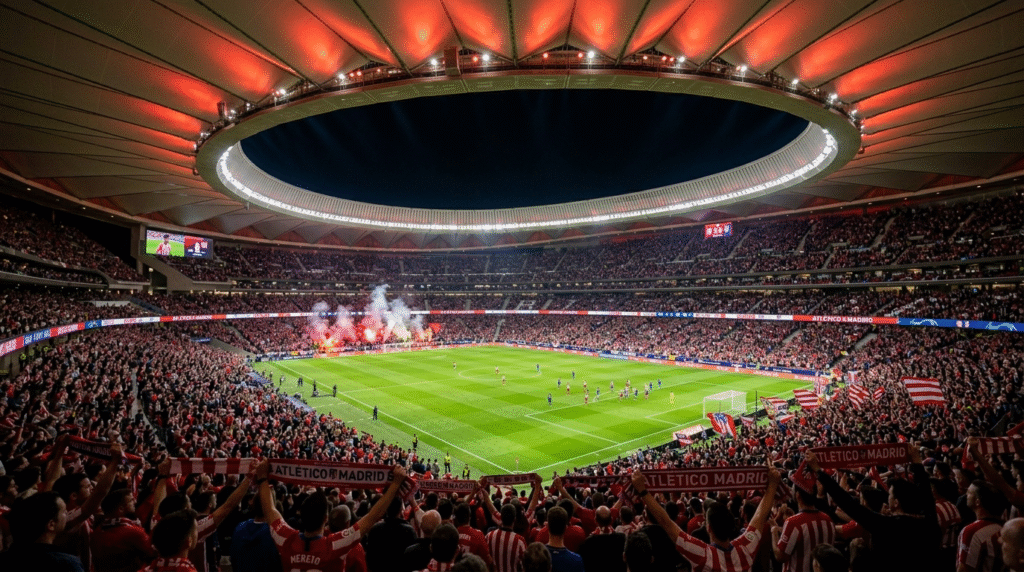
The Metropolitano atmosphere is raw, loud, and deeply local. The Frente Atlético ultras — based in the lower south end — generate a wall of sound from the first minute. The songs are tribal and relentless. The emotion is real. When Atlético scores, the stadium doesn’t just cheer; it shudders.
This is not a sanitised experience. It’s proper, gritty, working-class Madrid football culture — and it is absolutely worth experiencing at least once.
The Stadium: Civitas Metropolitano
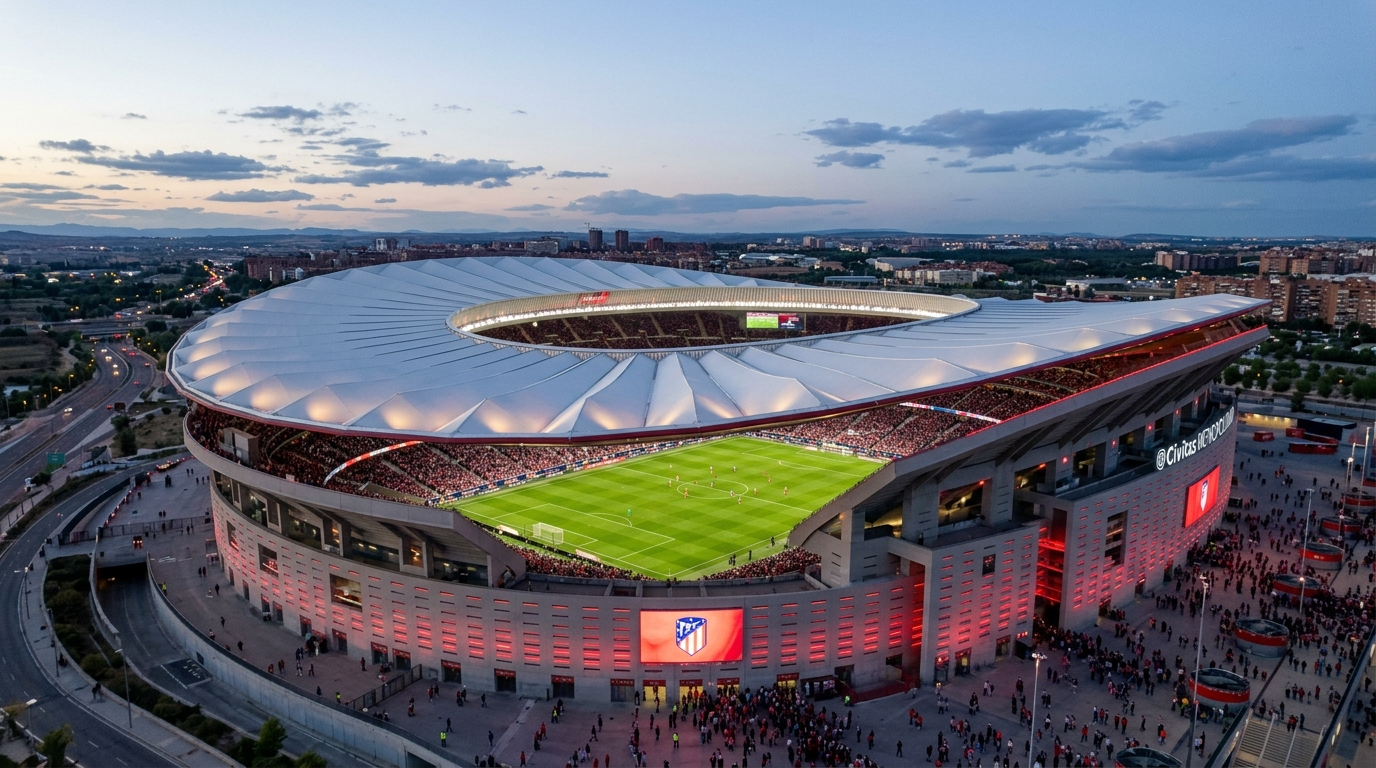
The Civitas Metropolitano (also known as the Riyadh Air Metropolitano due to sponsorship) opened in September 2017 and was immediately recognised as one of the most spectacular modern stadiums in the world. It hosted the UEFA Champions League Final in 2019.
Key facts you need:
- Capacity: approximately 68,000–70,000 seats
- Address: Avenida de Luis Aragonés, 4, 28022 Madrid
- Location: Northeast Madrid, about 10km from the city centre
- Opening year: 2017
The stadium is elliptical, steep, and designed to funnel noise downward onto the pitch — which is exactly why it sounds so intense from inside.
How to Buy Atlético de Madrid Tickets
This is the part that confuses most visitors, so pay attention.
The Official Channel: atleticodemadrid.com
The cleanest and safest way to buy tickets is directly through the official Atlético de Madrid website at atleticodemadrid.com. You will need to create a free account to complete your purchase. Tickets are delivered electronically to your phone — no paper required.
The honest reality: For most La Liga matches against mid-table opponents, tickets are available without much difficulty if you plan a few weeks ahead. For big matches — the Madrid derby against Real Madrid, Champions League knockout rounds, or clashes with Barcelona — availability is much tighter and you should aim to buy as early as possible.
La Liga tickets typically go on general sale 2–3 weeks before each match, but socios (club members) get early access. If you’re planning your trip around a specific match, check the fixture list and set a reminder for when sales open.
What to Avoid: Scalpers and Unofficial Platforms
Do not buy from street sellers outside the stadium, and be cautious with unofficial third-party platforms. While some reputable secondary marketplaces exist (and can be useful for sold-out matches), always verify you’re dealing with a legitimate reseller with a clear refund policy. Counterfeit tickets do circulate.
Ticket Prices: What to Expect
Pricing varies significantly depending on the match, the section, and whether it’s a domestic or European fixture. As a general guide for the 2025-26 season:
Regular La Liga match (non-derby):
- General admission: from €35–55 in upper tiers
- Mid-range lateral sections: €55–90
- Preferred side areas: €90–140+
High-demand matches (Madrid derby, Champions League):
- Prices rise sharply — expect to pay €100–250+ for decent seats, and significantly more on secondary markets
Best value tip: Midweek Copa del Rey fixtures and early-round Champions League group stage matches are where you’ll find the best combination of atmosphere and affordability. The hardcore fans show up regardless of the opponent.
Ticket Categories and Seating Guide
The Metropolitano is divided into roughly four main areas:
Gol Norte (North End): Behind one goal. Loud, atmospheric, packed with passionate fans. Best for atmosphere over comfort. Lower-priced.
Gol Sur (South End — Frente Atlético): This is where the ultras are. The singing and chanting starts here and never stops. If you want the most intense atmosphere in the ground, this is it — but it’s not for the faint-hearted or for young children.
Lateral Este & Lateral Oeste (East & West Sides): The main side stands. Better sightlines, slightly more relaxed atmosphere while still very vocal. These are the recommended sections for first-time visitors who want a balance of atmosphere and comfort.
Upper Tiers: Available in all sections. Cheaper, and the sightlines at the Metropolitano are still excellent from height due to the steep rake.
For Away Fans (Sector 300)
If you’re visiting Madrid and happen to support the visiting team, away supporters are housed in Sector 300, located in one section of the upper tier. Away ticket allocations are limited and are sold through the visiting club, not through Atlético’s website. Check your own club’s official ticketing channels well in advance.
Getting to Civitas Metropolitano
The club itself strongly recommends using public transport, and they’re right to — traffic around the stadium on matchdays is significant. Here’s how to get there:
Metro — The Best Option
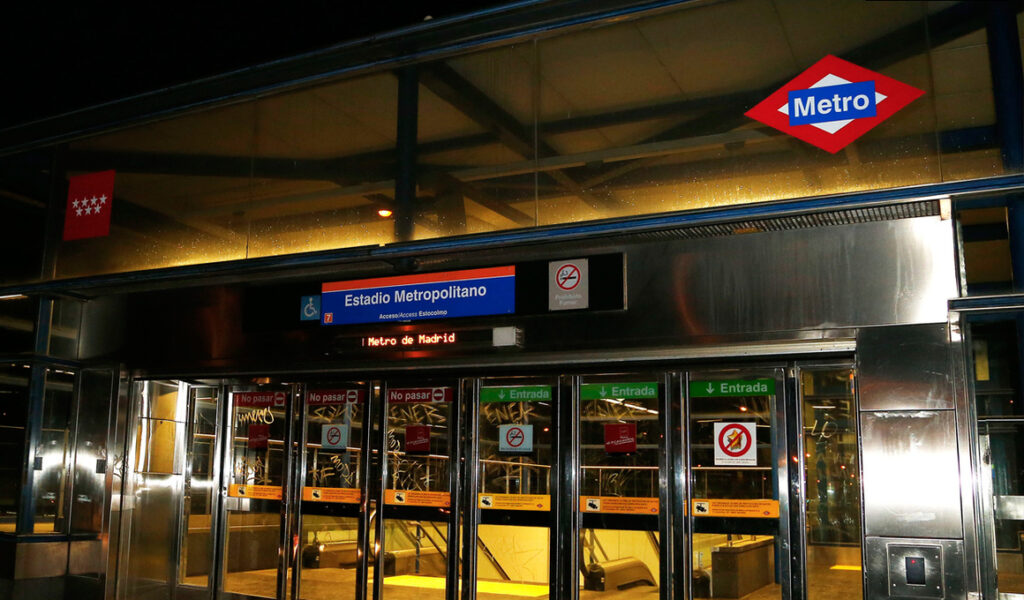
Take Line 7 (orange line) to Estadio Metropolitano station. This station exits directly to the stadium forecourt — you cannot miss it. Journey time from Sol (city centre) is approximately 20 minutes.
On matchdays, trains on Line 7 run more frequently and the platforms get very busy immediately after the final whistle. A useful local trick: don’t rush for the first train after the game. Wait 15 minutes in the stadium concourse or outside, let the first wave pass, and you’ll have a far more comfortable journey back.
Bus
Several bus lines serve the stadium area, including lines 28, 38, 140, and E2. These connect from different parts of the city but take longer than the metro in matchday traffic. The metro is almost always the better choice.
Taxi / Rideshare
Possible, but expect significant delays getting away from the stadium after the match. If you do take a taxi, agree to be dropped at least 10 minutes’ walk from the ground — drivers will often refuse to go closer due to road closures.
What to Eat and Drink Around the Metropolitano
Before the Match — Go Local, Not Tourist
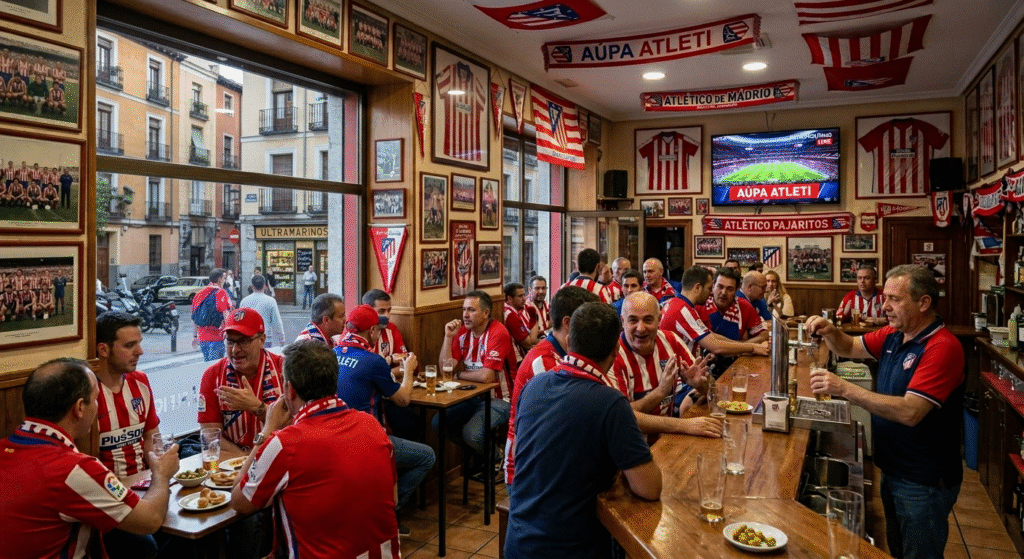
The area immediately surrounding the Metropolitano doesn’t have the dense tapas bar culture you’d find in central Madrid. For the best pre-match atmosphere, head to the bars near the Pajaritos bus terminal, about a 15-minute walk or one metro stop from the stadium. This is where you’ll find Atlético fans gathered for beers and tapas before every home game — proper local bars, not tourist pricing.
If you’re coming from the centre, consider having lunch or an early dinner in La Latina (a natural Atlético stronghold historically) or anywhere along your metro journey. You’ll almost certainly share your train carriage with fans heading to the game.
Inside the Stadium
The Metropolitano has significantly better food and beverage options than most Spanish stadiums. You’ll find the usual burger and sandwich concessions, but also Spanish standards: hot dogs (bocadillos de frankfurt), patatas bravas, jamón sandwiches, and beer. Prices are higher than a bar outside — expect €5–7 for a beer — but the quality has improved considerably since the stadium opened.
One tip: queues at the main concourse bars get long at half-time. If you want food or a drink, either get it in the 10 minutes before kick-off or wait until about 5 minutes into the second half when the rush dies down.
The Matches Worth Attending
El Derbi Madrileño — Atlético vs Real Madrid
This is the most anticipated fixture on the calendar, and it is genuinely unlike any other sporting event in Madrid. The rivalry is not just about football — it carries decades of class identity, neighbourhood pride, and genuine mutual dislike between fan bases. Tickets are the hardest to obtain and the most expensive. If you can get one, do it.
Champions League Nights
The Metropolitano is at its most spectacular under European competition floodlights. The atmosphere on big Champions League evenings — particularly knockout rounds — is extraordinary. These matches also tend to attract more international visitors, so the experience is slightly more cosmopolitan than a domestic league game.
La Liga vs Barcelona
The other marquee fixture of the domestic season. Always a full house, always enormous tension. Plan well ahead.
A Quiet La Liga Match — The Hidden Gem
Here’s something most guides don’t tell you: a Tuesday night La Liga match against a mid-table side, when the stadium is 80% full, is often a better experience for a first-time visitor. The fans are the real Atlético supporters — not tourists who got lucky with tickets — and the atmosphere is completely authentic. You also pay significantly less.
Practical Information for Matchday
Arrive early: Gates typically open 90 minutes before kick-off. Arriving 45–60 minutes early gives you time to find your seat, use the facilities, and absorb the pre-match build-up without stress.
What to bring: Your digital ticket on your phone (or a printed copy as backup), ID if requested, and a layer — the Metropolitano is open-air and evenings in autumn and winter can be cold.
What not to bring: Large bags (checked at the gate), glass bottles, or anything the entry staff deem a risk. Standard European stadium security rules apply.
Photography: Personal cameras and phones are fine. Professional camera equipment with long lenses requires media accreditation.
Disabled access: The Metropolitano is fully accessible, with dedicated spaces for wheelchair users distributed across all sections of the stadium. Contact Atlético’s official ticketing team in advance to arrange appropriate seating.
Atlético de Madrid vs Real Madrid — A Note on Identity
Understanding what Atlético de Madrid means to Madrid is part of understanding the city itself.
Real Madrid has always been the club of success, global glamour, and historic dominance. Atlético de Madrid has been the club of the neighbourhood — working-class, scrappy, fiercely proud, and consistently proving doubters wrong under Diego Simeone’s leadership over the past decade. The colchoneros (the mattress makers, the fan nickname derived from the red-and-white striped kit) don’t expect to win everything. They expect to fight for everything.
That spirit is what you feel in the Metropolitano that you don’t feel everywhere else. Go once and you’ll understand Madrid a little better than you did before.
Quick Reference Summary
| Stadium | Civitas Metropolitano (also Riyadh Air Metropolitano) |
| Opened | 2017 |
| Capacity | ~68,000–70,000 |
| Metro | Line 7, Estadio Metropolitano station |
| Official tickets | atleticodemadrid.com |
| La Liga prices | From €35 (upper) to €140+ (premium lateral) |
| Derby tickets | From €100+ (secondary market typical) |
| Away fans | Sector 300 — tickets via visiting club |
| Best value match | Midweek Copa del Rey or early Champions League |
FAQs
Where does Atlético de Madrid play? Atlético de Madrid plays at the Civitas Metropolitano (also known as the Riyadh Air Metropolitano), located at Avenida de Luis Aragonés, 4, 28022 Madrid. The club moved there in 2017. The Vicente Calderón, their previous ground, was demolished in 2020 and no longer exists.
How do I buy Atlético de Madrid tickets? The safest way is directly through the official website at atleticodemadrid.com. You’ll need to create a free account — tickets are delivered digitally to your phone. For high-demand matches (the Madrid derby, Champions League), buy as early as possible. La Liga tickets typically go on public sale 1–2 weeks before kick-off, with club members getting priority access first.
How much do Atlético de Madrid tickets cost? Regular La Liga matches start from around €35 in upper tiers, rising to €90–140+ for lateral sections closer to the pitch. High-demand fixtures like the Madrid derby or Champions League knockout games are significantly more expensive — expect €100–250+ on the secondary market.
How do I get to Civitas Metropolitano by metro? Take Metro Line 7 (orange line) to Estadio Metropolitano station, which exits directly at the stadium. Journey time from Sol in the city centre is approximately 20 minutes. The club strongly recommends public transport — matchday traffic around the stadium is severe and parking is extremely limited.
Where do away fans sit at the Metropolitano? Away supporters are allocated Sector 300, a section of the upper tier. Away tickets are not sold through Atlético’s website — you must buy them through your own club’s official ticketing channels. Allocation is limited, so check well in advance.
Can I buy Atlético de Madrid tickets on the day? It’s possible at the ticket office for less high-profile matches, but it’s risky. The safest approach is always to buy online in advance. For any match involving Real Madrid, Barcelona, or a Champions League knockout tie, assume it will be sold out and use an authorised secondary platform well ahead of travel.
Is the Metropolitano family-friendly? Yes, children are welcome at the Metropolitano. Reduced-price tickets are available for children aged 4–13. Families should avoid the Gol Sur end where the ultras are based, and instead aim for the Lateral Este, Lateral Oeste, or Gol Norte sections — full atmosphere without the intensity of the ultra areas.
Does the Metropolitano have a roof if it rains? The Civitas Metropolitano has a partial roof covering the upper tiers of all four stands, so upper-level seats are sheltered. Lower-tier seats are open to the elements. Check the forecast before you go and bring a layer — evening fixtures in autumn and winter can be genuinely cold.
Planning a full trip to Madrid? Check out our [complete Madrid travel guide], our breakdown of [the best neighborhoods to stay in], and if you want to see the other side of the city’s football culture, our guide to [Real Madrid tickets and the Bernabéu].

 8°C
8°C - Temperature
- Precipitation
- Rain Chance
- Wind
- Humidity
- Pressure




About the author: I was born and raised in Madrid. I’ve watched Atlético in multiple stadiums over the years — and yes, the Metropolitano is in a different league from anything that came before it.