Last Updated on March 6, 2026 by Jaime
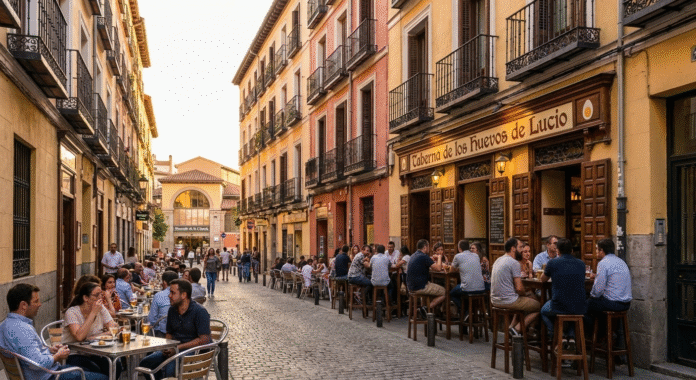
If Madrid had a soul, it would probably be hanging out in La Latina on a Sunday afternoon, hopping between tapas bars with a caña in hand. This neighborhood is where old Madrid comes alive – cobblestone streets wind between centuries-old buildings, locals spill out of packed bars onto sunny plazas, and the energy is absolutely infectious.
I’ve watched countless visitors arrive in La Latina planning to “just look around for an hour” and end up spending their entire day here. And honestly? I get it. There’s something magical about this barrio that captures the essence of Madrid better than anywhere else in the city.
What Makes La Latina Special?
La Latina is one of Madrid’s oldest neighborhoods, with roots stretching back to medieval times. Walking these streets, you’re literally tracing the footsteps of centuries of madrileños. But here’s what makes it truly special: unlike some historic districts that feel frozen in time or overly touristy, La Latina is still a living, breathing neighborhood where locals actually live, work, and play.
The neighborhood sits in the heart of Madrid’s historic center, bordered by some of the city’s most iconic landmarks. You’ve got the Royal Palace to the north, the bustling Puerta del Sol to the east, and it all flows seamlessly into the equally charming Lavapiés district to the south.
A Brief Walk Through History
The name “La Latina” comes from the Hospital de La Latina, founded in the 15th century by Beatriz Galindo, a remarkable scholar who tutored Queen Isabella I. The hospital is long gone, but the name stuck – and honestly, having a neighborhood named after a brilliant Renaissance woman feels pretty appropriate for an area that’s always had strong, independent character.
During Madrid’s Golden Age in the 16th and 17th centuries, La Latina was a thriving neighborhood filled with theaters, markets, and taverns. Fast forward to today, and… well, it’s still filled with theaters, markets, and taverns. Some things just work, you know?
The Sunday El Rastro Experience
Let’s talk about El Rastro, because if you’re visiting Madrid on a Sunday, this is non-negotiable. Every Sunday morning (and public holidays), the streets of La Latina transform into Europe’s largest open-air flea market. We’re talking hundreds of stalls stretching down Ribera de Curtidores and spilling into surrounding streets.
You’ll find everything here: vintage leather jackets, antique cameras, old vinyl records, handmade jewelry, bootleg DVDs (yes, still), questionable “antiques,” and genuinely cool treasures. The key is to arrive early – around 9 or 10 AM – before the crowds become shoulder-to-shoulder by midday.
Pro tip: Keep your valuables secure (pickpockets love the chaos), bargaining is expected and encouraged, and don’t buy anything in the first stretch of Ribera de Curtidores where it’s mostly tourist-oriented stuff. The real gems are in the side streets and Plaza del Campillo del Mundo Nuevo.
After browsing, do what the locals do: find a terrace, order some vermouth or a beer, and watch the parade of humanity flow past. It’s pure Madrid.
Must-See Spots in La Latina
Plaza de la Cebada
This isn’t the prettiest square – there’s currently a sports center being built where an old market once stood – but it’s absolutely essential La Latina. The plaza is surrounded by some of the neighborhood’s best bars and restaurants, and on weekends, the outdoor terraces are packed with locals catching up over drinks.
The name means “Barley Square,” a throwback to when grain was sold here centuries ago. Today, the only thing being traded is gossip and recommendations for where to eat next.
Cava Baja and Cava Alta
These two parallel streets are the beating heart of La Latina’s legendary tapas scene. Cava Baja especially has become almost mythically famous, lined with one excellent tapas bar after another. Yes, it’s touristy now, but there’s a reason for that – the food is genuinely incredible.
Both streets follow the path of the old medieval walls (that’s what “cava” refers to), and their narrow, atmospheric lanes are perfect for a slow evening stroll, popping into whichever bar catches your eye.
Basilica de San Francisco el Grande
This is one of Madrid’s most underrated sights. The basilica has one of the largest domes in the Christian world – seriously, it’s massive – and the interior is absolutely stunning. There are paintings by Goya and Zurbarán, and the guided tours (highly recommended) reveal fascinating details about the building’s history.
The plaza in front is also lovely for sitting and soaking up the atmosphere, especially at sunset when the light hits the building’s neoclassical facade.
Plaza de la Paja
Medieval Madrid’s main square, Plaza de la Paja (literally “Straw Square”) is now one of the neighborhood’s most charming spots. It’s quieter than Plaza de la Cebada, with a more refined selection of cafes and restaurants around its perimeter. The terrace at Delic is perfect for breakfast or an afternoon coffee with views up to the dome of San Andrés church.
This is also where you’ll find the Jardín del Príncipe de Anglona, a hidden garden that feels like a secret escape from the bustling streets outside.
Church of San Andrés and Capilla del Obispo
Right off Plaza de la Paja, this church complex is worth a peek inside if it’s open. The Capilla del Obispo (Bishop’s Chapel) is a stunning example of Spanish Gothic architecture, though it’s only accessible on guided tours.
Where to Eat and Drink: The Real Deal
Alright, this is what you’re really here for. La Latina is arguably the best neighborhood in Madrid for tapas, and that’s saying something in a city that takes its tapas very seriously.
For Traditional Tapas
Juana La Loca (Plaza de la Puerta de Moros) – Their tortilla de patatas is legendary. Seriously, people make pilgrimages for this potato omelet. Get there early or be prepared to wait.
Casa Lucas (Cava Baja) – A classic spot that hasn’t been ruined by its popularity. The croquetas are creamy perfection, and the atmosphere feels authentically local despite the crowds.
Taberna Tempranillo (Cava Baja) – Wine lovers, this is your spot. Excellent selection of Spanish wines paired with quality tapas. It’s small, so arrive early or late to snag a spot.
El Viajero (Plaza de la Cebada) – Three floors of fun with a rooftop terrace that’s perfect for sunset drinks. The food is solid, but you’re really here for the views and atmosphere.
For Something Different
Malacatín (Ruda) – Tucked away on a quiet street, this place serves creative takes on traditional dishes. The ambiance is cozy and romantic, perfect for a slower-paced meal.
La Musa Latina (Costanilla de San Andrés) – Modern tapas with an international twist. The brunch on weekends is particularly popular with the local crowd.
Angelita Madrid (Reina) – Just outside La Latina proper but worth the short walk. Contemporary Spanish cuisine done exceptionally well, with an impressive wine list.
The Vermouth Ritual
Sunday vermouth (vermut in Spanish) is a Madrid tradition, and La Latina is ground zero. After the Rastro, locals settle into their favorite bars for vermouth on tap, usually accompanied by potato chips or olives. Try Bodega La Ardosa or any place with “Casa” or “Bodega” in the name – you can’t really go wrong.
Practical Tips for Visiting La Latina
When to go: Sundays for the full experience (Rastro + tapas), but honestly, any day works. Saturday evenings are particularly lively for bar-hopping.
Getting there: Metro stations Tirso de Molina (Line 1) and La Latina (Line 5) are your best bets. It’s also very walkable from Sol or Plaza Mayor.
What to wear: Comfortable shoes are essential – those cobblestones are charming but murder on heels or new shoes. Dress casually; this is a relaxed neighborhood.
Budget: You can do La Latina on any budget. A caña (small beer) costs around €2-3, and tapas range from €3-8. A full meal at a sit-down restaurant will run €20-40 per person.
Timing your meals: Remember, Spaniards eat late. Lunch is 2-4 PM, dinner starts at 9 PM or later. Many kitchens close between lunch and dinner service, so plan accordingly.
Bar-hopping etiquette: It’s totally normal (expected, even) to have one drink and maybe a tapa at each place, then move on. Don’t feel obligated to stay anywhere for hours unless you want to.
Beyond the Obvious
Want to see La Latina like a local? Here are some insider moves:
- Duck into the small shops on Calle Toledo for traditional Madrid products – espadrilles, mantones (traditional shawls), and ceramics.
- Check out the street art in the alleyways around Calle Redondilla and Calle Calatrava.
- Visit on a weekday morning when the neighborhood shows its quieter, residential side.
- Explore the connections to neighboring barrios – wander into Lavapiés for a different vibe, or head toward the viaduct for incredible views.
Final Thoughts
La Latina isn’t perfect – it can be crowded, some bars have definitely become tourist traps, and finding a table on Sunday afternoon might require divine intervention. But there’s a reason this neighborhood has been the heart of Madrid social life for centuries. It’s authentic, it’s lively, it’s delicious, and it’s quintessentially Madrid.
My advice? Don’t try to “see” La Latina like you’d check off a museum or monument. Instead, let yourself get a little lost in its narrow streets. Follow the locals. Try the bar that looks too crowded to possibly be worth it (it is). Order things you can’t pronounce. Stay longer than you planned.
Because that’s what La Latina does best – it makes you slow down, pulls you into its rhythm, and reminds you that sometimes the best travel experiences aren’t about sights you see, but moments you live.
So grab a caña, find a sunny spot in Plaza de la Paja, and let La Latina work its magic. I’ll bet anything you’ll be planning your next visit before you’ve even left.

 12°C
12°C - Temperature
- Precipitation
- Rain Chance
- Wind
- Humidity
- Pressure