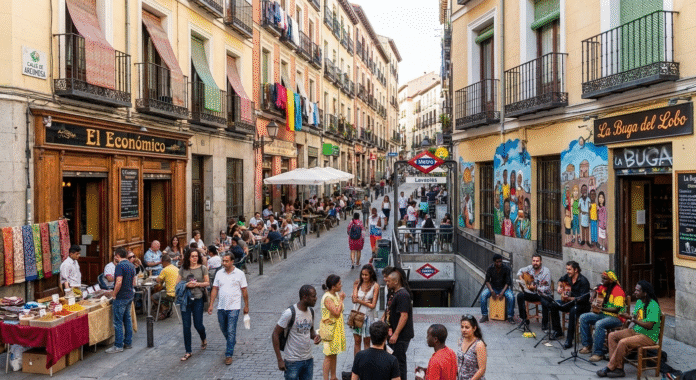
If La Latina is Madrid’s traditional heart, then Lavapiés is its creative soul. This is where the city gets interesting, unpredictable, and gloriously diverse. Walking through Lavapiés feels like stepping into a different Madrid altogether – one where Indian spice shops sit next to century-old tabernas, where street art covers every available wall, and where you’re as likely to hear Urdu, Arabic, or Bengali as you are Spanish.
I’ll be honest: Lavapiés isn’t for everyone. It’s gritty, it’s raw, and it doesn’t try to be pretty in the conventional sense. But if you want to experience the real, unfiltered Madrid – the one that’s evolving, mixing, and creating something entirely new – this is your neighborhood.
What Makes Lavapiés So Special?
Lavapiés is Madrid’s most multicultural neighborhood, and that’s not just marketing speak. Over 100 nationalities call this barrio home, making it one of the most diverse square kilometers in all of Europe. You’ve got Bangladeshi grocers, Senegalese restaurants, Pakistani textile shops, Chinese supermarkets, and Moroccan tea houses all within a few blocks of each other.
But here’s what makes it truly special: it’s not a “multicultural theme park” where diversity is performed for tourists. This is a real, living, breathing neighborhood where people from around the world are actually building their lives and businesses. The result is this incredible cultural fusion that you can taste, hear, and see on every corner.
The neighborhood sits just south of the city center, bordered by La Latina to the west and Atocha to the east. It’s one of Madrid’s oldest barrios, with a working-class history that still shapes its character today.
A Neighborhood With Stories to Tell
The name “Lavapiés” (literally “wash feet”) supposedly comes from a fountain where Jewish and Muslim residents would wash their feet before entering their places of worship. Whether that’s historical fact or legend, it captures something true about the neighborhood: this has always been a place where different communities come together.
During the Spanish Golden Age, Lavapiés was Madrid’s Jewish quarter. Later, it became the heart of working-class Madrid, appearing in countless zarzuelas (Spanish operettas) and novels as the epitome of authentic madrileño life. In the 1980s and 90s, it became a landing point for immigrants from Latin America, North Africa, South Asia, and sub-Saharan Africa.
Today, Lavapiés is also Madrid’s creative hub. Artists priced out of trendier neighborhoods have set up studios here. Alternative theaters, independent bookshops, and experimental music venues fill the streets. It’s become a symbol of Madrid’s alternative culture.
The Lavapiés Experience: What to Expect
Let me set expectations: Lavapiés isn’t polished. The streets can be rough around the edges. You’ll see graffiti (some of it incredible, some of it just tags), buildings that need renovation, and yes, some social issues that come with economic inequality. The neighborhood has been grappling with gentrification, rising rents, and the displacement of long-time residents.
But here’s why it’s worth visiting: Lavapiés is authentic in a way that’s increasingly rare in European capitals. There’s an energy here, a sense that things are happening, that culture is being created in real-time. And the food? Absolutely incredible and often criminally cheap.
Must-See Spots in Lavapiés
Calle del Argumosa
This is Lavapiés’s main artery and probably where you’ll spend most of your time. The street is lined with bars, cafes, and restaurants representing cuisines from around the world. On warm evenings, people spill out onto the sidewalks with drinks, creating an impromptu street party atmosphere.
The vibe is young, artsy, and relaxed. This is where you’ll find Madrid’s alternative crowd – artists, musicians, students, activists, and bohemians of all stripes.
Tabacalera
This former tobacco factory is now one of Madrid’s most important alternative cultural centers. It’s run as a self-managed social center (centro social autogestionado) and hosts exhibitions, concerts, workshops, and community events.
The building itself is fascinating – covered floor to ceiling in street art and graffiti. Even if nothing’s officially happening when you visit, it’s worth peeking inside to see the murals and feel the creative energy. Just be respectful; this is a community space, not a tourist attraction.
Cine Doré (Filmoteca Española)
This gorgeous Art Nouveau cinema from 1923 is Spain’s national film archive. They screen classic, independent, and international films, often with reduced prices (around €2.50 for many screenings). The summer terrace is a lovely spot for a pre-film drink, surrounded by that beautiful early 20th-century architecture.
Even if you’re not catching a movie, the exterior is worth admiring – it’s one of the few Art Nouveau buildings left in Madrid.
Plaza de Lavapiés
The neighborhood’s main square has been recently renovated and serves as the community’s living room. There’s a playground, benches, and usually a mix of families, elderly residents playing cards, and young people hanging out.
The square hosts the neighborhood’s weekend market and occasional festivals. It’s also ringed by some interesting bars and the Teatro Valle-Inclán, which puts on contemporary theater productions.
Rastro de Lavapiés (Sunday Market)
While everyone talks about the main Rastro in La Latina, the market actually extends deep into Lavapiés, particularly around Ribera de Curtidores. The Lavapiés section tends to be less touristy and more focused on practical goods, antiques, and second-hand items.
Some of the best finds are in the shops that open specifically on Sunday mornings, tucked into doorways along the side streets.
Street Art Tour
Lavapiés is an open-air street art gallery. Seriously, bring your camera. Some of the best murals are:
- The massive piece on Calle Argumosa corner with Calle del Olivar
- Multiple walls along Calle de la Fe and Calle Cabestreros
- The murals around Tabacalera
- Hidden gems in tiny alleyways throughout the neighborhood
The art changes constantly, so every visit reveals something new. This is part of what makes Lavapiés exciting – it’s never static.
Casa Árabe
This cultural center promotes understanding of Arab and Islamic culture through exhibitions, concerts, film screenings, and talks. The building itself is beautiful, and many events are free. Even if you’re just passing by, check their schedule – you might catch something interesting.
Where to Eat: A World Tour in One Neighborhood
This is where Lavapiés truly shines. You can eat your way around the world without leaving a few square blocks.
Indian and Pakistani
Shapla (Lavapiés) – Some of the best Indian food in Madrid at prices that’ll make you want to cry with joy. The thalis are incredible value.
Alibaba Kebab House (Argumosa) – Don’t let the name fool you. This Pakistani spot serves authentic biryanis, curries, and kebabs that would hold up anywhere in the world.
Delhi Darbar (Lavapiés) – Another solid Indian option with a great lunch menu and tandoori dishes.
African Cuisine
Awa (Argumosa) – Senegalese restaurant with incredible thieboudienne (fish and rice) and yassa chicken. Warm, welcoming atmosphere.
La Cantina Etíope (Cabestreros) – Ethiopian food served traditionally on injera. Perfect for sharing.
Middle Eastern and Turkish
Al Jaima (Lavapiés) – Lebanese and Syrian food. The mezze plates are generous and delicious.
Turquoise (Argumosa) – Turkish restaurant with excellent kebabs, pide, and meze. The breakfast is also great.
Chinese
Bo de B (Salitre) – Vietnamese-style banh mi sandwiches that are ridiculously good and cheap.
Restaurante Chino Casa Lin (Lavapiés) – Authentic Chinese food, not the usual Westernized stuff. Popular with Madrid’s Chinese community.
Traditional Spanish (Yes, Really!)
Melo’s (Ave María) – An old-school taberna that’s been here forever. Come for raciones, cheap wine, and that traditional Madrid atmosphere.
Casa Amadeo Los Caracoles (Plaza de Cascorro) – Famous for caracoles (snails) and other traditional tapas. A Lavapiés institution since 1941.
La Taberna de Antonio Sánchez (Mesón de Paredes) – Historic taberna with bullfighting memorabilia. Traditional raciones and vermouth.
Vegetarian and Vegan
La Majonera (Argumosa) – Vegetarian/vegan restaurant with creative dishes and a cozy atmosphere.
El Jardín Secreto (Conde Duque, nearby) – Lovely vegetarian spot with a peaceful garden terrace.
Cafes and Brunch
Café Barbieri (Ave María) – Historic cafe with 19th-century decor. Perfect for coffee, reading, or people-watching.
La Infinito (Dr. Fourquet) – Specialty coffee, excellent brunch, and a relaxed creative crowd.
Kaiku Caffè (Salitre) – Small, hipster-ish coffee spot with great flat whites and pastries.
Bars and Nightlife
Bonobo (Lavapiés) – Friendly neighborhood bar with good vibes, cheap drinks, and a mixed crowd.
La Trocadero (Salitre) – Craft beer bar with rotating taps. The owners really know their stuff.
El Intruso (Augusto Figueroa, nearby) – Bar, bookshop, and cultural space all in one. Great for afternoon drinks and conversation.
Contraclub (Bailén) – Alternative club with live music, DJ sets, and a grungy, authentic feel.
The Best Times to Visit Lavapiés
Weekday afternoons and evenings are perfect for soaking up the neighborhood’s daily rhythm without crowds. You’ll see it at its most authentic.
Sunday mornings bring the Rastro market extension and a more lively atmosphere, though it’s less intense than the main Rastro area.
During neighborhood festivals, especially the Lavapiés neighborhood festival in August, when the streets come alive with concerts, street food, and performances.
Thursday-Saturday nights if you want to experience the bar scene and nightlife at their most energetic.
Practical Tips for Visiting
Safety: Let’s address this upfront. Lavapiés has a reputation, and yes, you should be aware of your surroundings, especially at night. Keep valuables secure, don’t flash expensive items, and trust your instincts. That said, thousands of people live here safely every day, and most visitors have zero issues. It’s an urban neighborhood – just use common city sense.
Getting there: Metro Lavapiés (Line 3) drops you right in the heart of things. Antón Martín (Line 1) and Tirso de Molina (Line 1) are also close. It’s an easy 10-minute walk from Sol.
Money: Bring cash. Many smaller restaurants and shops don’t take cards, or have minimums. ATMs are plentiful.
Language: More helpful here than in tourist areas to have some Spanish, though many shopkeepers speak multiple languages. Don’t assume everyone speaks English.
What to wear: Dress casually and comfortably. This is not a fancy neighborhood. Locals dress for practicality, not fashion shows.
Respect the community: Remember you’re visiting a real neighborhood where people live and work. Be respectful when taking photos (especially of people), don’t treat it like a zoo, and support local businesses.
Best for: Adventurous eaters, culture enthusiasts, street art lovers, anyone interested in urban diversity, budget travelers, people who want to see “real” Madrid beyond the postcard version.
Maybe skip if: You’re uncomfortable with gritty urban environments, prefer sanitized tourist experiences, or have very limited time (hit the main sights first, then come here if you have extra days).
Shopping and Markets
Beyond the Sunday Rastro extension, Lavapiés offers unique shopping:
- International grocery stores for ingredients you won’t find elsewhere in Madrid
- Vintage and second-hand clothing shops along Ribera de Curtidores
- Artisan workshops and craft stores, especially around Calle del Doctor Fourquet
- Independent bookstores specializing in alternative literature, comics, and small press publications
- Record shops with vinyl from around the world
Cultural Events and Venues
Lavapiés has a rich cultural calendar:
- Teatro Valle-Inclán – Contemporary theater and experimental performances
- La Casa Encendida – Cultural center with exhibitions, concerts, workshops, and a rooftop terrace
- Cineteca Matadero (nearby) – Alternative cinema and film screenings
- Numerous small galleries showcasing emerging artists
- Live music venues with everything from flamenco to experimental electronic
Check local listings and posters around the neighborhood – there’s always something happening.
Beyond the Surface
What makes Lavapiés truly special isn’t the sights or even the restaurants. It’s the neighborhood’s spirit. This is a place where different cultures don’t just coexist – they interact, influence each other, and create something new.
You’ll see it in the fusion restaurants where Spanish and Indian flavors merge. In the street art that blends traditional Spanish imagery with global influences. In the bars where elderly Spanish residents share tables with recent immigrants and young artists.
Lavapiés is also a neighborhood in transition and sometimes tension. Gentrification is pushing against community resistance. Rising rents are forcing out longtime residents. The arrival of boutique hotels and trendy bars brings both opportunities and concerns. These are real issues affecting real people.
Final Thoughts
Lavapiés won’t be everyone’s cup of tea, and that’s okay. If you want pristine cobblestones, perfectly restored facades, and Instagram-perfect backdrops, stick to La Latina or Malasaña. But if you want to see a Madrid that’s rough, real, and radiating creative energy – a Madrid that’s grappling with the challenges and opportunities of the 21st century – you need to experience Lavapiés.
Come here hungry. Come with curiosity and an open mind. Try foods you’ve never heard of. Strike up conversations with shopkeepers. Get a little lost in the side streets. Let the neighborhood surprise you.
And whatever you do, don’t rush through. Lavapiés rewards those who slow down and pay attention. The best experiences here aren’t on any must-see list – they’re the unexpected moments that happen when you let the neighborhood reveal itself to you.
Maybe that’s a conversation with a Pakistani tea seller who recommends his favorite spot for samosas. Or stumbling onto a live music performance in a tiny bar. Or finding an incredible mural in an alley you weren’t supposed to take. Or sharing a table at an Ethiopian restaurant with locals who become friends.
That’s Lavapiés. Come find your own story here.

 11°C
11°C - Temperature
- Precipitation
- Rain Chance
- Wind
- Humidity
- Pressure