Last Updated on May 6, 2026 by Jaime
By Jaime · February 24, 2026 · 14 min read
Picture this: you’re standing in front of a 2,000-year-old Roman aqueduct that’s still standing without a drop of mortar, about to explore a castle that inspired Disney’s Cinderella, and planning where to eat the most famous roast suckling pig in Spain. Welcome to Segovia.
Just 27 minutes by high-speed train from Madrid, Segovia is the day trip that delivers everything you want from a Spanish excursion: jaw-dropping monuments, medieval atmosphere, spectacular food, and none of the overwhelming crowds of Toledo. It’s compact enough to see in a day, beautiful enough to make you want to stay longer, and delicious enough that you’ll remember the meal as much as the sights.
I’ve done this trip myself multiple times and watched countless visitors fall in love with Segovia. Some come for the aqueduct and leave raving about the cochinillo (roast suckling pig). Others come for the Alcázar and end up most impressed by the cathedral. Everyone leaves happy and planning their return.
Let me walk you through exactly how to plan the perfect Segovia day trip from Madrid.
Why Visit Segovia?
Segovia is one of those places that seems almost too picturesque to be real. The entire old town is a UNESCO World Heritage Site, and once you’re there, you’ll understand why.
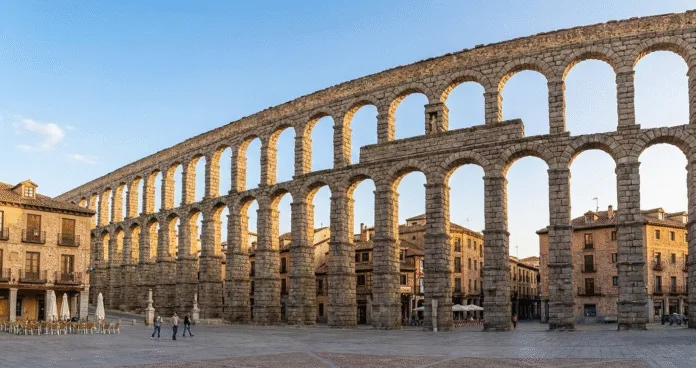
The Roman aqueduct – probably the most impressive Roman structure still standing in Spain – dominates the entrance to the old town. It’s 28 meters high, stretches nearly 1,000 meters, and was built in the 1st-2nd century AD without any mortar. Just perfectly cut granite blocks stacked precisely enough to carry water for 2,000 years.
The Alcázar – Segovia’s fairy-tale castle perched on a rocky outcrop – is so striking that Walt Disney used it as inspiration for Cinderella’s castle. It’s been a fortress, a royal palace, a prison, an artillery school, and now a museum. The views from the tower are spectacular.
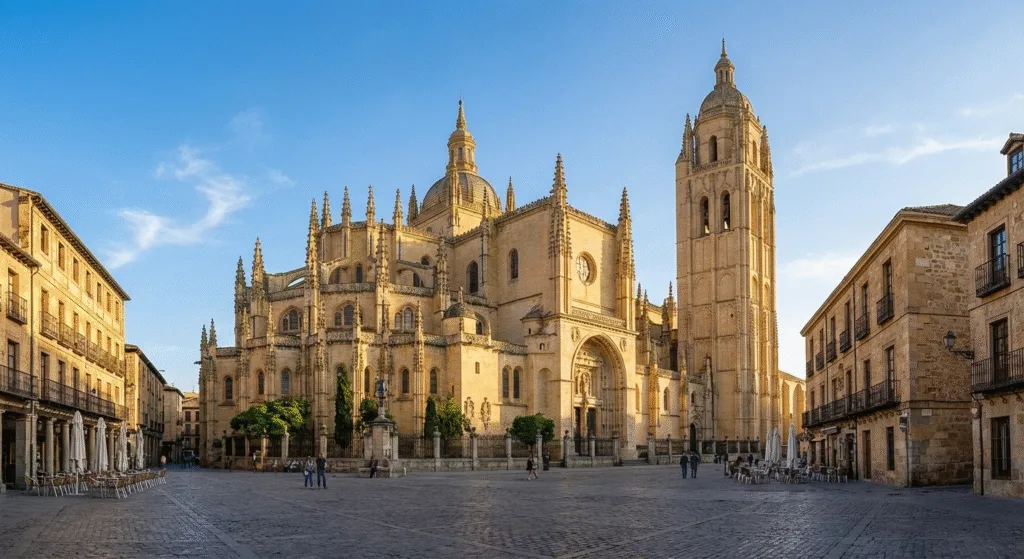
The cathedral – known as the “Lady of Cathedrals” – is one of Spain’s last and largest Gothic cathedrals, elegant and imposing against the skyline.
And then there’s the food. Segovia is famous for cochinillo asado (roast suckling pig), and eating it here is a culinary pilgrimage. The traditional restaurants take this dish very seriously, and the ceremonial presentation – cutting it with the edge of a plate – is part of the experience.
Getting to Segovia from Madrid
You have two excellent options:
High-Speed Train (Highly Recommended)
Take the AVE high-speed train from Madrid Chamartín to Segovia-Guiomar station.
Journey time: 27-30 minutes
Frequency: 8-10 trains per day
Cost: €13-25 depending on time and how far in advance you book
Advantages: Super fast, comfortable, scenic
The catch: Segovia-Guiomar station is about 5km outside the old town. From there, take bus line 11 (€2, runs every 15-20 minutes, 15-minute ride) to Plaza Mayor in the city center, or a taxi (€8-12) if you’re in a hurry or traveling with others.
Pro tip: Book your train tickets in advance on the Renfe website. Prices can double if you book last-minute or travel during peak times.
Bus
Buses run from Madrid’s Moncloa station to Segovia.
Journey time: 1 hour 15 minutes
Frequency: Every 30 minutes
Cost: Around €8-10 each way
Advantages: Drops you right at the aqueduct in the old town
The bus is slower but more convenient for arrival location. It’s a good option if you’re staying near Moncloa or if train times don’t work for you.
My recommendation: Take the AVE train for speed and comfort. The bus connection from Guiomar station is easy, and you’ll appreciate the extra hour saved compared to the bus.
Organized Tours
Many companies offer day trips from Madrid (€50-80) including transport, guide, and sometimes skip-the-line tickets.
Tours make sense if you want historical context without doing research, don’t want to navigate transport, or prefer the structure of a group experience. But Segovia is genuinely easy to visit independently – you’ll have more flexibility and save money doing it yourself.
How Much Time Do You Need?
Minimum: 5-6 hours (rushed but doable)
Recommended: 7-8 hours (comfortable pace with lunch)
Ideal: Full day (9-10 hours with relaxed lunch and wandering time)
A typical day trip looks like:
- Morning train from Madrid (depart 9-10 AM)
- Arrive Segovia, see aqueduct, walk through old town to Alcázar (2-3 hours)
- Lunch – the long, leisurely Spanish kind with cochinillo (2-2.5 hours)
- Cathedral, shopping, more wandering (1-2 hours)
- Return train to Madrid (4-6 PM)
Don’t try to rush Segovia. This is a place for lingering, especially over lunch.
The Segovia Walking Route: Aqueduct to Alcázar
The beauty of Segovia is that it’s perfectly set up for a linear walking route. No backtracking required.
Start: The Aqueduct (Acueducto Romano)
Whether you arrive by bus (drops you right here) or train (bus 11 stops at Plaza Mayor, walk 5 minutes down), begin at Plaza del Azoguejo beneath the aqueduct.
Stand there and look up. This thing is MASSIVE. 28 meters (92 feet) high, 167 double arches, built around 100 AD, and still standing strong. No mortar, no concrete, just precisely cut granite blocks and Roman engineering genius.
Walk around it from different angles. Go up the stairs on the side for a higher viewpoint. Take photos from the plaza looking up. This is one of those monuments that photos don’t quite capture – you need to stand beneath it to feel its scale.
Time needed: 20-30 minutes
Free to view: No ticket required, it’s in a public plaza
Through the Old Town
From the aqueduct, walk up Calle Cervantes into the old town. This is where Segovia gets charming. Narrow medieval streets, the occasional Romanesque church, local shops, and those distinctive sgraffito decorations on building facades (geometric patterns scratched into plaster).
Key stops as you walk:
Casa de los Picos – A 15th-century palace covered in diamond-point façade decoration. Very Instagram-worthy. Now houses an art school and exhibition space (free entry if something’s showing).
Plaza Mayor – The main square with cafés, the cathedral, and the town hall. Good spot for a coffee break or to get your bearings.
Cathedral – Worth going inside if you have time (€3 entry, free on Sundays). It’s elegant and spacious, one of Spain’s last Gothic cathedrals. The tower views are excellent if you want to climb.
Jewish Quarter – The narrow streets off the main route were once Segovia’s Jewish quarter. It’s atmospheric and less crowded.
Time for this section: 1-1.5 hours including cathedral visit
The Alcázar (Fairy-Tale Castle)
The walk from Plaza Mayor to the Alcázar takes about 15 minutes along the ridge of the old town. The Alcázar sits at the western tip, dramatically perched on a rock outcrop where two rivers meet.
From outside, it looks like something from a storybook – turrets, pointed towers, a moat, the whole deal. The blue-grey slate roofs are distinctive and (yes, really) inspired Cinderella’s castle at Disney World.
Inside the Alcázar:
The interior is a mix of royal apartments, throne rooms, armory, and museums. Highlights include:
- The Throne Room (Sala del Trono) with its remarkable Mudéjar ceiling
- The King’s Chamber with decorative elements and period furniture
- The Pine Cone Room (Sala de las Piñas) with its spectacular ceiling of 392 gilded pine cones
- The Armory displaying weapons and armor
- The views from various windows overlooking the surrounding countryside
The rooms aren’t enormous, but they’re beautifully decorated and maintained. Audio guides are available (€4) and worth it for the historical context.
The Tower: For an extra €3, climb the 152 steps up the Tower of Juan II for panoramic views of Segovia and the surrounding plains. It’s a narrow spiral staircase, but the views are spectacular. On a clear day, you can see for miles.
Tickets: €10 for palace, €13 for palace + tower, €7 reduced
Hours: 10:00 AM – 8:00 PM (April-September), 10:00 AM – 6:00 PM (October-March)
Time needed: 1-1.5 hours
Pro tip: Buy tickets online in advance from the official Alcázar website, especially in high season or weekends. Lines can be long.
Where to Eat in Segovia: The Cochinillo Pilgrimage
Okay, let’s talk about the real reason many people come to Segovia: cochinillo asado.
Roast suckling pig is Segovia’s signature dish. The piglets are milk-fed, only 21 days old, and roasted slowly in wood-fired ovens until the skin is crackling-crisp and the meat is incredibly tender. The traditional way to serve it? The waiter cuts it with the edge of a dinner plate (not a knife), then dramatically throws the plate to the ground to prove how tender it is.
Two legendary restaurants dominate the cochinillo scene:
Restaurante José María
Location: Calle Cronista Lecea, 11 (about 8 minutes walk from aqueduct)
Why go: Many locals and serious food people say this is the best cochinillo in Segovia
Atmosphere: Eight dining rooms, Castilian décor, professional service
Cost: Cochinillo €27 per person, full meal with wine €40-50
José María opened in 1982 and has built its reputation on quality. The owner takes cochinillo so seriously that he bought his own farm to control every aspect of raising the pigs. The restaurant is recommended in the Michelin Guide (Bib Gourmand).
The cochinillo here is exceptional – crispy skin, tender meat, perfectly seasoned. Start with Castilian garlic soup (sopa castellana) and maybe roasted peppers, order the cochinillo as your main, pair it with a Ribera del Duero wine (José María has his own winery), and finish with Ponche Segoviano (local layer cake).
Reservations: Strongly recommended, especially weekends. Book via their website or call +34 921 461 111.
Mesón de Cándido
Location: Plaza del Azoguejo, 5 (right at the aqueduct)
Why go: The most famous, oldest (since 1786), and most theatrical presentation
Atmosphere: Traditional mesón with history dripping from the walls, photos of celebrity visitors
Cost: Similar to José María, around €40-50 per person
Cándido is THE tourist destination for cochinillo. The late Cándido López, “Mesonero Mayor del Reino,” made this place legendary. The location right at the aqueduct is unbeatable, and the plate-cutting ceremony is done with extra flourish here.
The cochinillo is excellent, though some locals say José María’s is slightly better. What Cándido has is atmosphere, history, and that perfect location. If you want the full traditional experience with all the ceremony, this is your spot.
Other Options
Casa Duque – Family-run since 1895, another historic option. Fifth generation running it now. Excellent cochinillo and lechazo (roast lamb).
La Concepción – Views of Plaza Mayor, good food, less touristy than Cándido but more upscale than José María.
Which to choose?
- For the best cochinillo: José María
- For the most famous/traditional experience: Cándido
- For something less touristy: Duque
- For views: La Concepción
My honest take: You can’t go wrong with José María or Cándido. I slightly prefer José María for pure food quality, but Cándido for the full experience. If you’re doing a day trip, José María is more convenient (you’ll walk past it). If you want to eat overlooking the aqueduct and soak in all the history, Cándido is special despite being more touristy.
About Cochinillo Portions
One cochinillo serving is generous – you’ll get a quarter of the pig (roughly). It’s rich, so you don’t need huge portions. Most people share starters and save room for dessert. Don’t skip the Ponche Segoviano – Segovia’s traditional dessert is a delicious almond-based layer cake.
Cochinillo alternatives: If you don’t eat pork, most restaurants also offer lechazo (roast lamb) or fish options. But really, if you’re in Segovia and don’t have dietary restrictions… try the cochinillo. It’s what this place does best.
When to Visit Segovia
Best times:
- Weekdays (Tuesday-Friday): Fewer crowds, easier restaurant reservations
- Spring (April-May) or Fall (September-October): Perfect weather, manageable tourist numbers
Busy times:
- Weekends: Popular with madrileños doing day trips, restaurants packed
- Summer (July-August): Hot and crowded, but longer daylight hours
- Holidays: Spanish holidays see locals flooding in
Weather considerations: Segovia sits at 1,000 meters elevation in the mountains, so it’s cooler than Madrid. Bring a light jacket even in summer. Winter can be cold with occasional snow.
My recommendation: Go on a weekday if you can. The experience is much more pleasant without fighting crowds at the aqueduct or waiting for restaurant tables.
Practical Tips for Your Segovia Day Trip
Timing Your Visit
Arrive: 10-11 AM to see the aqueduct in good light and beat lunch crowds
Lunch: 2-4 PM (Spanish lunch time – restaurants may be closed 4-8 PM)
Return: 5-7 PM train gives you a full day without feeling rushed
What to Bring
- Comfortable walking shoes: Cobblestones and hills, no way around it
- Light jacket: Even in summer, it can be cool
- Water bottle: Walking uphill from aqueduct to Alcázar is thirsty work
- Camera: Everything here is photogenic
- Cash: Some smaller shops and ticket offices prefer cash
Money-Saving Tips
- Combined ticket: If visiting both Alcázar and Cathedral, check if there’s a combined ticket
- Free aqueduct: The main sight costs nothing
- Lunch alternatives: If cochinillo is too expensive, there are tapas bars and casual restaurants with good menu del día options (€12-18)
Restaurant Reservations
For José María or Cándido, especially on weekends, reserve at least 2-3 days ahead. Weekdays you might walk in, but don’t count on it during lunch hours.
Combining Segovia with Other Day Trips
Don’t try to combine Segovia with Toledo or El Escorial in one day. That’s too much. Each deserves its own day.
You could combine Segovia with La Granja de San Ildefonso (royal palace 11km away), but only if you have a car and a full day. Most day-trippers stick to Segovia proper.
Beyond the Main Sights
If you have extra time or want to see something most tourists miss:
Iglesia de la Vera Cruz – A 12-sided Templar church outside the walls. Unusual architecture, peaceful location. About 20 minutes walk from the Alcázar (or take a taxi back from here to the aqueduct when you’re done).
Casa-Museo de Antonio Machado – The poet lived here while teaching in Segovia. Modest but atmospheric if you’re into Spanish literature.
Monastery of El Parral – Just outside the old town walls, this monastery is peaceful and often empty. Free entry.
Walls walk – Parts of the medieval walls are accessible. Good views and a different perspective on the city.
Segovia vs. Toledo vs. El Escorial: Which Day Trip?
All three are excellent, but here’s the quick comparison:
Segovia:
- Best for: First-timers, foodies, castle lovers, Roman history fans
- Highlights: Aqueduct, Alcázar, cochinillo
- Pros: Compact, easy to navigate, fast train
- Cons: Less variety than Toledo
- Best for: History buffs, art lovers, those wanting a full medieval city
- Highlights: Cathedral, El Greco art, entire medieval cityscape
- Pros: More to see, richer history
- Cons: Crowded, can feel overwhelming, slower to reach
- Best for: Architecture enthusiasts, Spanish history lovers, Habsburg dynasty fans
- Highlights: Monastery complex, library, royal pantheon
- Pros: Less touristy, impressive single monument
- Cons: More austere, less charming surroundings
If you only have time for one: Segovia is the crowd-pleaser with the broadest appeal. If you have time for two: Segovia + Toledo or Segovia + El Escorial both work well. If you have time for all three: You’re lucky – do them!
Is Segovia Worth Visiting?
Absolutely, with a few caveats.
Visit Segovia if you:
- Have 3+ days in Madrid
- Want an easy, manageable day trip
- Love castles, Roman history, or good food
- Want something less overwhelming than Toledo
- Are traveling with kids (the castle is great for children)
Consider skipping if you:
- Only have 2 days in Madrid (focus on the city)
- Have very limited mobility (lots of walking and hills)
- Don’t like tourist-focused experiences (it is popular, though less than Toledo)
Final Thoughts
Segovia is one of those day trips that just works. It’s easy to reach, compact enough to see in a day but interesting enough that you won’t feel bored, and it delivers on every front: impressive monuments, beautiful medieval atmosphere, and genuinely excellent food.
The aqueduct alone is worth the trip – standing beneath those 2,000-year-old arches is genuinely awe-inspiring. The Alcázar adds the fairy-tale element. The cathedral provides the Gothic grandeur. And the cochinillo? That’s the delicious memory you’ll take home.
Most visitors I talk to say Segovia exceeded their expectations. It’s less intense than Toledo, more charming than El Escorial, and more immediately impressive than many places that take more effort to reach.
Go on a weekday if you can. Book your restaurant reservation in advance. Take the fast train. Wear comfortable shoes. Give yourself time for a long, leisurely lunch.
And when you’re sitting in a traditional restaurant, wine in hand, watching them cut your cochinillo with a plate edge, with the taste of 2,000-year-old Roman engineering and medieval magic still fresh in your mind, you’ll understand why Segovia has been stealing hearts for centuries.
It’s not trying to be anything other than what it is: a beautiful Spanish city that does history, architecture, and food extraordinarily well. And sometimes, that’s exactly what you want.
FAQs
Take the AVE high-speed train from Madrid Chamartín to Segovia-Guiomar (27-30 minutes, €13-25). From the station, take bus line 11 to Plaza Mayor (€2, 15 minutes) or taxi (€8-12). Alternatively, take a bus from Madrid’s Moncloa station (1 hour 15 minutes, €8-10).
The AVE high-speed train takes just 27-30 minutes from Madrid Chamartín to Segovia-Guiomar station. It’s the fastest way to reach Segovia, though you’ll need an additional 15 minutes by bus or taxi to reach the old town from the station.
Minimum 5-6 hours for a rushed visit. We recommend 7-8 hours for a comfortable pace including lunch, or a full day (9-10 hours) for a relaxed experience. This allows time to see the aqueduct, walk through the old town, visit the Alcázar, and enjoy a proper Spanish lunch.
Absolutely! Segovia offers one of the best-preserved Roman aqueducts in the world, a fairytale castle that inspired Disney, a stunning Gothic cathedral, and Spain’s best cochinillo (roast suckling pig). It’s compact, easy to reach (27 min by train), and less overwhelming than Toledo.
Segovia is famous for three things: its spectacular Roman aqueduct (2,000 years old, built without mortar), the Alcázar castle (which inspired Disney’s Cinderella castle), and cochinillo asado (roast suckling pig) – a legendary local dish served at traditional restaurants.
For cochinillo (roast suckling pig), the two most famous restaurants are Restaurante José María (locals’ favorite for quality) and Mesón de Cándido (most famous, right at the aqueduct). Reserve 2-3 days ahead, especially for weekends. Both serve exceptional cochinillo around €40-50 per person.
They’re different experiences. Segovia is more compact, easier to navigate, and has the spectacular aqueduct and castle. Toledo is larger with more to see but can feel overwhelming. Segovia has better food (cochinillo!). If you have time for both, do both. If choosing one: Segovia for first-timers and foodies, Toledo for history buffs.
Cochinillo asado is roast suckling pig – Segovia’s most famous dish. The piglets are milk-fed, just 21 days old, and slow-roasted in wood ovens until the skin is crispy and the meat incredibly tender. Traditionally, it’s cut with the edge of a plate (not a knife) to show how tender it is.
Yes! Segovia is one of the easiest and best day trips from Madrid. The AVE train takes just 27 minutes, the town is compact and walkable, and you can comfortably see the main sights and have lunch in 7-8 hours. It’s perfect for a day trip.
A: Book AVE train tickets in advance on the Renfe website for best prices (can double if you wait). Buy Alcázar tickets online to skip lines, especially on weekends (€10-13). Reserve restaurants (José María or Cándido) 2-3 days ahead for lunch, especially weekends. The aqueduct is free and requires no ticket.

 17°C
17°C - Temperature
- Precipitation
- Rain Chance
- Wind
- Humidity
- Pressure