Last Updated on June 3, 2026 by Jaime
By Jaime · May 10, 2026 · 10 min read

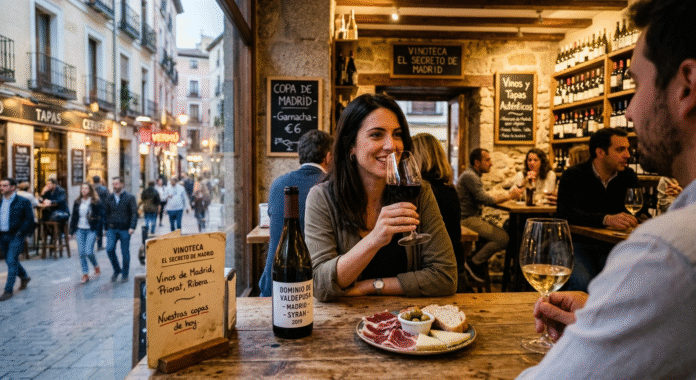
Copa de vino en Madrid — in a city famous for beer and vermouth, the wine scene is one of the best-kept secrets for anyone who bothers to look
🍷 Historic sherry bar: La Venencia · Calle Echegaray, 7 · Sherry from €1.90 · No photos, no tips
🏆 Best vinoteca: Angelita · Calle de la Reina, 4 · 500 bottles, 25 by the glass
📋 Chalkboard wines: De Vinos · Calle de la Palma, 76 · Malasaña · Rotating list, great by the glass
🧱 Classic La Latina: Taberna Tempranillo · Calle de la Cava Baja, 38 · All-Spanish list
🌿 Natural wine: La Fisna · Calle del Amparo, 91 · Lavapiés · 60+ by glass, take-home at shop prices
🍇 Local DO: Vinos de Madrid · 4 subzones · Garnacha & Tempranillo · Old-vine Garnacha from San Martín is the one to try
🗣️ How to order: “Una copa de tinto, por favor” · Ask “¿qué recomiendas por copa?” in wine bars
💡 Local rule: Vermouth is for midday. Sherry is for early evening. Wine goes with everything after 21:00.
Madrid has a reputation as a beer and vermouth city. That reputation is not wrong — the caña and the vermut do run deep here — but it misses something important. Madrid is also one of the best wine-drinking cities in Spain, precisely because it draws from everywhere. Walk into the right bar in Huertas and you can drink sherry from barrels the way Hemingway drank it in the 1930s. Step into the right vinoteca in Chueca and work through 25 different wines by the glass on a Tuesday night. Head to a classic taberna in La Latina and find old Rioja vintages listed alongside local Garnacha on a hand-written card.
And then there is the local secret that most visitors never discover: the DO Vinos de Madrid, a denomination of origin that produces wines from vineyards within the Comunidad itself — old-vine Garnacha from the Sierra de Gredos foothills that has been causing serious excitement among sommeliers across Europe for the past decade.
This guide covers all of it: the best wine bars in Madrid by neighbourhood, the story of the local wines, how to order without embarrassing yourself, and what to drink with what tapas. Grab a glass.
The Best Wine Bars in Madrid — By Neighbourhood

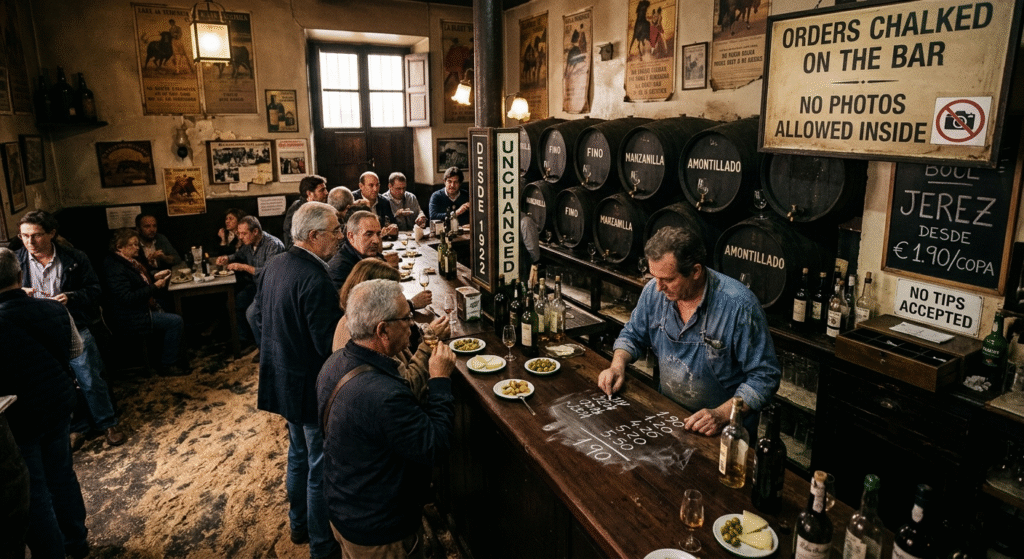
La Venencia — unchanged since 1922. Orders chalked on the bar, no photos, no tips, sherry from oak barrels. The most important wine bar in Madrid.
La Venencia ⭐⭐⭐⭐⭐ — The One That Started Everything
Huertas / Barrio de las Letras · Sherry only · From €1.90/glass
There is nothing quite like La Venencia anywhere in Madrid — and arguably nowhere else in Spain. Opened in 1922, it has been serving sherry from oak barrels in the same room on Calle Echegaray ever since, accumulating layers of tobacco smoke, peeling sherry posters, cobwebs on the vintage bottles and a lived-in patina that no designer could reproduce. The walls have turned a deep sepia. The barrels are older than most of your grandparents. Ernest Hemingway drank here. You should too.
The rules are simple and absolute: no photographs (an enamel sign makes this clear), no tips (also signed), and the only drink available is sherry. Your order is chalked on the wooden bar in front of you. You pay when you leave.
The sherry list runs through all the classic styles: Manzanilla (the lightest and most delicate, from Sanlúcar de Barrameda), Fino (dry, nutty, pale — the most popular order), Amontillado (aged, amber, richer), Palo Cortado (the rarest style, somewhere between amontillado and oloroso), and Oloroso (full-bodied, dark, walnut-deep). The tapas are simple and correct: jamón, chorizo, manchego, cecina (air-dried beef), mojama (salt-cured tuna) and the best green olives you will have all trip. Arrive at 19:30 on a weekday for a position at the bar. By 21:00 it is packed and people are drinking against the wall.
📍 Calle Echegaray, 7 · Metro: Sevilla (L2) or Sol (L1/L2/L3) · Mon–Sat 13:00–15:30 & 19:30–01:30 · Closed Sundays
💶 Sherry from €1.90 (fino/manzanilla) to €2.50 (palo cortado/oloroso) · Cash only · No reservations
💡 La Venencia ordering guide: Start with a fino or manzanilla — dry, cold, refreshing. Then move to amontillado. Never order a sweet sherry unless that is what you specifically want. When the barman asks “¿qué te pongo?” (what shall I give you?), the correct answer is “Un fino, por favor” said with confidence. Ask for a taste of the palo cortado when you are ready to be serious.
Angelita ⭐⭐⭐⭐⭐ — Madrid’s Most Prestigious Wine Bar
Chueca / Gran Vía · 500 bottles · 25 by the glass · Restaurant + bar
Angelita is a venue right in the city centre, just off the iconic Gran Vía. It has a street-level wine bar and a hidden basement cocktail lounge, and it was one of Madrid’s first proper wine bars. Brothers David and Mario Villalón from Zamora are behind the wine list, which runs to more than 500 different wine labels with 25 options by the glass, emphasising Burgundy and Vinos de Madrid.
What distinguishes Angelita from the dozens of vinotecas that have opened since is the quality of curation. The brothers approach their list with genuine conviction — they know what they have, why they have it and how to talk about it without making you feel inadequate. The food matches: modern Spanish cooking that works with the wine rather than competing with it. The basement cocktail bar is a different experience and worth its own visit.
📍 Calle de la Reina, 4 · Metro: Gran Vía (L1/L5) or Chueca (L5) · Tue–Sun 13:00–16:00 & 20:00–midnight
💶 Wines by the glass from €4–12 · Reservations recommended for dinner
De Vinos ⭐⭐⭐⭐ — The Malasaña Wine Bar
Malasaña · Chalkboard list · Rotating Spanish & international wines
De Vinos is a small family-run wine bar in the youthful and bohemian Malasaña district. The interior is old-school, with wooden chairs and vintage furniture. As you walk in, a massive chalkboard with a hand-written wine list is displayed on the wall. Owner and head sommelier Yolanda Moran is enthusiastic and always looking to update and change the options.
This is the kind of wine bar where nobody pretends to be something they are not. The list is honest — a selection of classics alongside things you have not heard of, all worth drinking. De Vinos regularly hosts wine tastings and live music, and the owner is happy to share her knowledge with guests, introducing Spain’s lesser-known but equally delicious wines. If Yolanda is behind the bar, tell her what you usually drink and let her choose. The result will be interesting.
📍 Calle de la Palma, 76 · Metro: Noviciado (L2) or San Bernardo (L2/L4) · Wed–Sun from 18:00
💶 Wines by the glass from €3.50–8 · No reservations needed
La Fisna ⭐⭐⭐⭐⭐ — The Natural Wine Mecca of Lavapiés
Lavapiés · 60+ by the glass · 600+ bottles · Shop prices to take home
La Fisna in Lavapiés has over 60 references in wine by the glass, alongside more than 600 labels in bottles for those who want to browse the full list. The team took on the space more than 10 years ago and turned it into a place where wines of all kinds are available to drink on site at shop price with a €4 corkage, or to take home.
This model — bar by night, wine shop by day — is what makes La Fisna genuinely different. If you fall in love with a bottle, you can take it home at the same price you would pay in a shop rather than the restaurant markup. The wine list skews heavily toward natural, biodynamic and organic producers, and the staff know every bottle on the shelves personally. This is a serious wine destination in a neighbourhood more famous for its multicultural food scene than its cellars.
📍 Calle del Amparo, 91 · Metro: Lavapiés (L3) · Tue–Sun from 17:00 · Closed Mondays
💶 Wines by the glass from €3–10 · Bottles to take home at shop price + €4 corkage
Taberna Tempranillo ⭐⭐⭐⭐ — The La Latina Classic
La Latina / Cava Baja · All-Spanish list · Jamón legs on the ceiling
Taberna Tempranillo sits on the Cava Baja, one of Madrid’s most famous tapas streets, and holds its own in exceptionally competitive company. The space is everything a classic Madrid wine taberna should be: jamón legs hanging from the ceiling, bottles lining the walls, a chalkboard listing the day’s selections, and the smell of good wine and cured meat mixing in the air.
The list is entirely Spanish, which is a deliberate choice and the right one. Spain produces extraordinary wine from a dozen different regions, and Tempranillo focuses on showcasing that range — Rioja, Ribera del Duero, Galician whites, local Garnacha, wines from Valencia and Jumilla you have never heard of. It is the kind of place where you go in for a single copa and emerge two hours later with a sheet of paper covered in notes about wine you want to find again.
📍 Calle de la Cava Baja, 38 · Metro: La Latina (L5) · Daily 13:00–15:30 & 20:00–midnight
💶 Wines by the glass from €3.50–9 · Tapas from €3–12
Vinoteca Vides ⭐⭐⭐⭐ — The Chueca Hidden Gem
Chueca · 70+ Spanish wines · No Rioja or Ribera on the list · Intentional
Vinoteca Vides in Chueca, on Calle Libertad, has made the deliberate choice to carry neither Riberas nor Riojas — the two DOs that dominate most Spanish wine lists. This is a statement of intent: there is an enormous country of wine being made outside these two famous regions, and Vides is the place to explore it. Over 70 references of Spanish wines from lesser-known areas, curated with genuine curiosity. The owner is charming, the atmosphere is relaxed, and you will inevitably drink something you have never heard of and want to find again.
📍 Calle Libertad, 12 · Metro: Chueca (L5) · Tue–Sun from 17:00
💶 Wines by the glass from €3.50–7
DO Vinos de Madrid — The Local Wines You Need to Try

Old-vine Garnacha vineyards in San Martín de Valdeiglesias, in the Sierra de Gredos foothills — the source of the most critically acclaimed wines in the DO Vinos de Madrid
Most people who visit Madrid do not know that the city has its own wine denomination. Most Madrileños do not either. The DO Vinos de Madrid covers 8,850 hectares of vineyards within the Comunidad de Madrid, produces approximately 3 million bottles a year from 44 wineries, and exports about 18% of its production internationally. The denomination was created in 1990 and is one of 94 recognised in Spain, divided into four subzones: Arganda, Navalcarnero, San Martín de Valdeiglesias and El Molar — the last one added in February 2019.
The four subzones
| Subzone | Location | Key grapes | Character | % of production |
|---|---|---|---|---|
| Arganda | Southeast, along Jarama and Tajuña rivers | Tempranillo (Tinto Fino), Malvar | Clay-limestone soils. Structured reds, fresh whites. The DO’s historic heartland. | ~60% |
| San Martín de Valdeiglesias | Southwest, Sierra de Gredos foothills | Garnacha Tinta, Albillo Real | Granite soils, high altitude. Old-vine Garnacha: elegant, perfumed, lighter-bodied. The most critically acclaimed wines of the DO. | ~24% |
| Navalcarnero | West-southwest, centre of the DO | Garnacha Tinta, Malvar | Sandy-loamy soils. Young, fruit-forward reds and dry whites. The “vinos del año” style. | ~15% |
| El Molar | North, between Guadarrama and Jarama | Garnacha, local varieties | Granite, slate and limestone. Newest subzone. Small production (~1%), growing in reputation. | ~1% |
The wine that changed the story: Old-vine Garnacha from San Martín
If you drink one local wine in Madrid, make it an old-vine Garnacha from San Martín de Valdeiglesias. The most critically acclaimed wines of the DO come from San Martín, created with old-vine Garnacha from vineyards rediscovered in this century, which have opened a new horizon of quality for the region. These are wines with a completely different profile from the powerful, wood-heavy Garnacha of Aragón — lighter in colour, perfumed (wild strawberry, violet, herbs), with a minerality that comes directly from the granite soils.
From the late 1990s, when cooperatives still dominated production, Luis Saavedra of Bodega Cenicientos was among the pioneers of this new Garnacha profile — seeking less concentration, less wood influence, more finesse and elegance. Other wineries in the area have since followed this direction. The result is a wine that is attracting serious international interest and that you can drink for €5–12 a glass in the right Madrid wine bars.
Albillo Real — the white to know
Albillo Real is the indigenous white grape of the Comunidad de Madrid — a variety of ancient local origin that thrives at altitude and on granitic soils. In San Martín de Valdeiglesias, it produces whites of genuine complexity: full-bodied but not heavy, with texture, stone fruit aromas and a savouriness that makes it extraordinary with food. In the right hands — a small producer, old vines, careful winemaking — it is one of Spain’s most interesting white wines. Ask for it specifically in any wine bar with a local selection.
Where to find DO Vinos de Madrid wines in the city: Angelita always has several by the glass. Vinoteca Vides carries a strong local selection. La Fisna stocks several natural producers from San Martín. Any decent vinoteca will have at least one or two local references. Look for the words “Vinos de Madrid” or “D.O. Madrid” on the label.
How to Order Wine in a Madrid Bar

Learning the basic vocabulary transforms the wine bar experience — these are the phrases that make you look like you know what you are doing
The mechanics of ordering wine in Madrid are straightforward, but there are a few things worth knowing before you walk into your first vinoteca.
The essential phrases
- “Una copa de tinto, por favor” — a glass of red wine. Replace “tinto” with “blanco” (white), “rosado” (rosé) or “espumoso” (sparkling).
- “¿Qué recomiendas por copa hoy?” — What do you recommend by the glass today? This is the single most useful phrase in any wine bar. It shows you trust the sommelier’s judgment and invites them to show you something they are excited about. Almost always produces the best result.
- “Ponme un rioja” or “Ponme un ribera” — give me a Rioja / a Ribera del Duero. Using the regional name rather than a specific producer is completely normal and expected in everyday bars.
- “¿Cuál es el vino de la casa?” — What is the house wine? In traditional tabernas, the house wine is often a decent everyday Tempranillo served in a small jug or jarra. It is honest, cheap (€1.50–3/glass) and often better than you expect.
- “¿Me das un poco a probar?” — Can I have a small taste? In good wine bars, offering a taste before you commit to a glass is perfectly acceptable and often encouraged.
- “La cuenta, por favor” — the bill, please. You pay at the end in tabernas, not per round.
What to expect in different types of bars
In a traditional taberna, wine is sold by the glass from a small card or verbally from the bartender. The selection is likely three or four choices — red, white, rosé, maybe a local option. Prices are €1.50–3.50/glass. No pretension, just wine.
In a vinoteca (wine bar), there is usually a proper written list, wines by the glass and bottle, and staff with genuine knowledge. Glass prices range from €3.50 at the entry level to €12–15 for something special. It is entirely normal to ask for guidance, describe what you usually like and let the sommelier decide.
In a restaurant, the wine list comes with the menu. Asking for house wine (vino de la casa) in a good restaurant is not a faux pas — the house selection is usually chosen carefully and represents good value. If you want something specific, tell the waiter the style you prefer and your budget and they will find something.
💡 Local timing: Vermouth (vermut) is a midday ritual — aperitivo from 13:00–14:30, before lunch. Sherry (jerez) is drunk in the early evening, 19:00–21:00, as an aperitivo. Wine is the drink of dinner and the night — from 21:00 onwards when food arrives. Going to La Venencia at 14:00 on a Sunday is perfectly correct. Going for a copa de tinto at 23:00 is equally correct. Both are Madrid.
Wine and Tapas — The Basic Pairings

The Spanish approach to wine and food pairing: regional matches — what grows together goes together. Fino with anchovy. Verdejo with gambas. Garnacha with croquetas.
Spanish wine and food pairing is less complicated than French wine theory suggests. The guiding principle is regional: wines and foods that come from the same area have evolved together and almost always work. Beyond that, a few simple rules cover most situations.
| Wine | Pairs with | Why it works |
|---|---|---|
| Fino / Manzanilla (dry sherry) | Jamón ibérico, mojama, boquerones, salted anchovies, manchego, olives | The bone-dry salinity of fino cuts through fat and salt perfectly. The classic La Venencia combination: fino + mojama is one of the greatest flavour pairings in Spanish food. |
| Verdejo (from Rueda, near Madrid) | Gambas al ajillo, boquerones en vinagre, fried fish, croquetas de bacalao | Crisp, aromatic white with herbal notes that cuts through fried food and lifts the brininess of seafood. |
| Albillo Real (DO Vinos de Madrid) | Pescado a la plancha, almejas (razor clams), artichokes, white asparagus | Textured, mineral white that handles vegetables and delicate fish with more weight than most Spanish whites. |
| Young Tempranillo / Garnacha (DO Vinos de Madrid) | Patatas bravas, croquetas, albóndigas, chorizo, tortilla española | Fruit-forward, low-tannin reds that match everyday tapas without overpowering them. The house wine of Madrid life. |
| Aged Rioja or Ribera del Duero | Jamón ibérico, manchego curado, roasted lamb (lechazo), cocido madrileño | The bigger, oak-aged reds need bigger flavours. Aged cheese, cured meat and slow-cooked meat dishes. |
| Amontillado / Oloroso (aged sherry) | Cecina, aged manchego, foie gras, blue cheese | The nutty, complex depth of aged sherry can handle strong, intense flavours that would overwhelm lighter wines. |
| Albariño (from Galicia) | Pulpo a la gallega (Galician octopus), mussels, percebes (barnacles) | The great Galician white matches Galician seafood — regional logic at its purest. |
💡 The local truth about pairing: Madrileños do not agonise over wine and food pairing the way some cultures do. They drink what they like with what they like. The only firm local rule is that no Madrileño would ever drink a sweet sherry at the start of a meal (that would be baffling to them), and no serious diner orders house wine with high-end jamón or aged cheese. Otherwise — drink what makes you happy and eat what makes you happy. The wine will find a way.
Where to Buy Wine in Madrid — The Best Shops
If you want to take wine home, or stock up for a self-catering trip, Madrid has excellent wine shops across every price range.
- La Fisna (Calle del Amparo 91, Lavapiés) — Also functions as a wine shop. Wide natural and organic selection, very knowledgeable staff, reasonable prices. You can drink in the bar and take home what you love. The best option for anyone interested in natural wines or DO Vinos de Madrid bottles.
- Lavinia (Calle de José Ortega y Gasset 16, Salamanca) — One of the largest wine shops in Europe. Over 4,500 references, international and Spanish. Wine bar attached. Go for the range; the prices are higher than smaller independents but the selection is unmatched.
- El Corte Inglés Gourmet Experience (Callao, 7th floor) — Surprisingly strong wine section, especially for DO Vinos de Madrid bottles. Accessible, well-organised, good prices. The sommelier staff in the wine section are genuinely helpful.
- Bodegas Santa Cecilia (Calle de Blasco de Garay 74, Chamberí) — Long-established wine warehouse with an extraordinary selection at warehouse prices. If you know what you want and want to pay less for it, this is where locals go.
- For local DO wines: Any of the above carry Vinos de Madrid bottles. Specifically seek out: Bernabeleva, Comando G, El Regajal and Viña Bayona — four producers with strong reputations both locally and internationally.
The Wine Bar Neighbourhood Map — Where to Go for What
- Huertas / Barrio de las Letras: La Venencia (sherry). The neighbourhood also has several cocktail bars and general wine bars — but the sherry bar is the point here.
- Chueca: Angelita (serious vinoteca) · Vinoteca Vides (hidden gem, no Rioja). The best neighbourhood for wine bar crawling.
- Malasaña: De Vinos (chalkboard, rotating list). The neighbourhood is better known for beer and cocktails but De Vinos is a genuine find.
- Lavapiés: La Fisna (natural wine, shop prices). The neighbourhood’s bohemian character suits natural wine perfectly.
- La Latina / Cava Baja: Taberna Tempranillo (classic Spanish list). The neighbourhood’s tapas street has several wine options; Tempranillo is the best.
- Salamanca: Vinology (upscale vinoteca, small producers, Pilar Oltra’s curation) · Lavinia (wine shop). The neighbourhood’s character suits a more refined wine experience.
✅ The local plan: Start at La Venencia at 19:30 for a fino and mojama. Walk 15 minutes to Angelita for a proper wine-and-food session. Finish at De Vinos or La Fisna for something unexpected from the rotating list. That is a Madrid wine evening done correctly.
FAQs — Wine in Madrid 2026
The best wine bars in Madrid 2026: La Venencia (Calle Echegaray 7, Huertas) — historic sherry bar from 1922, sherry from €1.90, no photos, no tips, essential. Angelita (Calle de la Reina 4, Chueca) — 500 bottles, 25+ by the glass, Madrid’s most prestigious wine bar. De Vinos (Calle de la Palma 76, Malasaña) — chalkboard list, rotating Spanish and international wines, unpretentious and genuine. La Fisna (Calle del Amparo 91, Lavapiés) — 60+ wines by the glass, 600+ bottles, take-home at shop price + €4 corkage. Taberna Tempranillo (Calle de la Cava Baja 38, La Latina) — classic Spanish wine selection with jamón legs on the ceiling. Vinoteca Vides (Calle Libertad 12, Chueca) — deliberately no Rioja or Ribera, 70+ Spanish wines from underrated regions.
DO Vinos de Madrid is the Denominación de Origen for wines produced in the Comunidad de Madrid, established in 1990. It covers 8,850 hectares across four subzones: Arganda (largest, 60% of production, Tempranillo), San Martín de Valdeiglesias (24%, old-vine Garnacha — the DO’s most acclaimed wines), Navalcarnero (15%, Garnacha and Malvar) and El Molar (newest, added 2019, ~1%). The most critically praised wines are old-vine Garnacha from San Martín de Valdeiglesias — elegant, perfumed, mineral, lighter-bodied than Aragonese Garnacha. Also worth knowing: Albillo Real (white grape, old-vine San Martín) produces remarkable whites with genuine complexity. Look for labels from Bernabeleva, Comando G, El Regajal and Viña Bayona.
Essential phrases for ordering wine in a Madrid bar: “Una copa de tinto/blanco/rosado, por favor” (a glass of red/white/rosé). “¿Qué recomiendas por copa hoy?” — what do you recommend by the glass today? This is the most useful question in any wine bar and usually produces the best result. “¿Cuál es el vino de la casa?” — what is the house wine? (Honest, affordable, usually good.) “¿Me das un poco a probar?” — Can I have a small taste before committing? Perfectly normal in wine bars. “Ponme un rioja/un ribera” — give me a Rioja/Ribera del Duero. Practical tip: in traditional bars, the house wine (vino de la casa) comes in a glass or small jug at €1.50–3. In wine bars (vinotecas), prices run €3.50–12+ by the glass. Always pay at the end, not per round.
Classic Madrid wine and tapas pairings: Fino or Manzanilla sherry with jamón ibérico, mojama (salt-cured tuna) or salted anchovies — the essential combination at La Venencia. Verdejo (Rueda) with gambas al ajillo, boquerones en vinagre or fried fish. Albillo Real (DO Vinos de Madrid) with grilled fish, razor clams or white asparagus. Young Tempranillo or Garnacha (DO Vinos de Madrid) with patatas bravas, croquetas, albóndigas or chorizo. Aged Rioja or Ribera del Duero with jamón ibérico, aged manchego, slow-roasted lamb or cocido madrileño. Albariño (Galicia) with pulpo a la gallega, mussels or percebes. Amontillado or Oloroso sherry with cecina, aged blue cheese or foie gras.

 26°C
26°C - Temperature
- Precipitation
- Rain Chance
- Wind
- Humidity
- Pressure






, Angelita, De Vinos, La Fisna, Taberna Tempranillo. Plus DO Vinos de Madrid explained, how to order wine in Spanish, and wine-tapas pairing basics. Complete local guide.)