Let’s be honest: Madrid is ridiculously photogenic. From 2,000-year-old Roman aqueducts (wait, that’s Segovia) to Egyptian temples transplanted into city parks, from Belle Époque cafés to glass palaces surrounded by gardens – this city gives you endless opportunities to fill your camera roll with stunning shots.
But here’s the thing about photographing Madrid: knowing where to go is only half the battle. You also need to know when to go (that golden hour light hits different), how to avoid the crowds (trust me, Plaza Mayor at 2 PM on a Saturday is a nightmare for photos), and what angles actually work.
I’ve spent years photographing Madrid – both the famous spots and the hidden corners that locals gatekeep. I’ve learned which Instagram-famous locations are actually worth the hype and which ones photograph better than they look in person. I’ve figured out the best times for light, the secret vantage points, and how to get that shot without twenty tourists photobombing your frame.
So grab your camera (or let’s be real, your phone – smartphones these days are incredible), and let me show you the 20 most photogenic places in Madrid, complete with practical tips for actually getting the shot.
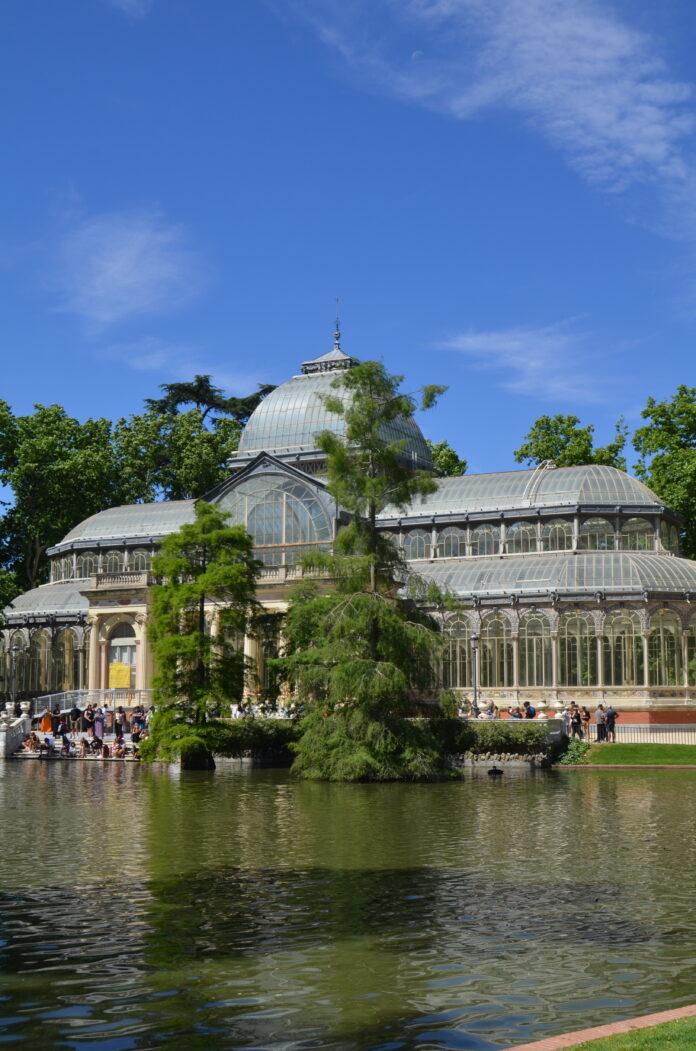
1. Palacio de Cristal (Crystal Palace), Retiro Park
What it is: A stunning glass-and-iron palace from 1887, originally built to showcase exotic plants from the Philippines
Why it’s photogenic: The entire structure is glass, reflecting the surrounding lake and trees. The light filtering through creates magical effects, especially on sunny days. The Romanesque-style architecture combined with the natural setting is breathtaking.
Best time: Early morning (8-9 AM) for soft light and no crowds, or late afternoon when the sun creates dramatic reflections. Autumn is spectacular when the surrounding trees turn golden.
Photography tip: Shoot from the small hill opposite to get the palace reflected in the lake. For interior shots (when it’s open for exhibitions), look up – the ceiling structure is geometric perfection.
Crowd factor: High on weekends, manageable on weekday mornings
Getting there: Metro Retiro (Line 2) or Ibiza (Line 9), then 10-minute walk through the park
2. Temple of Debod (Templo de Debod)
What it is: An actual 2,200-year-old Egyptian temple, gifted to Spain in 1968 and reconstructed in Madrid
Why it’s photogenic: It’s surreal – an ancient Egyptian temple with Madrid’s skyline in the background. The reflecting pool in front doubles the visual impact.
Best time: Sunset. Period. This is Madrid’s most famous sunset spot for good reason. Arrive 45 minutes before sunset to claim your spot.
Photography tip: Position yourself on the side of the reflecting pool to capture the temple, its reflection, and the sunset sky. Use a wide-angle lens or panorama mode to get the full scene.
Crowd factor: Packed at sunset (everyone knows about this spot), quiet during the day
Getting there: Metro Plaza de España (Lines 2, 3, 10) or Ventura Rodríguez (Line 3), 5-minute walk
Pro tip: Come back after dark when the temple is illuminated – far fewer people and equally stunning photos
3. Plaza Mayor
What it is: Madrid’s grand 17th-century main square, the historic heart of the city
Why it’s photogenic: The symmetry is perfection – uniform terracotta buildings surrounding a rectangular plaza with the equestrian statue of Philip III in the center. Those frescoed facades photograph beautifully.
Best time: Early morning (before 8 AM) or late evening (after 10 PM) to avoid crowds. Midday harsh light actually works okay here because the square is so bright and colorful.
Photography tip: Enter through the archways for that dramatic reveal moment. Shoot from the corners to capture the depth and symmetry. For a different angle, get a table at one of the cafés and shoot from the arcade level.
Crowd factor: Extremely high midday, manageable at breakfast time
Getting there: Metro Sol (Lines 1, 2, 3), 3-minute walk
Alternative angle: Climb to Gourmet Experience on the 9th floor of Corte Inglés on Calle Raimundo Fernández Villaverde for aerial shots of Plaza Mayor
4. Gran Vía at Callao
What it is: Madrid’s “Broadway” – the main commercial street lined with impressive early 20th-century buildings
Why it’s photogenic: The Carrión Building (topped with the iconic Schweppes sign) and the art deco Capitól Cinema create a classic Madrid skyline. The energy and lights at night are pure magic.
Best time: Dusk or nighttime when the neon signs illuminate. The “blue hour” (just after sunset) gives you that perfect balance of ambient light and neon.
Photography tip: Stand in the middle of the intersection (carefully!) or use a zoom lens from the sidewalk. Long exposure at night creates light trails from the traffic.
Crowd factor: Always busy, but that’s part of the energy
Getting there: Metro Callao (Lines 3, 5)
Safety note: Watch for traffic and pickpockets – this is a high-traffic tourist area
5. Royal Palace (Palacio Real) and Almudena Cathedral
What it is: Spain’s official royal residence (though the family lives elsewhere) and Madrid’s grand cathedral
Why it’s photogenic: The sheer scale and grandeur. The palace’s classical white stone facade against blue skies, with the cathedral’s neo-Gothic architecture next door, creates an epic composition.
Best time: Early morning from the Plaza de Oriente side, or late afternoon from Plaza de la Armería. Sunset light on the white stone is gorgeous.
Photography tip: Shoot from Campo del Moro gardens for a different angle with peacocks sometimes in your frame (yes, really). From Plaza de la Armería, include the cathedral for the full grandeur.
Crowd factor: High around the main entrance, lower in the gardens
Getting there: Metro Ópera (Lines 2, 5, R)
Bonus: Visit the gardens of Campo del Moro (free entry) for photos with peacocks and palace views
6. Puerta de Alcalá
What it is: Neoclassical triumphal arch from 1778, one of Madrid’s most iconic monuments
Why it’s photogenic: It’s massive, elegant, and dramatically positioned in Plaza de la Independencia. The honey-colored stone glows in warm light.
Best time: Golden hour (an hour before sunset) when the light hits the stone perfectly. Night photography works too when it’s illuminated.
Photography tip: Shoot from Retiro Park side for clean background, or from the traffic circle (carefully) for the full frontal view. Include Retiro’s trees for context.
Crowd factor: Moderate – it’s a traffic roundabout so people don’t linger long
Getting there: Metro Retiro (Line 2), right outside the station
7. Círculo de Bellas Artes Rooftop (Azotea)
What it is: Cultural center with a stunning rooftop terrace offering 360-degree Madrid views
Why it’s photogenic: Panoramic city views with Gran Vía, the Royal Palace, and distant mountains all visible. The rooftop statue of Minerva adds a dramatic foreground element.
Best time: Sunset for those golden hour cityscape shots, or clear sunny days for maximum visibility
Photography tip: Arrive early to get a spot by the railing. Use portrait mode or a telephoto lens to compress the cityscape. The statue makes a great silhouette against sunset skies.
Crowd factor: Can get busy at sunset, manageable other times
Cost: €5 entry to the rooftop
Getting there: Metro Banco de España (Line 2), Calle Alcalá 42
Pro tip: There’s a café/bar on the rooftop – grab a drink and take your time with photos
8. Retiro Park – Monument to Alfonso XII
What it is: A grand monument overlooking the park’s main lake, with columns and a reflecting pool
Why it’s photogenic: The symmetrical colonnade, the lake with rowboats, and the reflection all combine for classic Madrid shots. It’s romantic and grand simultaneously.
Best time: Sunday mornings (around 9-10 AM) for soft light and locals rowing boats. Spring when trees are blooming.
Photography tip: Shoot from the monument steps looking down for the lake view, or from across the lake to capture the full monument reflected in water. Rowboats add a lovely element of life.
Crowd factor: Very high on sunny weekends, peaceful on weekday mornings
Getting there: Metro Retiro (Line 2) or Príncipe de Vergara (Line 2)
Rent a boat: €6 for 45 minutes – great for photos from the water
9. Mercado de San Miguel
What it is: Historic iron-and-glass market hall from 1916, now a gourmet food market
Why it’s photogenic: The Belle Époque architecture, colorful food displays, hanging jamón, champagne towers, and market atmosphere create a sensory overload perfect for food photography.
Best time: Late morning or early evening when the market is lively but not packed
Photography tip: Focus on details – the colorful macarons, the glistening oysters, the architecture’s ironwork. The warm interior lighting creates a cozy glow.
Crowd factor: Always busy, but that’s part of the atmosphere
Getting there: Metro Sol (Lines 1, 2, 3), right by Plaza Mayor
Food photography note: Natural light near the entrance works better than the artificial interior lighting
10. Calle Palma (Malasaña Colorful Storefronts)
What it is: A charming pedestrian street in the hip Malasaña neighborhood with colorful shops and cafés
Why it’s photogenic: Pastel-colored facades, vintage storefronts, flower boxes, and that quintessential European narrow-street charm. Tompai store is especially Instagram-famous.
Best time: Morning or early afternoon when shops are open and light filters down the street
Photography tip: Position yourself at one end of the street for the perspective shot. Focus on architectural details, doorways, and window displays. The soft color palette is dreamy.
Crowd factor: Moderate – popular with photographers but not overwhelming
Getting there: Metro Tribunal (Lines 1, 10) or Noviciado (Line 2)
Explore the area: All of Malasaña is photogenic – wander the side streets for more colorful discoveries
11. Puerta del Sol – Bear and Strawberry Tree Statue
What it is: Madrid’s most central square and the city’s official symbol – a bear reaching for a madroño (strawberry tree)
Why it’s photogenic: It’s THE Madrid icon. Small enough to photograph easily, surrounded by the energy of Sol.
Best time: Early morning before the crowds descend. Honestly, expect people – this is Madrid’s Times Square.
Photography tip: Wait for a clear moment (they happen!) or embrace the energy and include people in your composition. Shoot from different angles – straight on, from the side, looking up.
Crowd factor: Extreme. This is one of Madrid’s busiest spots.
Getting there: Metro Sol (Lines 1, 2, 3) – you can’t miss it
Also photograph: The Tío Pepe sign and Kilometer Zero plaque while you’re here
12. Jardines de Cecilio Rodríguez (Retiro’s Secret Garden)
What it is: A hidden formal garden within Retiro Park, featuring fountains, pergolas, and peacocks
Why it’s photogenic: Peacocks wandering manicured gardens! The symmetrical layout, classical fountains, and elegant landscaping create a romantic, timeless atmosphere.
Best time: Morning when peacocks are most active and light is soft. Spring when flowers bloom.
Photography tip: Be patient for peacock shots – they’re used to people but won’t pose on command. The formal garden structure provides great leading lines and symmetry.
Crowd factor: Low – most tourists don’t know about this spot
Getting there: Inside Retiro Park, southeast corner near Puerta del Ángel Caído
Entry: Free, but check opening hours (sometimes closes midday)
13. Plaza de Cibeles – Cibeles Fountain
What it is: Grand fountain featuring the goddess Cybele in a chariot pulled by lions, with the stunning Cibeles Palace behind
Why it’s photogenic: The combination of the mythological fountain sculpture and the palatial architecture creates an iconic Madrid scene. Real Madrid celebrates championships here.
Best time: Late afternoon or night when the palace is illuminated. The fountain is lit up at night too.
Photography tip: Shoot from the Banco de España side for the best angle. Use a long exposure at night to smooth the fountain’s water. The palace’s architectural details deserve close-ups too.
Crowd factor: High due to central location, but the plaza is large
Getting there: Metro Banco de España (Line 2)
Pro tip: The Palacio de Cibeles has a rooftop viewpoint (Mirador de Madrid) with stunning 360° city views
14. El Capricho Park (Parque de El Capricho)
What it is: One of Madrid’s most beautiful but least-known parks, designed in the 18th century with romantic garden aesthetics
Why it’s photogenic: Hidden grottos, a small temple of Bacchus, romantic pond, tree-lined paths, and stunning seasonal colors. It feels like a secret escape.
Best time: Autumn when leaves turn golden and red. Spring for blooming flowers. Available only on weekends and holidays!
Photography tip: The Templete (small temple) by the lake is the signature shot. Explore the paths for arched tree tunnels and reflections in the pond.
Crowd factor: Low to moderate – locals know it, tourists often don’t
Getting there: Metro El Capricho (Line 5)
Important: Only open Saturdays, Sundays, and public holidays
15. Schweppes Building (Edificio Carrión) at Night
What it is: The art deco Carrión Building topped with the glowing Schweppes advertisement sign
Why it’s photogenic: Classic Madrid nighttime shot. The neon glow, the art deco architecture, and the Gran Vía energy combine for that “big city” vibe.
Best time: Blue hour (just after sunset) or full night. The sign illuminates at dusk.
Photography tip: Long exposure creates dreamy light trails from traffic. Shoot from across Gran Vía to get the full building, or zoom in on the sign against the sky.
Crowd factor: High pedestrian traffic but lots of shooting angles
Getting there: Metro Callao (Lines 3, 5)
Combine with: Capitol Cinema building next door for another architectural beauty
16. Chocolatería San Ginés
What it is: Historic chocolatería serving churros con chocolate since 1894
Why it’s photogenic: The vintage green facade, classic interior with its original tilework, and the iconic churros-dunked-in-chocolate shot that every food blogger dreams of.
Best time: Morning or late night (it’s open 24 hours!) for better light through the windows
Photography tip: Get the exterior shot first (the green tiles photograph beautifully). Inside, order churros and photograph the dunking moment. The traditional interior with marble tables is charming.
Crowd factor: Can be packed, especially weekend mornings
Getting there: Metro Sol (Lines 1, 2, 3), near Plaza Mayor
Food photography note: Natural window light works better than the dim interior lighting – sit near a window
17. Malasaña’s Wall of Eyes (Calle de la Palma)
What it is: A colorful mural featuring hundreds of eyes covering an entire building wall
Why it’s photogenic: It’s bold, colorful, and quirky. Perfect for portrait shots with an artistic background.
Best time: Morning or afternoon when the wall gets direct sunlight bringing out the colors
Photography tip: Stand close for an immersive effect or step back to show the wall’s scale. Wear bright colors to complement the mural.
Crowd factor: Moderate – popular Instagram spot
Getting there: Metro Tribunal (Lines 1, 10)
Alternative: Explore Malasaña for more street art and colorful facades
18. ABC Museum (Museo ABC) – Triangle Courtyard
What it is: Drawing and illustration museum with a stunning geometric courtyard
Why it’s photogenic: The triangle-patterned architecture creates mesmerizing geometric compositions. It looks almost surreal.
Best time: Midday when light filters down into the courtyard creating dramatic shadows
Photography tip: Look up for the architectural pattern. Use symmetry and leading lines. It’s architectural photography heaven.
Crowd factor: Low – hidden gem that most tourists miss
Getting there: Metro Noviciado (Line 2), Calle Amaniel 29-31
Museum entry: Free on certain days, check schedule
19. Plaza de España
What it is: Large square undergoing recent renovation, featuring the Cervantes monument with Don Quixote and Sancho Panza statues
Why it’s photogenic: The recently renovated square offers modern landscaping with the classic monument, creating interesting old-meets-new compositions.
Best time: Late afternoon for warm light on the statues
Photography tip: Get close to the Don Quixote and Sancho Panza statues for character. Wide shots show the full square transformation with Torre de Madrid in background.
Crowd factor: Moderate
Getting there: Metro Plaza de España (Lines 2, 3, 10)
Combine with: Walk to Temple of Debod (5 minutes) for sunset after shooting here
20. Matadero Madrid Contemporary Art Center
What it is: Former slaughterhouse converted into contemporary art space with industrial architecture
Why it’s photogenic: Raw industrial aesthetic, street art, modern installations, and interesting architecture. Very different from classic Madrid.
Best time: Weekend afternoons when events and markets bring energy
Photography tip: Focus on the architectural details – exposed brick, industrial elements, street art murals. The contrast between old industrial and new creative use tells a story.
Crowd factor: Low to moderate, depends on events
Getting there: Metro Legazpi (Lines 3, 6)
Bonus: Great for urban/street photography and capturing Madrid’s contemporary creative scene
General Photography Tips for Madrid
Timing & Light
Golden hour (hour before sunset, hour after sunrise): Warm, soft light that makes everything look magical. Temple of Debod, Puerta de Alcalá, and palace shots benefit most.
Blue hour (just after sunset): Perfect for city lights and illuminated monuments. Gran Vía, Cibeles, and Schweppes sign shine now.
Midday harsh light: Actually works for Plaza Mayor and other brightly colored spots. Avoid for palace and monument shots where shadows are too harsh.
Avoiding Crowds
- Weekday mornings (before 10 AM): Your best bet for popular spots like Plaza Mayor and Retiro
- Late evenings (after 9 PM): Fewer tourists, local atmosphere, beautiful night lighting
- Winter months: Generally quieter than spring/summer/fall
Equipment
Smartphone: Honestly, modern smartphones are excellent. Use portrait mode for subject separation, panorama for wide scenes, and night mode for low light.
Camera: If you’re bringing a proper camera:
- Wide-angle lens (16-35mm) for architecture and plazas
- 50mm for portraits and street photography
- Telephoto (70-200mm) for compressing cityscapes and details
Tripod: Small travel tripod for long exposures and night shots. Guerrillapod or GorillaPod works great for compactness.
Composition Tricks
Rule of thirds: Place key elements (monuments, buildings) off-center for dynamic compositions
Leading lines: Use streets, archways, and paths to lead the eye to your subject
Symmetry: Madrid loves symmetry – Plaza Mayor, Palacio de Cristal, formal gardens all reward centered compositions
Human scale: Include people to show monument scale and add life to your shots
Instagram Hashtags
Use these to get discovered and find inspiration:
- #MadridPhotography
- #VisitMadrid
- #MadridGram
- #MadridMola (locals’ favorite)
- #IgersMadrid
- #MadridCity
- #ThisisMADRID
Respect & Ethics
- Don’t block traffic or pathways for photos
- Respect “no photography” signs in museums and private spaces
- Ask permission before photographing people closely
- Don’t use drones without proper permits (heavily regulated)
- Be aware of your surroundings – pickpockets target distracted photographers
Planning Your Photo Walk
Half-Day Route (Morning)
Start at Temple of Debod (less crowded in morning) → Walk to Royal Palace and Cathedral → Plaza Mayor → Mercado San Miguel (arrive for late breakfast) → Puerta del Sol
Half-Day Route (Afternoon/Evening)
Retiro Park (Crystal Palace, Alfonso XII monument, secret gardens) → Puerta de Alcalá → Cibeles → Gran Vía at sunset → Círculo de Bellas Artes rooftop for golden hour cityscape
Full Day Ambitious Route
Morning: Retiro Park (multiple spots) → Cibeles → Gran Vía → Lunch break → Royal Palace → Temple of Debod → Sunset → Gran Vía night shots
Hidden Gems Day
El Capricho Park (weekend only!) → ABC Museum → Malasaña (street art and colorful streets) → Matadero Madrid → Chocolatería San Ginés for late-night churros
Final Thoughts
Madrid isn’t just photogenic – it’s generous with its beauty. Unlike some cities where you need to hunt for that perfect shot, Madrid throws visual gifts at you around every corner. A random street in Malasaña, an unexpected plaza in La Latina, the way light hits a building on Gran Vía.
The spots I’ve listed are the greatest hits – the places that reward the effort to visit and photograph. But honestly? Some of my favorite Madrid photos have come from getting lost, wandering neighborhoods without a plan, and just keeping my eyes open.
So yes, visit these 20 photogenic spots. Get those iconic shots. Fill your Instagram grid with Temple of Debod sunsets and Crystal Palace reflections. But also give yourself permission to wander, to get lost, to photograph the random moments that capture something true about Madrid.
That churro vendor setting up at 7 AM. The old men playing cards in a plaza. The way afternoon light filters through trees in a neighborhood park. The graffiti on a Lavapiés wall that somehow captures the city’s creative soul.
Madrid’s most photogenic places aren’t always the most famous ones. Sometimes they’re the moments you didn’t plan, the corners you stumbled upon, the scenes that reminded you why you travel with a camera in the first place.
Happy photographing, and remember: the best camera is the one you have with you, the best time is when you’re actually there, and the best shot is the one that makes you smile when you look at it later.
Now get out there and show Madrid what you’ve got.
FAQs:
Q: What are the most photogenic places in Madrid? A: The top photogenic spots include Crystal Palace and Temple of Debod in Retiro Park, Gran Vía at night, Royal Palace, Plaza Mayor, Puerta de Alcalá, and hidden gems like El Capricho Park and ABC Museum’s triangle courtyard. Each offers unique photo opportunities from architectural grandeur to natural beauty.
Q: Where should I take photos in Madrid? A: For iconic shots visit Temple of Debod at sunset, Crystal Palace in golden hour, and Gran Vía at night. For Instagram-worthy spots try colorful Calle Palma in Malasaña, the geometric ABC Museum courtyard, and Retiro Park’s secret gardens with peacocks.
Q: What is the best time to photograph Madrid? A: Golden hour (hour before sunset) is best for monuments like Puerta de Alcalá and Royal Palace. Blue hour (just after sunset) is perfect for city lights on Gran Vía and Cibeles. Early morning (before 10 AM) helps you avoid crowds at popular spots like Plaza Mayor and Temple of Debod.
Q: How do I avoid crowds when photographing Madrid? A: Visit popular spots on weekday mornings before 10 AM, or after 9 PM for night shots. Temple of Debod and Crystal Palace are quieter on weekday afternoons. Hidden gems like El Capricho Park (weekends only) and ABC Museum have fewer tourists year-round.
Q: What are the best Instagram spots in Madrid? A: Top Instagram locations include Temple of Debod sunset, Crystal Palace reflections, colorful Calle Palma in Malasaña, Wall of Eyes street art, Chocolatería San Ginés churros shot, and Círculo de Bellas Artes rooftop for cityscape views.
Q: Do I need a professional camera to photograph Madrid? A: No! Modern smartphones take excellent photos. Use portrait mode for subject separation, panorama for wide scenes, and night mode for low light. The guide works for any camera – it’s about timing, composition, and knowing the best spots.
Q: Where can I watch sunset in Madrid? A: Temple of Debod is Madrid’s most famous sunset spot (arrive 45 minutes early). Other excellent sunset locations include Círculo de Bellas Artes rooftop, Puerta de Alcalá, and any west-facing viewpoint in Retiro Park or near the Royal Palace.
Q: Are there photo walk routes in Madrid? A: Yes! Try the half-day morning route: Temple of Debod → Royal Palace → Plaza Mayor → Mercado San Miguel → Puerta del Sol. Or the afternoon route through Retiro Park covering Crystal Palace, Alfonso XII monument, and secret gardens, ending at Puerta de Alcalá for sunset.

 12°C
12°C - Temperature
- Precipitation
- Rain Chance
- Wind
- Humidity
- Pressure