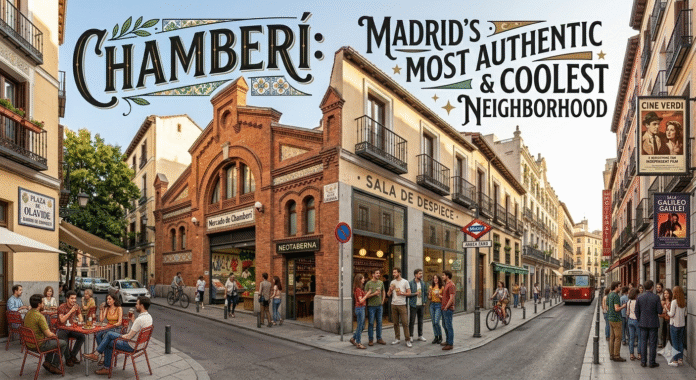
Here’s a confession: when visitors ask me for Madrid neighborhood recommendations, I sometimes hesitate before mentioning Chamberí. Not because it’s not amazing – it absolutely is – but because it’s one of those rare neighborhoods that still feels authentically local, and part of me wants to keep it that way.
But that’s selfish, isn’t it? So let me tell you about Chamberí: a neighborhood where you’ll find more madrileños than tourists, where the tapas bars aren’t performing for Instagram, and where the rhythm of daily life hasn’t been disrupted by Airbnb apartments and souvenir shops.
Chamberí is what Madrid neighborhoods used to be before they became “discovered.” It’s residential, real, and refreshingly normal. And that’s exactly what makes it extraordinary.
What Makes Chamberí Special?
Chamberí sits just north of Madrid’s city center, bordering the more touristy Malasaña and Chueca to the south. It’s close enough to walk to the main attractions, but far enough that it maintains its own distinct personality.
This is where middle-class madrileños actually live. You’ll see grandmothers doing their daily shopping at the market, parents walking kids to school, elderly men reading newspapers at corner bars, and young professionals grabbing coffee before work. It’s Madrid without the performance, without the posturing.
The neighborhood has been having a moment lately – Time Out ranked it as one of the world’s coolest neighborhoods, and Calle Ponzano has become Madrid’s hottest food street. But unlike other neighborhoods that have been completely transformed by popularity, Chamberí has somehow managed to absorb the attention without losing itself. Yet.
The architecture is elegant without being showy – mostly early 20th century buildings with Art Nouveau and modernist touches. The streets are tree-lined and walkable. The vibe is sophisticated but unpretentious. Think of it as Salamanca‘s cooler, more down-to-earth younger sibling.
The Heart of Chamberí: Neighborhoods Within the Neighborhood
Chamberí is actually made up of several distinct sub-neighborhoods, each with its own character:
Trafalgar (where Calle Ponzano is located): The trendy, foodie heart of Chamberí. Young, energetic, constantly evolving.
Vallehermoso: More residential, family-oriented, with the excellent Mercado de Vallehermoso as its anchor.
Almagro: Elegant and refined, with beautiful architecture and a slightly more formal atmosphere.
Arapiles: Quieter and more traditional, beloved by long-time residents.
Gaztambide: Near the university, so it has a student influence mixed with local families.
Ríos Rosas: Business-oriented during the day, residential at night.
Don’t worry about memorizing these – just know that as you explore Chamberí, the flavor changes from street to street. That’s part of the fun.
Calle Ponzano: Madrid’s Food Scene at Its Finest
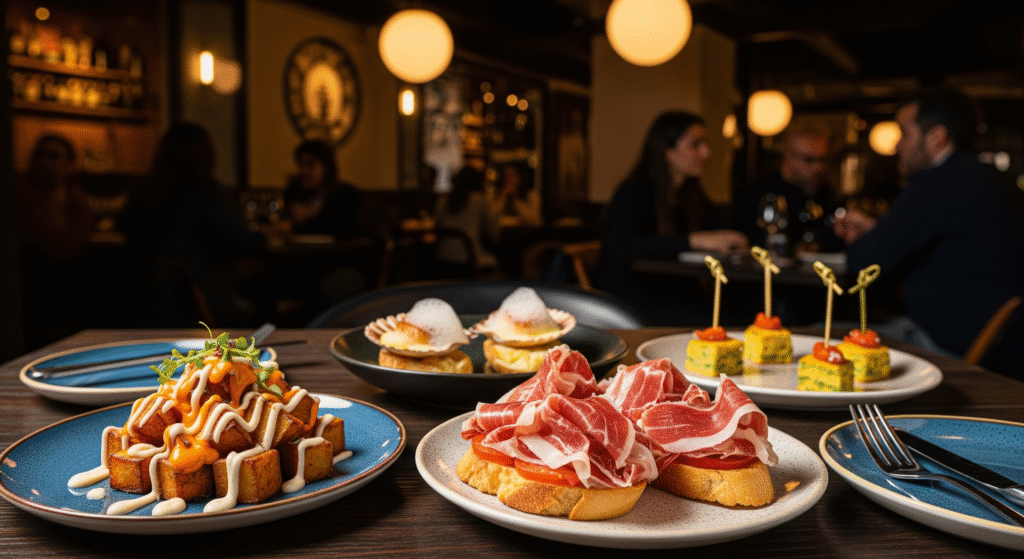
Let’s start with what’s put Chamberí on the map: Calle Ponzano. This unassuming street has become Madrid’s most exciting food corridor, packed with innovative bars, restaurants, and gastrobars serving everything from traditional tapas to international fusion.
What makes Ponzano special isn’t just the quality (though that’s excellent) – it’s the atmosphere. Unlike La Latina’s Cava Baja, which can feel like a tapas theme park for tourists, Ponzano remains genuinely local. Yes, food bloggers and in-the-know visitors come here, but they’re outnumbered by neighborhood regulars who drop in several times a week.
The street runs for several blocks, and the density of good eating is remarkable. You could spend a week doing a different bar crawl every night and not repeat a single place.
A few Ponzano highlights:
Angelita Madrid – Possibly the best food on the street. Contemporary Spanish cuisine with an excellent wine list. It’s more restaurant than bar, so expect to spend a bit more, but worth every euro.
Gaztandegi – Basque pintxos (small bites on bread) at reasonable prices. Usually packed, which is always a good sign.
Lambuzo – Seafood specialists. The grilled prawns and fish are outstanding. Small and cozy.
Juanjo – Old-school vermouth bar that’s been here forever. A reminder that Ponzano wasn’t always trendy – there were good bars here before Instagram existed.
Ojala – Beach-themed bar with sand on the floor (yes, really). Fun for cocktails and a more relaxed vibe.
La Bobia – Asturian cider house. They pour cider from height in the traditional way – it’s a show and delicious.
Levadura Madre – Excellent bakery/café for breakfast or lunch. The sourdough bread is phenomenal.
The Ponzano strategy: don’t overthink it. Walk the street, see what looks good, go in. Have one drink and a tapa, then move on to the next place. That’s how the locals do it, and they’ve got it figured out.
Pro tip: Go on a weeknight (especially Wednesday or Thursday) when it’s lively but not insane. Friday and Saturday nights it gets packed. Sunday is calmer but many places are closed.
Plaza de Olavide: The Neighborhood’s Living Room
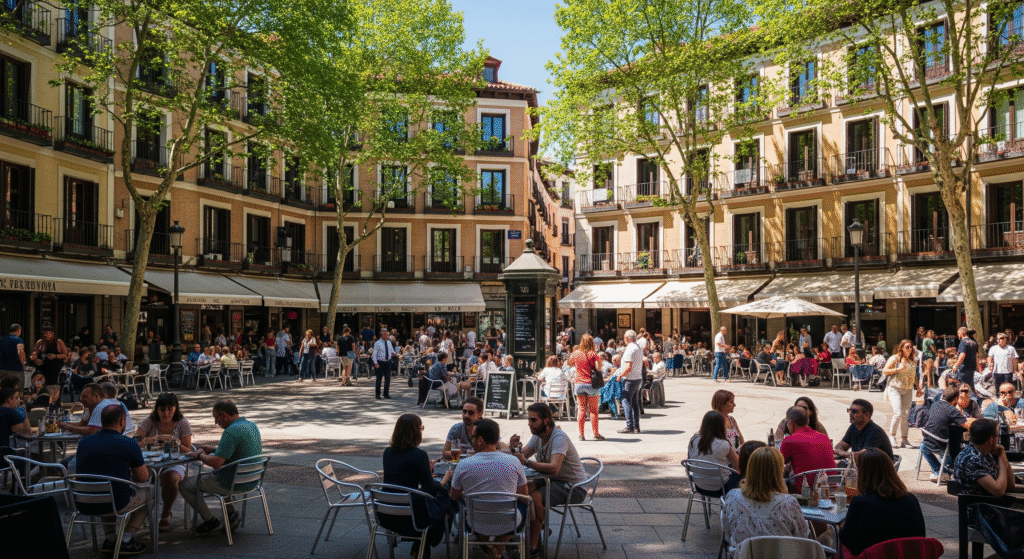
If Calle Ponzano is Chamberí’s dining room, Plaza de Olavide is its living room. This circular plaza, designed in the late 19th century, is where the neighborhood gathers.
There are cafés with terraces around the perimeter – nothing fancy, just solid neighborhood bars where you can sit for hours with a coffee or beer. In summer, the plaza fills with families, elderly residents chatting on benches, kids playing, and that timeless Spanish scene of people watching people.
This isn’t a tourist attraction. There’s no Instagram moment here. It’s just… nice. Authentically, unremarkably nice. And that’s increasingly rare in European capitals.
The market stalls set up here sometimes, and there are occasional neighborhood events. But mostly it’s just a place to exist without an agenda. Grab a coffee at one of the cafés, find a sunny spot, and watch Madrid life happen around you.
Andén 0: A Ghost Station Frozen in Time
Here’s something genuinely unique: beneath the modern Chamberí metro station lies Andén 0, a perfectly preserved 1960s “ghost station” that’s now a museum.
When the Madrid metro expanded in the 1960s, the original Chamberí station became too small and awkward to use, so they closed it and built a new one nearby. For decades, trains would just pass through without stopping, and the old station sat there, frozen in time with its vintage advertisements, tile work, and mid-century design intact.
In 2008, they opened it as a free museum. You can walk the old platform, see the original ticket booth, read the period advertisements, and get a fascinating glimpse into Madrid’s past. It’s small – you can see it in 20-30 minutes – but it’s atmospheric and genuinely cool.
Practical info: Free admission prior reservation is necessary, but limited capacity so there might be a short wait. Check opening hours before you go. The entrance is at Plaza de Chamberí.
It’s the kind of quirky, specific attraction that makes a neighborhood memorable. Most tourists have no idea it exists, which means you probably won’t be fighting crowds.
Mercado de Vallehermoso: Where Locals Shop and Eat
Madrid’s traditional neighborhood markets are wonderful, and Vallehermoso is one of the best. This isn’t a tourist market – this is where Chamberí residents buy their daily groceries.
The ground floor is classic market: butchers, fishmongers, fruit vendors, cheese specialists. The quality is excellent and prices are reasonable. Even if you’re not cooking, it’s worth wandering through to see the variety and quality of Spanish produce.
But here’s where it gets interesting: the top floor has been converted into a modern food hall with various stalls serving everything from traditional Spanish food to Asian cuisine, healthy bowls, craft beer, and excellent coffee. It’s become a popular lunch spot for locals, especially on weekends.
Unlike Mercado de San Miguel (which is lovely but completely tourist-oriented), Vallehermoso remains genuinely local. You’ll sit next to neighborhood families, elderly couples, and young professionals. The prices are fair. The food is good. It feels real.
Go on a Saturday morning when the market is most alive. Buy some jamón and cheese for a picnic, grab a coffee at one of the stalls, soak up the atmosphere.
The Sorolla Museum: Art in an Artist’s Home
The Sorolla Museum is one of Madrid’s most charming museums, though it’s often overlooked by visitors doing the Prado–Reina Sofía circuit.
Joaquín Sorolla was a Spanish painter known for his luminous beach scenes and masterful use of light. This was his home and studio, and after his death, his widow transformed it into a museum. Walking through feels like visiting someone’s actual house – because you are.
The paintings are beautiful – Sorolla’s beach scenes practically glow with Mediterranean light – but the house itself is equally appealing. The Andalusian-style garden with its fountains and tiles is particularly lovely, a peaceful oasis right in the middle of the city.
Note: As of early 2026, the museum is closed for renovations and expected to reopen later in the year. Check their website before planning a visit. When it reopens, it’ll be even better.
The museum is small enough that you won’t get overwhelmed, and intimate enough that you can really appreciate the art. It’s the kind of place where you might spend an hour and leave feeling refreshed rather than exhausted.
Architecture and Hidden Details
Chamberí doesn’t have the grand boulevards of Salamanca or the historic weight of La Latina, but if you pay attention, the architecture is quietly impressive.
Look up as you walk. You’ll see Art Nouveau flourishes, modernist details, beautiful ironwork on balconies, and elegant façades from the early 20th century. The neighborhood was developed during Madrid’s expansion in the late 1800s and early 1900s, and much of that original architecture remains.
Some buildings to notice:
- The modernist details around Plaza de Chamberí
- The elegant apartment buildings along Calle Santa Engracia
- The churches (Iglesia de Nuestra Señora del Carmen is particularly beautiful)
- The small palacetes (mini-palaces) scattered throughout, especially in the Almagro area
Chamberí rewards the observant walker. Unlike neighborhoods that announce their beauty loudly, this one whispers it.
Where to Eat Beyond Ponzano
While Ponzano gets most of the attention, Chamberí has excellent food throughout the neighborhood.
For traditional tapas: Casa Hortensia (Calle Fernández de la Hoz) – Old-school bar with excellent homemade food. The croquetas are legendary among locals. Cash only, no frills, just good food.
Taberna La Catapa (Calle Viriato) – Another authentic neighborhood bar. The kind of place where the bartender knows most customers by name.
For sit-down meals: Taberna Pedraza (Calle Manuel Malasaña) – Contemporary Spanish food in a beautiful space. Excellent tasting menus.
Desencaja (Calle Ponzano) – Yes, technically Ponzano, but worth special mention. Creative small plates with great wine pairings.
For breakfast/brunch: Levadura Madre (mentioned earlier, but seriously – go here for breakfast)
Federal Café (Plaza de las Comendadoras) – Australian-style brunch spot. Excellent coffee and eggs.
For coffee: Toma Café (Calle Palafox) – One of Madrid’s original specialty coffee roasters. If you’re a coffee snob, this is your place.
For late night: Yakitoro (Calle Reina Mercedes) – Japanese-Spanish fusion that stays open late. Fun for drinks and small plates.
For vermouth: La Ardosa (Calle Colón) – Historic vermouth bar that’s been serving since 1892. Sunday vermouth here is a Chamberí tradition.
What to Do in Chamberí
Chamberí isn’t about sights – it’s about atmosphere and daily life. But here’s how to spend your time:
Morning: Start with coffee at Toma Café or breakfast at Levadura Madre. Walk to Mercado de Vallehermoso (if it’s a weekday or Saturday) and browse the market. Maybe buy something for a picnic later.
Late Morning: Visit the Sorolla Museum if it’s open. If not, just wander – walk through Plaza de Olavide, explore the side streets, look at the architecture.
Afternoon: Visit Andén 0 (the ghost metro station). Then find a café with a terrace and watch the neighborhood go about its business. This is when you’ll see locals shopping, kids coming home from school, the daily rhythm of the area.
Evening: This is when Chamberí shines. Start with vermouth at La Ardosa or another traditional bar. Then head to Calle Ponzano for a proper tapas crawl. Plan to hit 3-4 different bars, staying 30-45 minutes at each, having a drink and maybe two tapas at each stop. End wherever the night takes you.
Alternative evening: If you’re not in a bar-hopping mood, book dinner at one of the sit-down restaurants (Angelita, Taberna Pedraza, etc.) and enjoy a leisurely meal.
When to Visit Chamberí
Weekday evenings are perfect – the neighborhood is alive with locals finishing work, having drinks, eating dinner. This is when you see Chamberí at its most authentic.
Saturday mornings show a different side – the market at full operation, families doing weekend shopping, brunch crowds at cafés.
Sunday afternoons (especially around 1-3 PM) for the traditional vermouth ritual. Bars fill up with people having pre-lunch drinks.
Avoid Monday evenings when many restaurants are closed, and dead-of-August when half the neighborhood leaves for vacation.
Getting to Chamberí
Metro: Multiple stations serve the area
- Bilbao (Lines 1 and 4) – good for Ponzano area
- Iglesia (Line 1) – central Chamberí
- Quevedo (Line 2) – northern area
- Alonso Martínez (Lines 4, 5, 10) – southern edge
- Rubén Darío (Line 5) – eastern side
Walking: It’s about 15-20 minutes walk from Plaza de España or Malasaña. Very doable if the weather’s nice.
From tourist areas:
- From Gran Vía: 10 minutes walk north
- From Chueca: 10 minutes walk northwest
- From Retiro: 20 minutes walk or quick metro ride
Who Will Love Chamberí
Foodies: Calle Ponzano alone is worth the trip.
People seeking authentic experiences: This is real Madrid, not Madrid performing for tourists.
Slow travelers: If you have 5+ days in Madrid and want to see beyond the highlights.
Digital nomads and expats: Many choose to live here because it has all the amenities without the tourist chaos.
Architecture and design enthusiasts: The subtle beauty of the buildings and urban planning.
Anyone tired of tourist crowds: Come here when La Latina or Malasaña feel too busy.
Who Might Skip It
First-time visitors with 2-3 days: Prioritize the historic center, major museums, and La Latina first.
People looking for major sights: There’s no Prado or Royal Palace equivalent here.
Party animals: While there are bars, this isn’t where Madrid’s nightclub scene is.
Shopping tourists: Salamanca is better for luxury, Malasaña for vintage, Gran Vía for mainstream.
Practical Tips
Language: More helpful to have some Spanish here than in tourist areas. Not everyone speaks English, but people are friendly and patient.
Dress: Casual and comfortable. Locals dress well but not fancy. You’ll fit in with smart-casual.
Reservations: For popular restaurants (Angelita, Desencaja, Taberna Pedraza), book ahead, especially weekends. Casual tapas bars don’t take reservations.
Money: Have cash for smaller bars and the market. Most restaurants take cards.
Time needed: Half a day minimum to get a feel for it. A full evening for proper Ponzano bar-hopping. A full day if you want to really explore deeply.
Combining Chamberí With Other Areas
Chamberí works well combined with:
Malasaña: Right next door. Do Malasaña shopping/vintage in the afternoon, Chamberí food in the evening.
Chueca: Also adjacent. Do Chueca for coffee and culture, Chamberí for dinner.
City center: Easy walk. Do tourist sights during the day, escape to Chamberí for authentic dinner.
Salamanca: If you’re staying in Salamanca, Chamberí offers a more relaxed dining alternative.
Why I Almost Didn’t Tell You About Chamberí
Remember how I said I hesitate to recommend Chamberí? Here’s why: neighborhoods change when they become “discovered.” The authenticity that makes them special can evaporate under tourist attention. Rents rise, locals are pushed out, businesses orient toward visitors rather than residents, and the neighborhood becomes a performance of itself.
It’s already happening a bit on Calle Ponzano. The bars that opened because the neighborhood needed them are now joined by bars that opened because Ponzano is trendy. It’s still mostly genuine, but you can feel the tension.
So if you go to Chamberí – and you should – go with respect. Don’t treat it like a zoo where you’re observing the locals. Be a temporary resident, not a tourist. Learn basic Spanish pleasantries. Eat where the neighborhood eats. Don’t be loud and disruptive. Support the local businesses that have been here for decades, not just the trendy new spots.
Chamberí is special because it’s real. Help it stay that way.
Final Thoughts
There are Madrid neighborhoods that announce themselves boldly – La Latina with its Sunday markets and tapas scene, Malasaña with its alternative edge, Chueca with its pride flags and energy. Chamberí doesn’t do that. It doesn’t need to.
This is a neighborhood that’s comfortable with itself. It doesn’t try to be cool (even though it kind of is). It doesn’t perform for visitors (even though it’s beautiful). It just… exists, functioning as a neighborhood should, serving the people who live there.
That might not sound exciting, but in an age of Instagram-optimized travel experiences and neighborhoods designed for tourists, there’s something deeply satisfying about a place that’s just genuinely good at being a neighborhood.
Come to Chamberí when you want to see how madrileños actually live. Come when you’re tired of tourist crowds and overpriced, mediocre food. Come when you want to slow down and experience Madrid’s daily rhythms rather than hitting attractions.
And when you’re sitting at a terrace on Plaza de Olavide on a sunny afternoon, or bar-hopping your way down Calle Ponzano on a Thursday evening, surrounded by locals living their lives, you’ll understand why people who know Madrid tend to keep Chamberí to themselves.
Just don’t tell too many people about it, okay?
FAQ
Q: What is Chamberí known for? A: Chamberí is known for Calle Ponzano, Madrid’s best food street with incredible tapas bars and restaurants. It’s also famous for being an authentic local neighborhood with Andén 0 ghost metro station, Mercado de Vallehermoso, and Plaza de Olavide – all without the tourist crowds of other Madrid neighborhoods.
Q: Is Chamberí worth visiting in Madrid? A: Absolutely, especially if you have 5+ days in Madrid or want authentic local experiences. Chamberí offers world-class food on Calle Ponzano, genuine neighborhood atmosphere, and unique attractions like the Andén 0 ghost station. It’s where madrileños actually live and eat.
Q: Where do locals eat in Chamberí? A: Locals love Calle Ponzano for its concentration of excellent restaurants (Angelita, Gaztandegi, Lambuzo). Also popular: Casa Hortensia for traditional tapas, La Ardosa for vermouth, and Mercado de Vallehermoso’s food hall. Most restaurants on Ponzano are still primarily local-focused.
Q: What is Calle Ponzano in Madrid? A: Calle Ponzano is Madrid’s hottest food street in the Chamberí neighborhood. It’s lined with tapas bars, gastrobars, and restaurants serving everything from traditional Spanish to international fusion. Unlike tourist-heavy areas, Ponzano maintains an authentic local atmosphere.
Q: How do I get to Chamberí from Madrid center? A: Chamberí is just north of the city center. Take Metro to Bilbao (Lines 1, 4), Iglesia (Line 1), or Quevedo (Line 2). It’s also a 15-20 minute walk from Gran Vía or Malasaña. Very easy to access.
Q: Is Chamberí safe? A: Yes, Chamberí is one of Madrid’s safest neighborhoods. It’s residential, well-maintained, and family-oriented. Standard city precautions apply, but it’s very safe day and night.
Q: What’s the best time to visit Chamberí? A: Weekday evenings (especially Wednesday-Thursday) for Calle Ponzano at its best – lively but not overcrowded. Saturday mornings for the market at full operation. Sunday afternoons (1-3 PM) for traditional vermouth culture.
Q: Should I visit Chamberí or La Latina? A: Both! They offer different experiences. La Latina is great for traditional tapas and Sunday El Rastro market (tourist-friendly). Chamberí is more authentic, local, and food-focused. If you only have 2-3 days, prioritize La Latina. With 5+ days, definitely add Chamberí.

 11°C
11°C - Temperature
- Precipitation
- Rain Chance
- Wind
- Humidity
- Pressure