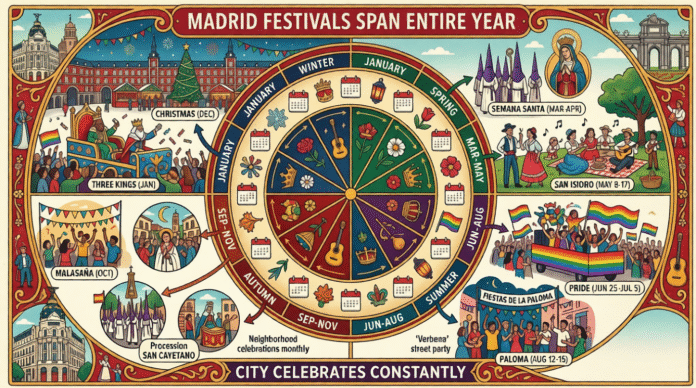
Ask a madrileño what festival they’re celebrating and there’s a good chance the answer is “one of them.” Madrid celebrates constantly. Religious saints’ days, neighborhood traditions, seasonal parties, cultural events – the city maintains a festival calendar that fills every month with celebrations both massive and intimate.
Some are huge: San Isidro in May brings 10 days of concerts, bullfights, and millions celebrating Madrid’s patron saint. Madrid Pride draws 2 million to Chueca every summer. Christmas transforms Plaza Mayor into a market wonderland.
Others are hyper-local: Lavapiés celebrates Las Mayas in early May. La Latina honors three patron saints in August. Individual neighborhoods throw verbenas (street parties) with traditions centuries old.
I’ve experienced Madrid’s festival calendar across decades – dancing chotis at San Isidro dressed as a chulapa, watching Three Kings arrive on camels in January, eating 12 grapes at midnight on New Year’s Eve at Puerta del Sol, joining neighborhood verbenas where elderly couples dance with the same grace they had 50 years ago.
And here’s what I’ve learned: Madrid’s festivals aren’t tourist performances. They’re living traditions. When you see families picnicking on San Isidro meadow eating rosquillas, that’s what their grandparents did. When you watch the Paloma procession in August, you’re seeing a neighborhood tradition that predates electricity. These festivals are Madrid’s soul.
So let me walk you through Madrid’s annual celebration calendar. The major festivals everyone knows, the neighborhood parties locals cherish, and the cultural events that make every month special.
Madrid’s Major Annual Festivals
San Isidro Festival (May 8-17, 2026)
Madrid’s biggest celebration honoring the city’s patron saint, San Isidro Labrador (Isidore the Farmer), a 12th-century peasant who became Madrid’s saint.
Dates: Always around May 15 (Saint’s Day), typically May 8-17
2026 Dates: May 8-17
Where: Citywide, centered on Pradera de San Isidro, Plaza Mayor, Las Vistillas
What Happens:
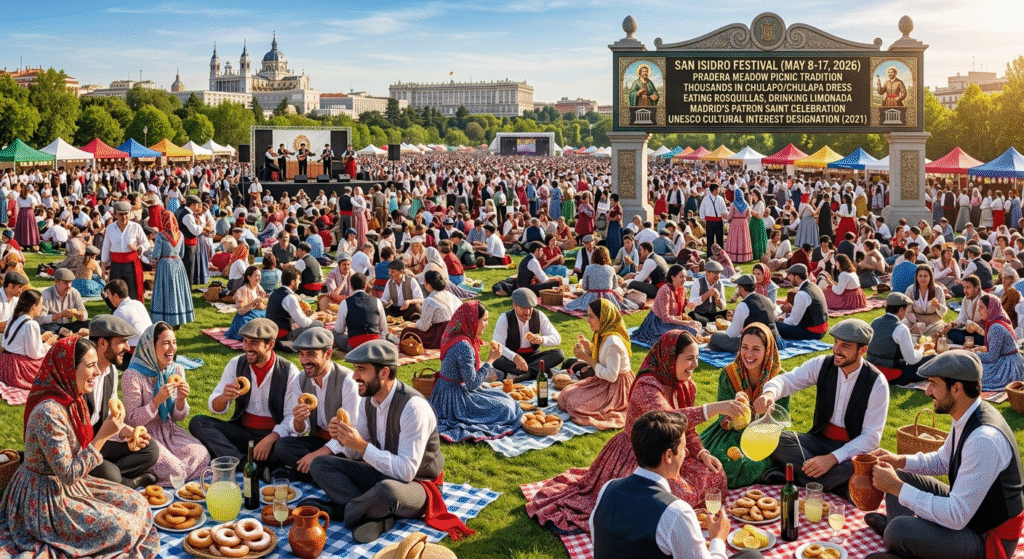
The Romería (May 15): Thousands picnic on Pradera de San Isidro meadow wearing traditional chulapo/chulapa dress (flat caps and vests for men, polka-dot dresses and Manila shawls for women). Families eat tortilla española, drink limonada (wine-based lemonade), nibble rosquillas (sweet donuts in four varieties: listas/glazed, tontas/plain, Santa Clara/meringue-covered, francesas/almond).
Concerts: Free stages at Plaza Mayor, Las Vistillas, Matadero with Spanish pop, rock, traditional music. Evening verbenas (street dances) where couples dance the chotis (traditional Madrid waltz).
Bullfighting: Las Ventas hosts the world’s most prestigious bullfighting fair (Feria de San Isidro) from early May through mid-June – over 30 bullfights featuring the top matadors. Controversial but traditionally significant.
Giants and Big Heads Parade: Enormous festival figures parade through streets.
Cultural Events: Pottery fair at Plaza Comendadoras, art exhibitions, theater performances.
UNESCO Recognition: Declared Asset of Cultural Interest (2021).
My take: This is authentic Madrid. The Pradera picnic is magical – thousands of people in traditional dress eating rosquillas and drinking from San Isidro’s holy spring. If you can only attend one Madrid festival, make it this one. Arrive early May 15 to Pradera (Metro Oporto or Marqués de Vadillo), dress up if you want (locals love when visitors participate), buy rosquillas from street vendors, and join the city in celebrating its patron.
[Already mentioned in Best Time to Visit Madrid guide →]
Verbena de la Paloma (August 12-15, 2026)
Madrid’s beloved summer neighborhood festival celebrating the Virgen de la Paloma (Virgin of the Dove).
Dates: Always around August 15 (Assumption)
Where: La Latina neighborhood, centered around Calle Toledo
What Happens:
Part of the Castizo Trilogy (three consecutive summer verbenas):
- San Cayetano (August 7)
- San Lorenzo (August 10)
- Virgen de la Paloma (August 12-15, biggest)
Traditional dress: Chulapos and chulapas in full regalia (even more elaborate than San Isidro)
Street parties: Bands, dancing, outdoor drinking, decorated balconies with Manila shawls
Religious procession: Virgen de la Paloma statue carried through La Latina streets August 15
Concerts: Free stages featuring Spanish traditional music, chotis dancing
Food stalls: Traditional Madrid food – gallinejas (fried lamb intestines), entresijos (lamb mesentery), barquillos (wafer cookies)
My take: More local, less touristy than San Isidro. If you’re in Madrid mid-August (when half the city vacations elsewhere), this is peak authentic Madrid. The neighborhood transforms – every balcony decorated, every bar spilling into streets, elderly couples dancing chotis with grace and dignity. It’s hot, crowded, and wonderful.
Madrid Pride (Orgullo Madrid) (June 25 – July 5, 2026)
Europe’s largest LGBTQ+ celebration, already covered in detail.
Parade: Saturday, July 4, 2026
2+ million attendees over 10 days
Chueca neighborhood epicenter
[See complete Madrid Pride guide →]
Three Kings Parade (January 5, 2026)
Spain’s main Christmas gift-giving celebration when the Three Wise Men arrive.
Date: Always January 5
Time: Evening parade, typically 6:30-9:30 PM
What Happens:
Parade route: Starts Plaza San Juan de la Cruz → ends Plaza de Cibeles
The spectacle: Elaborate floats carrying Gaspar, Melchior, and Balthazar throwing candy to crowds (bring a bag!). Camels, exotic costumes, thousands of participants, magical atmosphere
Tradition: Children write letters to the Kings requesting gifts. On evening of January 5, families watch the parade. Overnight, “the Kings” deliver presents. January 6 morning, children open gifts.
Roscón de Reyes: Traditional ring-shaped cake eaten January 6, contains hidden figurine (finder gets crown) and fava bean (finder pays for cake next year).
Pro tip: Arrive parade route 90+ minutes early for good viewing spots. Bring bags for catching candy. Side streets less crowded than main route.
Christmas Markets (December 1-31, 2026)
Madrid’s festive Christmas season with markets, lights, celebrations.
Main Market: Plaza Mayor Christmas Market (100+ stalls)
Dates: Usually December 1-31
What’s sold: Nativity figures (belenismo is huge in Spain), decorations, gifts, Christmas sweets
Other locations:
- Plaza España
- Chamartín
- Various neighborhood markets
Christmas lights: Gran Vía, Puerta del Sol, Plaza Mayor spectacularly illuminated from late November
New Year’s Eve: Puerta del Sol hosts Spain’s main celebration – eat 12 grapes at midnight with each bell chime for 12 months of good luck. Hundreds of thousands attend, broadcast nationally.
My take: Plaza Mayor market is charming but crowded. For more authentic experience, explore neighborhood markets in Chamartín or Vallecas. The tradition of eating 12 grapes at Sol is genuinely fun if you can handle massive crowds (or watch from nearby bar with less density).
Neighborhood Festivals
Dos de Mayo / Madrid Day (May 2, 2026)
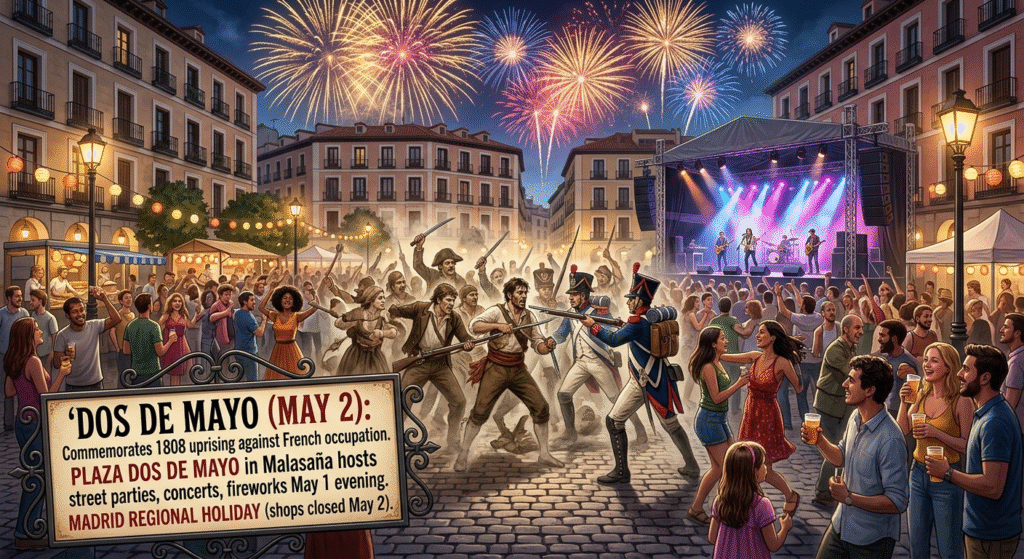
Commemorates Madrid’s uprising against French occupation (1808), celebrated with special pride in Malasaña.
Where: Centered on Plaza del Dos de Mayo (Malasaña)
What: Street parties, concerts, fireworks May 1 evening, official celebrations May 2
Significance: Madrid’s regional holiday (shops/offices closed May 2)
History: May 2, 1808, Madrid citizens rose against Napoleon’s forces. Goya immortalized the subsequent French reprisals in “The Third of May 1808” (now in Prado Museum). Plaza Dos de Mayo marks where artillery barracks defenders held out.
Las Mayas (May 3, 2026)
Traditional spring celebration in Lavapiés honoring young girls and spring’s arrival.
Where: Plaza de Lavapiés and neighborhood streets
What: Girls dressed as “mayas” sit on flower-decorated altars, passersby give coins. Street parties, traditional music, neighborhood pride.
UNESCO: Declared Asset of Cultural Interest
Origin: Medieval tradition celebrating May/spring through feminine symbols
Cultural Events & Festivals
ARCOmadrid (March 4-8, 2026)
International Contemporary Art Fair, Spain’s most important art event.
Where: IFEMA Madrid
Who attends: 95,000+ visitors, 200+ galleries globally
Why attend: See cutting-edge contemporary art, meet artists/gallerists, understand Madrid’s art scene beyond museums
Access: Buy tickets online, professional vs. public days
Madrid Book Fair (May 29 – June 14, 2026)
Massive annual book fair in Retiro Park.
Where: Retiro Park’s Paseo de Coches
What: 350+ book stalls, author signings, readings, presentations
Who: Publishers, bookstores, authors – from literary fiction to comics
Tradition: Since 1933 (with interruptions), now essential Madrid cultural event
Pro tip: Late afternoon/evening best for author events. Weekdays less crowded than weekends.
Veranos de la Villa (July-August 2026)
Madrid’s summer cultural festival with 40+ years tradition.
What: Outdoor cinema, concerts, dance, theater, circus across city venues
Where: Matadero, Conde Duque, parks, outdoor spaces
Cost: Many events free or low-cost
Vibe: Accessible culture taking advantage of warm summer evenings
Autumn Festival (November 2026)
Performing arts festival celebrating dance, theater, experimental performance.
Duration: Throughout November
Venues: Major theaters plus unconventional spaces
Focus: Contemporary, cutting-edge, often international artists
44th edition in 2026
Mercedes-Benz Fashion Week Madrid (March 17-21, 2026)
Spain’s premier fashion event showcasing autumn-winter collections.
Where: IFEMA Madrid
Who: Spanish designers plus international presence
Access: Industry professional vs. public access varies
Parallel event: Ortega y Gasset street (September, exact dates TBD) – urban fashion festival
Religious Celebrations
Semana Santa / Holy Week (March 29 – April 5, 2026)
Spain’s most important religious week with processions, traditions.
Madrid’s Processions:
- La Borriquita (Palm Sunday): Almudena Cathedral → Plaza San Ildefonso (Malasaña)
- Various neighborhood processions through week
- Viernes Santo (Good Friday): Most solemn, multiple processions
What to see: Religious brotherhoods (cofradías) carry sacred images through streets on ornate floats (pasos). Penitents in hooded robes, bands playing solemn marches, incense, crowds.
Comparison: Not as elaborate as Seville’s Semana Santa but authentic Madrid tradition
Food tradition: Torrijas (similar to French toast) eaten throughout Holy Week
Corpus Christi (June 4, 2026)
Catholic celebration 60 days after Easter.
In Madrid: Less prominent than Toledo (which has spectacular processions) but religious services and some traditional observances
Music & Concert Festivals
Mad Cool Festival (July 8-11, 2026)
Madrid’s premier multi-day music festival, 10th anniversary edition.
Headliners 2026: Foo Fighters, Florence + The Machine, Twenty One Pilots, Halsey
Where: Iberdrola Music (venue)
Genre: Rock, indie, pop, electronic
Attendance: 70,000+ per day
Concert Season at Plaza Mayor / Free Stages
Throughout spring-summer, Madrid offers free concerts:
San Isidro (May): Plaza Mayor, Las Vistillas, Matadero
Veranos de la Villa (July-Aug): Multiple outdoor venues
Neighborhood festivals: Each with own musical programming
Madrid Festival Calendar 2026 Summary
JANUARY
- New Year’s Day (Jan 1)
- Three Kings Parade (Jan 5)
- Three Kings Day gifts (Jan 6)
FEBRUARY
- La Candelaria / Candlemas (Feb 2): Processions, traditional celebrations
MARCH
- ARCOmadrid Art Fair (Mar 4-8)
- Fashion Week Madrid (Mar 17-21)
- Semana Santa / Holy Week (Mar 29 – Apr 5)
APRIL
- Easter Sunday (Apr 5)
- Easter Monday (Apr 6)
MAY
- Dos de Mayo / Madrid Day (May 2): Regional holiday, street parties
- Las Mayas (May 3): Lavapiés traditional spring festival
- San Isidro Festival (May 8-17): Madrid’s biggest celebration
- Madrid Book Fair (May 29 – Jun 14)
JUNE
- Corpus Christi (Jun 4)
- Madrid Pride (Jun 25 – Jul 5): Europe’s largest LGBTQ+ celebration
JULY
- Mad Cool Festival (Jul 8-11)
- Veranos de la Villa begins (July-August)
AUGUST
- Verbena de la Paloma (Aug 12-15): Traditional summer neighborhood festival
- Castizo Trilogy: San Cayetano (Aug 7), San Lorenzo (Aug 10), La Paloma (Aug 12-15)
SEPTEMBER
- Fashion events return (dates TBD)
NOVEMBER
- Autumn Festival (throughout month)
DECEMBER
- Christmas markets begin (Dec 1-31)
- Christmas lights illuminated citywide
- New Year’s Eve at Sol (Dec 31 midnight)
Tips for Experiencing Madrid Festivals
Book accommodations ahead: Hotels spike during San Isidro, Pride, Christmas
Embrace local traditions: Wear traditional dress at San Isidro if you want (locals love it)
Free is really free: Most neighborhood festivals, street parties, concerts are genuinely free
Eat traditional foods: Each festival has specific foods – rosquillas at San Isidro, torrijas at Easter, roscón at Three Kings
Learn basic steps: Chotis (traditional Madrid dance) is simple waltz – watch and join
Respect religious observances: Semana Santa processions are sacred to many, maintain reverence
Watch for pickpockets: Crowded festivals attract thieves, secure valuables
Final Thoughts
Madrid’s festival calendar reveals the city’s soul. These aren’t performances for tourists – they’re living traditions connecting modern Madrid to centuries of history.
When you eat 12 grapes at midnight on New Year’s Eve at Sol, you’re doing exactly what millions of Spaniards do simultaneously across the country. When you picnic on San Isidro meadow eating rosquillas, you’re participating in a tradition Goya painted in 1788. When you watch Three Kings throw candy from elaborate floats, you’re seeing Spain’s gift-giving tradition predating commercial Christmas.
Some festivals are huge (San Isidro, Pride). Others are intimate (Las Mayas, neighborhood verbenas). All matter. All connect past to present. All invite you to participate, not just observe.
My advice? Pick one major festival and experience it properly. Arrive early to the Pradera for San Isidro. Get a spot on the parade route for Three Kings. Join the street dancing at La Paloma. Buy the traditional food. Learn the customs. Participate.
Because Madrid’s festivals aren’t things to see. They’re experiences to join.
And when you’re standing in Plaza Mayor on a warm May evening during San Isidro, drinking limonada while a band plays traditional music and couples dance the chotis, you’ll understand why Madrid celebrates constantly. This is what makes Madrid, Madrid.
FAQs
Q1: What festivals are celebrated in Madrid?
A: Major Madrid festivals: San Isidro (May 8-17, patron saint, biggest festival), Madrid Pride (Jun 25-Jul 5, Europe’s largest LGBTQ+), Verbena de la Paloma (Aug 12-15, summer neighborhood festival), Three Kings Parade (Jan 5, Christmas gift-giving), Christmas markets (December), Dos de Mayo (May 2, Madrid Day), Semana Santa (March-April, Holy Week processions). Plus neighborhood verbenas, cultural events year-round.
Q2: When is San Isidro Festival in Madrid?
A: San Isidro Festival 2026: May 8-17 (always around May 15, patron saint day). Madrid’s biggest annual celebration featuring Pradera meadow picnic with chulapo/chulapa traditional dress, rosquillas (donuts), concerts at Plaza Mayor/Las Vistillas, bullfighting at Las Ventas, street dancing (chotis), religious processions. UNESCO Cultural Interest designation (2021).
Q3: What is Verbena de la Paloma?
A: Verbena de la Paloma (August 12-15) celebrates Virgen de la Paloma in La Latina neighborhood. Traditional summer neighborhood festival with chulapos in traditional dress, street dancing (chotis), religious procession August 15, outdoor concerts, traditional food (gallinejas, entresijos). Part of Castizo Trilogy with San Cayetano (Aug 7) and San Lorenzo (Aug 10). Most authentic local Madrid festival.
Q4: Does Madrid celebrate Three Kings Day?
A: Yes! Three Kings Day (January 6) is Spain’s main Christmas gift-giving tradition. January 5 evening: massive Three Kings Parade (Cabalgata) with Gaspar, Melchior, Balthazar on floats throwing candy, route Plaza San Juan Cruz to Cibeles. Children write letters requesting gifts. “Kings” deliver overnight. January 6 morning: children open presents, eat Roscón de Reyes cake.
Q5: What should I eat at San Isidro?
A: San Isidro traditional foods: Rosquillas (four varieties – listas/glazed, tontas/plain, Santa Clara/meringue, francesas/almond), limonada (wine-based lemonade with fruit), tortilla española (Spanish omelet), gallinejas (fried lamb intestines), entresijos (lamb mesentery), barquillos (wafer cookies). Buy from Pradera vendors or street barquilleros (organ grinders) in traditional costume.
Q6: When are Madrid Christmas markets?
A: Madrid Christmas markets run December 1-31, 2026. Main market: Plaza Mayor (100+ stalls selling nativity figures, decorations, gifts). Other locations: Plaza España, Chamartín, neighborhood markets. Christmas lights illuminate Gran Vía, Sol, Plaza Mayor from late November. New Year’s Eve celebration at Puerta del Sol midnight with 12 grapes tradition.
Q7: What is Dos de Mayo in Madrid?
A: Dos de Mayo (May 2) commemorates Madrid’s 1808 uprising against Napoleonic occupation (Goya painted aftermath in “Third of May 1808” now at Prado). Madrid regional holiday (shops/offices closed). Celebrations centered Plaza Dos de Mayo in Malasaña: street parties, concerts, fireworks May 1 evening. Patriotic significance for Madrid.
Q8: Can tourists participate in Madrid festivals?
A: Absolutely! Madrid festivals welcome everyone. Wear chulapo/chulapa dress at San Isidro (locals love when visitors participate), join Pradera picnic, dance chotis at verbenas, catch candy at Three Kings Parade, eat 12 grapes at Sol New Year’s. Most events free. Respect religious observances (Semana Santa processions sacred). Embrace traditions – festivals are living culture, not performances.
Q9: What is the chotis dance?
A: Chotis is Madrid’s traditional dance – simple waltz where couples hold close, man guides, woman keeps feet still rotating in place. Danced at San Isidro, Verbena de la Paloma, neighborhood festivals. Elderly couples demonstrate graceful tradition. Easy to learn, watch and join. Essential Madrid cultural experience, represents authentic castizo (traditional Madrid working-class) culture.
Q10: What’s the difference between San Isidro and Verbena de la Paloma?
A: San Isidro (May 8-17): Madrid’s patron saint, citywide celebration, Pradera meadow picnic, major concerts, bullfighting, massive scale, more touristy, UNESCO designation. Verbena de la Paloma (Aug 12-15): Neighborhood festival in La Latina, more local/authentic, traditional summer verbena, smaller scale, hotter weather (mid-August), part of Castizo Trilogy. Both feature chulapos, chotis dancing, traditional food. San Isidro = biggest, Paloma = most authentic.

 13°C
13°C - Temperature
- Precipitation
- Rain Chance
- Wind
- Humidity
- Pressure





, Pride (Jun 25-Jul 5), Paloma (Aug 12-15), Christmas, Three Kings. Complete calendar traditions, dates, tips!)